Search This Blog

Showing posts with label detection. Show all posts

Wednesday, March 7, 2012

IBM Analytics Help Sonoma County, CA Conserve Water

IBM Analytics Help Sonoma County, California Conserve Water

Automatic Leak Detection, Pressure Management Aims to Reduce Water Loss
Sonoma County, CA, USA - 07 Mar 2012: IBM (NYSE: IBM) Research scientists and the Sonoma County Water Agency (SCWA), which supplies water to more than 600,000 people in the heart of Northern California’s wine country, have once again teamed up to address the pressing problem of water conservation. 
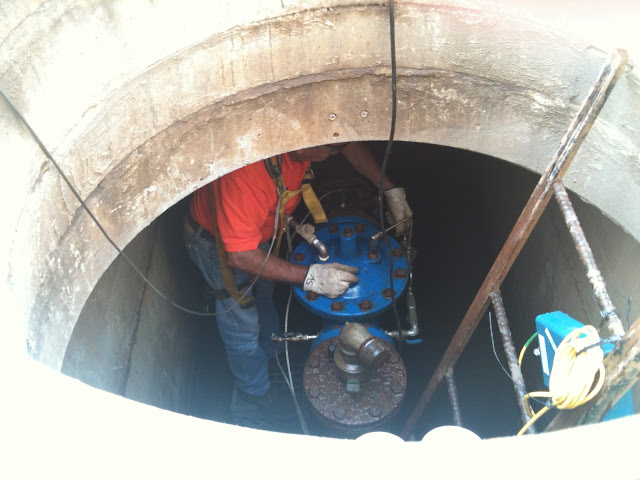
The new program, which builds on an existing IBM-SCWA water management collaboration, uses analytics technology to helpValley of the Moon Water District (VOMWD), a purchaser of wholesale water from SCWA, to reduce water loss. This is done by optimizing the setting of the pressure reducing valves at the entrance to their distribution network based on data from existing sensors as well as from SCADA, billing, pressure gauges, and flow loggers throughout the water system.          
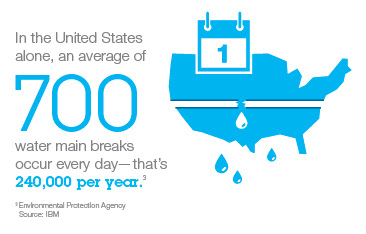
According to the Environmental Protection Agency, much of the 880,000 miles of water pipes in the United States has been in service for decades – some for over 100 years – and can be a significant source of water loss. The World Bank estimates that worldwide costs from leaks total $14 billion annually.  
“We’re helping SCWA and Valley of the Moon to more efficiently analyze data, anticipate problems and manage resources,” said IBM Smarter Water Program Director Michael Sullivan.  “The ability to track water at such a granular level helps SCWA and Valley of the Moon make informed decisions about how to manage – and conserve – water along its entire lifecycle.” 
Developed by scientists at IBM Research – Haifa in Israel, the pressure management solution provides recommendations for water pressure adjustments based on usage, weather, and environmental conditions. The benefits of improved pressure management include reduced water loss, energy savings, and reduced wear on the infrastructure---alongside an improvement in the quality and turnover of stored water. 
 “We are proud to partner with IBM and SCWA on this First of a Kind Program to field test a non-invasive analytical tool to better manage water pressure and potentially locate leaks, said Krishna Kumar, General Manager, Valley of the Moon Water  District.  “I'm glad to see IBM taking the lead and employing its vast institutional strengths to forge unique public private partnerships to solve some of the pressing challenges faced by the water utilities all over the world.” 
Managing the pressure of a water system – comprised of pipes, valves, pumps, tanks and other equipment – is rife with complexity.  If a well stops working, some water tanks will not be filled. If pressure is increased to fill those tanks, other tanks may not be emptying as often as they should to maintain a proper exchange of water and maintain required water quality. Or, if there is a leak, reducing the pressure to one pipe will reduce the amount of water lost through the pipe, but it also means that some consumers may not have enough pressure in their taps at home. 
Prior to working with IBM, Valley of the Moon operations staff had to continuously – and manually –adjust the pressure of each valve to maintain optimal pressure across the system – a time consuming and inefficient process.  Now, IBM analytics provides the engineers with detailed information for recommendations of optimal settings for each valve based on what’s happening across the entire system so that valves can be quickly and easily adjusted as necessary. 
In addition to the pressure management work, IBM and SCWA are extending the new technology to also enable leak detection by comparing real-time information about the water system with expected and historical values. 
For more information about IBM Smarter Water, visit www.ibm.com/smarterplanet/water
For more information about IBM Research, visit www.ibm.com/research
For more information about SCWA, visit www.scwa.ca.gov
For more information on VOMWD, visit www.vomwd.com

Tuesday, March 6, 2012

News Release from EPA - Kansas Refinery

FOR IMMEDIATE RELEASE
March 6, 2012
Kansas Refinery to Pay Nearly $1 Million Penalty for Environmental Violations Related to Air Emissions

WASHINGTON — 
The U.S. Environmental Protection Agency (EPA) and the U.S. Department of Justice announced that Coffeyville Resources Refining & Marketing (CRRM) has agreed to pay a civil penalty of more than $970,000 and invest more than $4.25 million on new pollution controls and $6.5 million in operating costs to resolve alleged violations of air, superfund and community right-to-know laws at its Coffeyville, Kan. refinery. The settlement will benefit the environment and human health by requiring new and upgraded pollution controls, more stringent emission limits, and more aggressive leak-detection and repair practices to reduce emissions from refinery equipment and process units. Sulfur dioxide (SO2) and nitrogen oxide (NOx), two pollutants emitted from refineries, can cause respiratory problems like asthma and are significant contributors to acid rain, smog and haze.
“The Clean Air Act is designed to protect people’s health from emissions of harmful pollutants,” said Cynthia Giles, assistant administrator of EPA’s Office of Enforcement and Compliance Assurance. “Today’s settlement will protect residents living near the facility and ensure that the necessary pollution controls are installed to protect the residents of southeastern Kansas in the future.”
“This settlement puts CRRM on a level playing field with the more than 100 petroleum refineries that have agreed to implement aggressive pollution control measures, thereby reducing the threats posed by harmful emissions to area residents,” said Ignacia S. Moreno, assistant attorney general for the Environment and Natural Resources Division of the Department of Justice. “The agreement reaffirms our commitment to ensure that the petroleum refining industry complies with the nation’s Clean Air Act.”

The settlement resolves alleged violations of the Clean Air Act (CAA), 
Comprehensive Environmental Response, Compensation, and Liability Act (CERCLA), and Emergency Planning and Community Right-to-Know Act (EPCRA). Coffeyville allegedly made modifications to its refinery that increased emissions without first obtaining pre-construction permits and installing required pollution control equipment. The CAA requires major sources of air pollution to obtain such permits before making changes that would result in a significant emissions increase of any pollutant. The settlement also resolves violations in which CRRM failed to timely notify state and local emergency responders of releases of hydrogen sulfide and sulfur dioxide from the refinery, as required by the CERCLA and EPCRA.

Once fully implemented, the pollution controls required by the settlement will annually reduce an estimated 200 tons of NOx emissions and more than 110 tons of SO2 emissions. The settlement will also reduce emissions of volatile organic compounds, particulate matter, carbon monoxide and other pollutants that affect air quality. CRRM has also agreed to perform a voluntary environmental project at the refinery valued at more than $1.2 million. The project will benefit the environment and surrounding communities by reducing emissions of volatile organic compounds and hydrogen sulfide, reducing the frequency of future acid gas flaring incidents, and conserve 15 million gallons of water each year that would previously have come from the 
Verdigris River.
The settlement with CRRM is the 30th under 
an EPA initiative to improve compliance among petroleum refiners and to reduce significant amounts of air pollution from refineries nationwide through comprehensive, company-wide settlements. The first of EPA’s settlements was reached in 2000, and with today’s settlement, 107 refineries operating in 32 states and territories – more than 90 percent of the total refining capacity in the United States – are under judicially enforceable agreements to significantly reduce emissions of pollutants. As a result of the settlement agreements, refiners have agreed to invest more than $6 billion in new pollution controls designed to reduce emissions of sulfur dioxide, nitrogen dioxide and other pollutants by more than 360,000 tons per year. 
CRRM’s refinery has the capacity to refine more than 115,000 barrels of crude oil per day, producing
 gasoline, diesel fuels, and propane. 
The State of Kansas has joined in the settlement and will receive a portion of the civil penalty.

The consent decree, lodged in the U.S. District Court for the District of Kansas, is subject to a 30-day public comment period and court approval.
More information on the CRRM settlement:
http://www.epa.gov/compliance/resources/cases/civil/caa/coffeyville.html
More information on other petroleum refinery settlements:
http://www.epa.gov/compliance/resources/cases/civil/caa/oil/index.html

Tuesday, February 28, 2012

News Release from EPA - Fremont Facility

For Immediate Release: February 28, 2012
Contact: Margot Perez-Sullivan, perezsullivan.margot@epa.gov

U.S. EPA Fines Fremont facility $62,500 for Hazardous Waste Violations

SAN FRANCISCO—The U.S. Environmental Protection Agency fined Western Digital Corporation, a wafer fabrication facility that generates large quantities of hazardous wastes including solvents, acids and sulfates, $62,500 for the improper management of hazardous waste at its Fremont facility.

A 2010 inspection at Western Digital Corporation uncovered violations of federal standards governing the handling and storage of hazardous waste. In this case, the facility manufactures    components used to make hard drives, using a variety of hazardous materials.  Among the  violations were failure to properly label and seal containers, failure to control tank emissions, failure to adequately train personnel, failure to monitor equipment, failure to provide an adequate contingency plan, and failure to provide a leak detection system,

Under the EPA’s Resource Conservation and Recovery Act program, hazardous substances must be stored, handled and disposed of using measures that safeguard public health and the environment.

For more information on the Resource Conservation and Recovery Act, please visit the EPA’s web site at:  http://www.epa.gov/compliance/civil/rcra/index.html

Tuesday, January 17, 2012

Naval Base Kitsap Fails to Properly Monitor Fuel Tanks

EPA News Release:


Naval Base Kitsap fails to properly monitor fuel tanks near Puget Sound for leaks
Contact Information: Hanady Kader, EPA Public Affairs, (206) 553-0454, kader.hanady@epa.gov
Anne Christopher, EPA Ground Water Unit, (206) 553-8293, christopher.anne@epa.gov


Navy correct violations and settles with EPA for nearly $161,000.

(Seattle—Jan. 17, 2012) Naval Base Kitsap Bangor failed to properly monitor pipes and underground fuel storage tanks for leaks on its property in Silverdale, Washington in violation of federal laws that protect groundwater, according to a settlement with the U.S. Environmental Protection Agency. The Navy will pay nearly $161,000 in fines.

“EPA is working hard to restore Puget Sound and fuel leaks near the shoreline could seriously set us back,” said Peter Contreras, Manager of the Ground Water Unit in EPA’s Seattle office. “Nearby communities also rely on groundwater for drinking water, so preventing releases protects both Puget Sound and public health.”
The violations occurred between 2006 and 2010. The holding capacity of the inspected tanks ranges between 170 gallons and 45,000 gallons.

The Navy has 53 underground storage tanks on the base it uses for storing diesel, used oil and gasoline. EPA inspectors identified 37 violations including failure to properly monitor the tanks and pipes for leaks; failure to have the proper leak detection equipment installed for the pipes; and failure to provide an adequate alarm system to prevent delivery drivers from overfilling the tanks.

Leaks from underground storage tanks allow toxic fumes and vapors to escape and collect in areas such as parking garages or basements where they can cause explosion or respiratory illness. Toxic contaminants can also leak into groundwater sources that people depend on for drinking water. Regularly monitoring tanks and pipes minimizes contamination risks.

To detect leaks quickly, underground storage tanks must be monitored monthly and the pipes must be equipped with a leak detector and tested annually or monitored monthly.  The Navy had the appropriate monitoring equipment in place at most of the sites, but failed to check the monitors on a monthly basis and document that the tanks and pipes were not leaking.

Since the 2010 EPA inspection of the base, the Navy has corrected the violations. The Navy has agreed to provide EPA with documentation showing it is in compliance with proper monitoring.

The Resource Conservation and Recovery Act and requires owners of underground storage tanks to regularly monitor their tank systems for leaks.

For more information on underground storage tanks, visit http://yosemite.epa.gov/R10/WATER.NSF/UST/UST+LUST+home


FREE Shipping at RockCreek.com