Search This Blog

Wednesday, June 29, 2016

FAS Capacity-Building Efforts in Central America Yield Benefits There and at Home

From the #USDA:


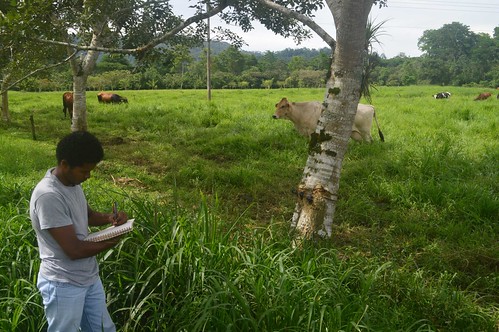
Pablo Chacón, a Guatemalan farmer
Pablo Chacón, a Guatemalan farmer, takes notes at the CATIE dairy farm and research center in Turrialba, Costa Rica, where he is studying agroforestry on an FAS-funded scholarship.
Pablo Chacón, a young Guatemalan farmer who is studying agroforestry at the Tropical Agricultural Research and Higher Education Center (CATIE) in Turrialba, Costa Rica, can now show the people in his home community how livestock grazing and hardwood forests can co-exist and prosper. Earlier this month, he told me and other Foreign Agricultural Service (FAS) visitors to CATIE that the education he gained from his FAS-funded scholarship to CATIE has equipped him to be a change maker.
“CATIE’s research in the tropics shows that degraded lands can be restored using combined forest and pastoral production systems,” Chacón said. “The benefits of trees in pastures are clear: The shade helps reduce stress in animals during the dry season, keeps moisture in the soil and retains the strength of pastures during the dry season.”
Indeed, through his studies at CATIE, Chacón learned that his family and other in his highland community not only can, but should, grow trees in pasture fields. The trees provide shade for the cows on hot days and also help fight erosion. Helping this young Guatemalan become an agent of positive agricultural change exemplifies the capacity-building programs that FAS executes throughout Latin America, particularly in Central America.
With a capacity built up over more than 100 years, the U.S. agricultural sector is, arguably, the most efficient in the world. It profits greatly from food and feed exports, including to Central America, where governments expressed the desire to recreate U.S. agricultural efficiency. The United States agreed to train farmers, processors and government policymakers to build stronger agricultural systems within their countries. We have made good on our word, and the technical assistance has been a win-win for our economies. For nearly a dozen years, since the CAFTA-DR trade agreement entered into force, USDA has been training Central American farmers to grow more food in ways that raise farmer incomes, minimize waste, reduce pests and safeguard the environment.
Pedro Chacón’s story is just one example of how USDA promotes agricultural practices that help small farmers in developing countries produce food more efficiently and sustainably. But how does this benefit the United States?
First, more efficient farming methods generate more income for farmers, who can then participate in the global economy. Second, all farmers use precious resources: The finite amount of arable land and water on Earth, combined with the challenge of feeding 9.6 billion people by 2050, will require farmers everywhere to be good stewards of our natural resources. Finally, the U.S. food and beverage industry, a thriving part of our economy, needs commodities – namely cocoa and coffee – that are not grown commercially in the United States. For every dollar of cocoa the U.S. imports, our own farmers sell another $2-4 of dairy, sugar and peanuts. And there are more than 130 million coffee drinkers in the United States. Central America is a main source of both cocoa and coffee, so USDA’s assistance in protecting the production of these commodities is also protecting a major driver of our domestic economy.

Tuesday, June 28, 2016

Reversing Pollinator Decline is Key to Feeding the Future

From the #USDA:


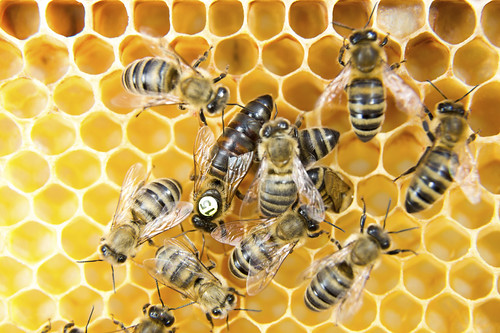
Bees in a bee hive
About 44 percent of managed honey bee colonies have been lost over the past year. (iStock image)
Without pollinators, we don’t eat—it’s simple as that—and, at the moment, large numbers of pollinators are dying.  With the world’s population projected to exceed 9 billion in just the next 30 years or so, that is not a good position for us to be in.
More than 90 species of U.S. specialty crops require pollination, and various animals, including bees, butterflies, moths, bats, and birds are a critical part of the pollinator-plant ecosystem.  Despite the myriad species of pollinators available, American farmers rely on one species of honey bee, Apis mellifera, for most of the pollinator services to pollinate their crops. Wild and managed bees together add $15 billion in crop value each year.
During the past 30-plus years, our nation’s pollinator populations have suffered serious losses due to invasive pests and diseases, such as mites and viral and fungal pathogens, exposure to pesticides and other chemicals, loss of habitat, loss of species and genetic diversity, and changing climate. Numerous species of butterflies, moths, and native bees are either extremely rare or are extinct.  A recent reportstates that 44 percent of managed honey bee colonies were lost in 2015-2016, largely due to infectious diseases carried by varroa mite larvae.
Recognizing the importance of honey bees and other pollinators to agriculture and the health of natural systems, President Barack Obama established the Pollinator Task Force to develop a national strategy to protect and promote health of pollinators.  The task force, co-chaired by the U.S. Department of Agriculture and the U.S. Environmental Protection Agency, released the Pollinator Research Action Plan in May 2015.  This comprehensive plan guides the federal agenda, including research, to restore and increase pollinator habitat and populations.
The National Institute of Food and Agriculture (NIFA) is making major investments to protect and promote pollinator health and protect U.S. agriculture.  Between 2008 and 2014, NIFA invested approximately $40 million in competitive and capacity grants devoted to research, extension, and educational programming on bee health.  Just this past month of May, NIFA announced a new, stand-alone $6 million funding opportunity through the Agriculture and Food Research Initiative’s Food Security Challenge Area to address some of the priorities of the Pollinator Research Action Plan.  In fiscal year 2017, NIFA plans to dedicate $10 million in funding for pollinator health research.
The following are a few, recent accomplishments resulting from NIFA funding provided to university, government, and private partners.
  1. The Bee Informed Partnership (BIP), an extension-led consortium of bee researchers and extension specialists, is working closely with beekeepers and queen breeders to demonstrate monitoring techniques for disease and mite management. The partnership is also working with queen breeders to use regionally appropriate practices for selecting mite and disease resistance traits.  Recent findings show that beekeepers who follow BIP guidelines to manage varroa mites have a 20.4 percent annual colony loss rate, which is a remarkable improvement.
  2. Washington State University (WSU) researchers successfully recovered germplasm from a unique honey bee strain from Kazakhstan to enhance the high quality genetic traits in honey bee stock.  The WSU Honey Bee Germplasm Repository will use cryopreservation (deep freeze) methods for long-term storage of bees to be used for breeding improved honey bee strains and for distribution to major honey bee queen producers in the United States.
  3. American foulbrood (AFB) is a prevalent and serious bacterial disease that affects honeybees. University of Nevada-Las Vegas researchers used NIFA funding to identify a virus that attacks AFB. Experimental trials to treat AFB infections have significantly reduced AFB levels and increased overall honey bee colony health.
  4. NIFA awarded $9 million to a team led by Michigan State University to study the performance economics and farmer perceptions of different pollination strategies.  Most recently, investigators provided the first-ever quantitative assessment of the status and trends of wild bees the United States.  Estimates showed that wild bees declined 23 percent across the United States between 2008 and 2013.  The declines appear to be a result of conversion of natural habitats to row crops, such as corn and soybeans, in the Midwest.
  5. NIFA-funding helped develop and distribute Science, Technology, Engineering, and Math (STEM)-based K-8 lesson plans—“Local Heroes: Your Hardworking Pollinators”—to 3,000 formal and non-formal educators.
  6. More than 100 land-grant colleges and universities receive national program leadership and funding support from NIFA to create extension education programs for their communities.  One example is the integrated pest management program at Lincoln University that helps farmers minimize pesticide use.
NIFA invests in and advances agricultural research, education and extension and seeks to make transformative discoveries that solve societal challenges.

Wildlife Underpass to Benefit Animals, Drivers

From the #USDA:


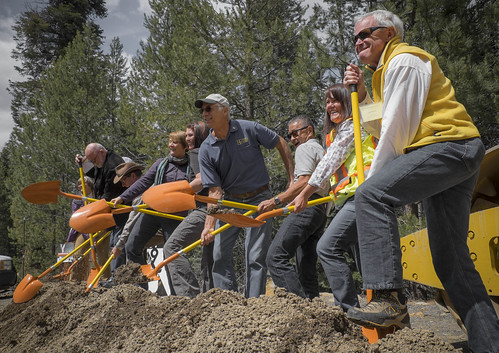
Members of the Highway 89 Stewardship Team
Members of the Highway 89 Stewardship Team ceremonially broke ground in early May to begin construction on two wildlife underpasses in northeast California. Photo credit: Sagehen Creek Field Station
Every year in the U.S. roughly 200 people are killed in as many as 2 million wildlife-vehicle collisions and at a cost of more than $8 billion, according to the Western Transportation Institute.
But the U.S. Forest Service’s Pacific Southwest Research Station scientists, along with their collaborators in the Highway 89 Stewardship Team, are paving the way to reduce those statistics with their latest project. The team broke ground last May on its second and third wildlife underpasses along a 25-mile stretch of Highway 89 between Truckee and Sierraville, California.
“Studies have shown that well-placed wildlife crossings, coupled with fencing, can reduce wildlife-vehicle collisions by as much as 75 to 100 percent,” said Sandra Jacobson, a wildlife biologist with Pacific Southwest Research Station.
While wildlife crossings exist across the country, the Highway 89 crossings will be unique in their value to science. Built to near identical dimensions and only located a mile apart from each other, the underpasses will allow scientists to manipulate conditions to learn what might make an underpass more appealing to wildlife.
For instance there might be things that cancel out noise or add cover within the tunnels that might promote use among smaller animals. The tunnels are adjacent to the University of California, Berkeley’s Sagehen Creek Field Station in the Sagehen Experimental Forest, which will give scientists access to the forest’s research facilities and monitoring equipment.
The $2.8 million project was funded largely in part by a Federal Highways Transportation Enhancement grant. The underpasses should be completed and operational by the fall.

Saturday, June 25, 2016

Sustainably Growing Vegetables in a Changing Climate: It’s about Working Together

From the #USDA:


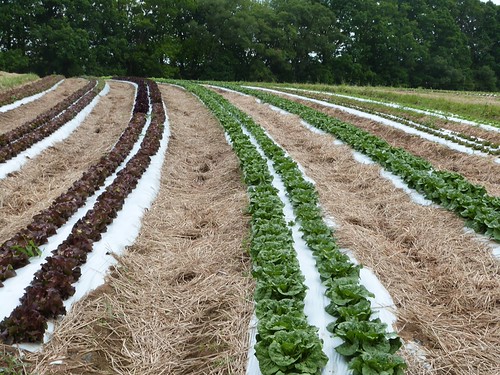
Soils protected from the impact of intense rainstorms by a layer of mulch between rows of lettuce growing at Harvest Valley Farm in Valencia, PA
Soils protected from the impact of intense rainstorms by a layer of mulch between rows of lettuce growing at Harvest Valley Farm in Valencia, PA. Photo credit: Franklin Egan, Pennsylvania Association of Sustainable Agriculture (PASA) Director of Educational Programs, a USDA partner
The Pennsylvania Association of Sustainable Agriculture (PASA) sponsored a field day on June 2 to talk about growing vegetables in a changing climate.  The discussion focused on climate change, its impacts on the farming system, and strategies to effectively adapt through increasing biodiversity on the farm.
PASA’s Director of Educational Programs, Franklin Egan, provided an overview of climate change trends and projections.  Dave King and others who farm 160 acres of vegetables and small fruit all sold within 25 miles of the farm, talked about their challenges and sustainable farming practices.  Among them, high tunnel beds have more aphids and pill bugs in the winter, downy mildew appears earlier in the summer, weeds are not any easier to manage especially without degrading soil health,  irrigation costs are rising, and deer pressure rises during droughts.  Practices being continuously adapted to respond to changing conditions include a highly diversified crop production system, use of beneficial insects, crop rotations, cover cropping, and rye straw mulch.
Several guest speakers contributed their expertise to the program, including John R. Taylor, Ph.D., Assistant Professor of Sustainable Agroecology at Chatham University, Lee Stivers, Penn State Extension Educator in Horticulture and Heather Manzo, Penn State Extension Educator in Ag Entrepreneurship & Community Economic Development.  Taylor used an ecological framework to present how different practices increase biodiversity within the larger landscape.  Building off of this, Stivers provided an overview of soil health and the win-win role cover crops, crop rotation and crop diversification play in both improving soil quality and removing carbon from the air.  Finally the day concluded with a presentation by Manzo on the many resources available from USDA agencies to protect the fiscal sustainability of the farm including crop insurance, NRCS conservation programs, FSA loan programs and many more.
Knowledge exchanged between scientists, educators and farmers facing the reality of climate change is essential to developing practical climate adaptation and greenhouse gas mitigation solutions.  PASA’s proactive effort brings resources together to confront the challenges of climate change and keeps its members profitable at producing healthy food while respecting the natural environment.  Funding for the Field Day, webinars, a pre-conference track at the recent 25th annual Farming for the Future conference, and a four part series of articles in the association’s newsletter Passages was supported by an EPA Environmental Justice grant (#96335501) for educational programs related to climate change and agriculture, and by the USDA Northeast Climate Hub.

Hill Farm Buzzing with Pollinator Success

From the #USDA:


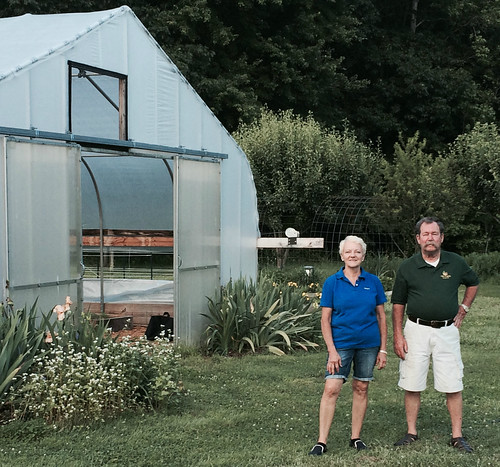
Farmers Scott and Susan Hill in front of their pollinator garden
Farmers Scott and Susan Hill in front of their pollinator garden. “We had an agricultural specialist visit our farm operations who told us we needed more pollinators,” explained Susan Hill. “We initially added two bee hives and established a pollinator garden. It was amazing, our tomato production increased by 25 percent in the first year!”. Photo by Hill Farm
Since it’s National Pollinator Week, it seemed fitting to express my thanks to farmers Scott and Susan Hill – who run the Hill Farm outside Charlottesville, VA.  Earlier, I had the chance to visit their 10-acre property former tobacco farm to see firsthand how hard they are working to grow a variety of produce for the local customers. But there are more little workers helping on the Hill Farm too. Pollinators!
In the United States, about one third of all agricultural output depends on pollinators. Insects and other animal pollinators are vital to the production of healthy crops for food, fibers, edible oils, medicines, and other products. It’s clear that pollinators are important to the Hill Farm for their production of their artisan and specialty varieties of several vegetables, including lettuce, asparagus, tomatoes and even golden beets.  And the first year, the addition of bees increased their tomato production by 25 percent.
The commodities produced with the help of pollinators generate significant income for agricultural producers and those who benefit from a productive agricultural community. An estimated $15 billion worth of crops, including more than 90 fruits and vegetables are pollinated by honey bees alone. Pollinators are also essential components of the habitats and ecosystems that many wild animals rely on for food and shelter.
You may have heard that in recent years pollinators have experienced in serious decline in their population. Helping pollinators is critical to healthy food systems and native ecosystems since virtually all of the world’s seed plants need to be pollinated. Here at USDA, we are working to promote pollinator health as part of White House Pollinator Health Task Force’s National Strategy to Promote the Health of Honey Bees and Other Pollinators.
One particular project involves USDA’s Agricultural Research Service (ARS) Bee Research Laboratory, which is focused on improving honey bee survival. ARS conducts research on bees and provides science-based beekeeping and management strategies to help bee keepers across the country build and maintain healthy honey bee populations. ARS is also organizing a national bee gene bank that will help preserve the genetic diversity of honey bees, especially for traits such as resistance to pests or diseases and pollination efficiency.
The National Agricultural Statistics Service recently issued the first Honey Bee Colonies Report that provides information about honey bee losses. The report is an important tool to better understand honey bee population dynamics. The National Institute of Food and Agriculture set a priority for pollinator health for their grant program that provides funding that address key problems in sustaining all components of food and agriculture.
ARS along with the Farm Service Agency and the National Resource Conservation Service are working with U.S. Geological Survey to monitor honeybee colonies in four states to evaluate the effectiveness conservation programs to enhance pollinator forage habitat and hive health.
This work by USDA is increasing our understanding of pollinators, their needs, and the threats to their health. In fact, Secretary Tom Vilsack signed a National Pollinator Week proclamation stating “pollinators such as honey bees, native bees, birds, bats, and butterflies contribute substantially to the economy of the United States and are vital to keeping fruits, nuts, and vegetables in our diets.”
USDA will be celebrating National Pollinator Week in the People’s Garden and USDA’s Farmers Market, managed USDA’s Agricultural Marketing Service.  Join us on Friday, June 24, from 9 a.m. to 2 p.m., to learn about bees, birds, bats and other pollinating animals at the sixth annual Pollinator Festival outside USDA Headquarters along 12th Street in Washington, DC. More than 14 USDA agencies, other federal departments and partners will celebrate the significance of pollinators.
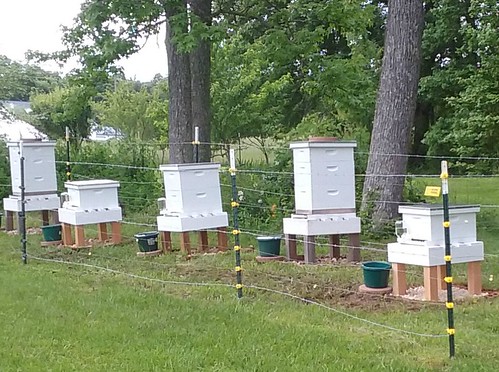
Bee hives on Hill Farm
Bee hives were installed on Hill Farm to increase their fruit and vegetable production. Susan is allergic to bees so she created the pollinator gardens. “I love irises. I get to pick a new variety every year for my birthday to expand our pollinator garden.” Photo by Hill Farm