Search This Blog

Showing posts with label KYF2. Show all posts

Tuesday, June 28, 2016

Wildlife Underpass to Benefit Animals, Drivers

From the #USDA:


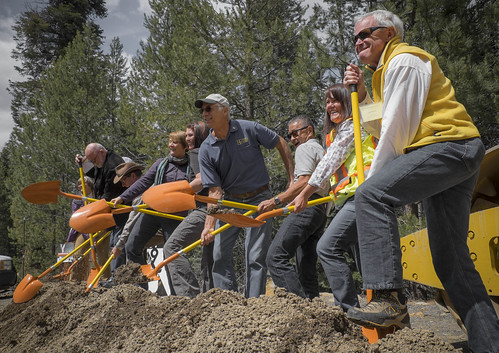
Members of the Highway 89 Stewardship Team
Members of the Highway 89 Stewardship Team ceremonially broke ground in early May to begin construction on two wildlife underpasses in northeast California. Photo credit: Sagehen Creek Field Station
Every year in the U.S. roughly 200 people are killed in as many as 2 million wildlife-vehicle collisions and at a cost of more than $8 billion, according to the Western Transportation Institute.
But the U.S. Forest Service’s Pacific Southwest Research Station scientists, along with their collaborators in the Highway 89 Stewardship Team, are paving the way to reduce those statistics with their latest project. The team broke ground last May on its second and third wildlife underpasses along a 25-mile stretch of Highway 89 between Truckee and Sierraville, California.
“Studies have shown that well-placed wildlife crossings, coupled with fencing, can reduce wildlife-vehicle collisions by as much as 75 to 100 percent,” said Sandra Jacobson, a wildlife biologist with Pacific Southwest Research Station.
While wildlife crossings exist across the country, the Highway 89 crossings will be unique in their value to science. Built to near identical dimensions and only located a mile apart from each other, the underpasses will allow scientists to manipulate conditions to learn what might make an underpass more appealing to wildlife.
For instance there might be things that cancel out noise or add cover within the tunnels that might promote use among smaller animals. The tunnels are adjacent to the University of California, Berkeley’s Sagehen Creek Field Station in the Sagehen Experimental Forest, which will give scientists access to the forest’s research facilities and monitoring equipment.
The $2.8 million project was funded largely in part by a Federal Highways Transportation Enhancement grant. The underpasses should be completed and operational by the fall.

Wednesday, June 22, 2016

Pollinator Week: Celebrating Blue Butterflies on the Great Lakes

For the #USDA:

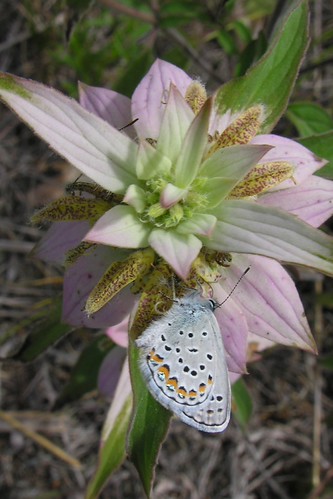
Karner Blue Butterfly
Karner Blue Butterfly on Dotted Horsemint on the Huron-Manistee National Forest. Photo credit: U.S. Forest Service
In honor of National Pollinator Week, the U.S. Forest Service joins organizations and individuals across the world to celebrate pollinators and share ways to help them survive and thrive.
Pollinators are vital to healthy ecosystems. Eighty percent of flowering plants require pollination by animals to successfully reproduce and produce seeds and fruits. Plants and pollinators together provide the basis for life by converting sunlight into food, materials for shelter, clean air, clean water, medicines, and other necessities of life.
Across the country, management of pollinators on national forests, grasslands and prairie is an important aspect of the Forest Service’s botany program. And, in the Great Lakes states, there is a unique opportunity to help pollinators while contributing to the overall health of the great lakes.
Located within the Great Lakes Basin, the Huron-Manistee National Forest’s Baldwin/White Cloud Ranger District provides important habitat for the endangered Karner Blue Butterfly. The butterfly depends on a rare natural community called savanna—open areas with scattered trees and abundant wildflowers. Savannas have declined to less than 1 percent of their former extent due to extensive reforestation, fire control efforts, human development, and the process of natural selection. To address this, the BWC Ranger District has been actively working to restore the area’s oak savanna habitat since 1992.
These savannas include upland and lowland areas, and are close to water bodies. Land managers use a number of treatment methods to reduce tree density and encroachment of trees and shrubs in order to promote growth of native grasses and nectar plants, especially wild lupine, the sole food source for the Karner Blue Butterfly when it is a caterpillar.
A dramatic increase in the BWC’s restoration efforts was made possible by Great Lakes Restoration Initiative funding. In 2015, the Forest Service managed 1,310 acres of savanna, a significant increase from its initial target of 400 acres per year.
And, it’s important to point out that none of this would be possible without the help of a small army of volunteers. Volunteers conduct surveys, restore habitat by seeding and planting native nectar species, and collect native nectar seed to be used for future restoration work.
The work is paying off.
Annual monitoring has found that Karner Blue Butterfly has occupied 14 areas of the BWC’s savanna areas through natural dispersion. They also found that other wildlife species in the area are increasing, including the red headed woodpecker, prairie warbler, frosted elfin, monarch butterflies and many more.
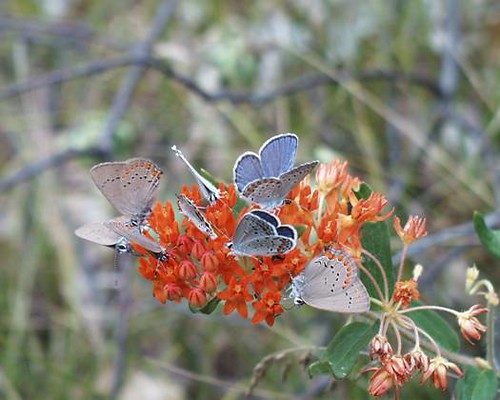
Cluster of Karner Blue Butterfly
Cluster of Karner Blue Butterfly on Butterfly Weed on the Huron-Manistee National Forest. Photo credit: U.S. Forest Service

Tuesday, June 21, 2016

Learn How to Bee a Friend during USDA’s Pollinator Festival this Friday, June 24

From the #USDA:


National Pollinator Week Festival graphic
USDA will be celebrating National Pollinator Week on Friday, June 24, from 10 a.m. to 2 p.m. outside USDA Headquarters along 12th St., Washington, D.C.
The best time to bee a friend to pollinators is now! Today is the first day of summer and the launch of National Pollinator Week, June 20-26. Around the globe, people are celebrating with events that emphasize the importance of pollinators and teach ways to save them. Here at USDA, we’ve issued theNational Pollinator Week Proclamation and are hosting our seventh annual Pollinator Week Festivalthis Friday, June 24 from 10 a.m. to 2 p.m. outside USDA Headquarters in Washington, DC.
The festival highlights the work of USDA agencies, other federal departments and institutions such as the United States Environmental Protection Agency, U.S. Fish and Wildlife Service, Smithsonian Gardens, and the U.S. Botanic Garden, who along with partners like the National Honey Board, Pollinator Partnership and University of Maryland Extension are working to address pollinator decline.
It’s a free (and fun) event for all ages to learn about the birds and the bees – as well as other pollinators like bats and monarch butterflies. Ask experts, participate in kid-friendly activities and watch live demonstrations about why you should care about pollinators, what is being done to protect them, and how you can help them not only survive but thrive. It’s as easy as planting a window box for pollinators.
Pollinators like bees and bats shouldn’t scare us. What should be worrisome is a world without them. The simple truth is that every one of us needs pollinators to survive. Pollinators visit flowers providing an essential ecological function – pollination, which in return produces fruits including many summertime favorites like watermelon.
You can see how such a crisis could affect our food system at the USDA Farmers Market, located next to the Pollinator Week Festival. Stop at the market for groceries or lunch and see signs labeling produce and prepared food offerings we’d be without if not for the hard work of bees, birds, butterflies, bats and other pollinators.
National Pollinator Week is an annual reminder that each of us can be a friend to pollinators. Learn ways to help in your community on the People’s Garden website at https://peoplesgarden.usda.gov/and don’t forget to share your actions, big or small, with us on Twitter @PeoplesGarden. Your neighborhood pollinators will thank you!
USDA’s Agricultural Marketing ServiceTransportation and Marketing Program oversees the People’s Garden Initiative for the Department.

Monday, June 20, 2016

USDA Blog » Secretary Vilsack Visits Puerto Rico to Talk Climate Change and Caribbean Agriculture

Agriculture Secretary Tom Vilsack visited the Caribbean Climate Hub in Puerto Rico earlier this month to lead a roundtable discussions with local agricultural officials, farmers and ranchers, USDA agency leaders, economic investors, and scientists, and to view first-hand the Hub’s pioneering work in climate change research, education and outreach.


USDA Blog » Secretary Vilsack Visits Puerto Rico to Talk Climate Change and Caribbean Agriculture

Friday, June 17, 2016

Get Outdoors and Enjoy the Age-Old Tradition of Ghost Stories by the Campfire

From the #USDA:


Ghost stories illustration
Ghost stories illustration by Mary Horning, US Forest Service.
Shadows start falling fast while you scurry to gather the last scraps of dead wood before it’s too dark – and too scary – to leave the relative security of the campsite on your favorite National Forest or Grassland. But, once the fire is safely lit, everyone gathers around to start roasting marshmallows and listen to…ghost stories!
No one really knows when or how the tradition of telling scary ghost stories around a campfire began. It just did, and we really like to do it. In fact, there are many books out there that provide those with less creative story telling talents to get a group of outdoors enthusiasts nervously shifting their eyes and jumping at the sound of what was certainly a twig being broken by the heavy foot of a monstrous creature in the night or, yes, even a clumsy ghost.
There are many reasons most of us, to some degree, are afraid of the dark especially while outside. Some believe it’s simply an evolved trait that kept us from, well, being eaten by the above mentioned monstrous creature in the night.
All I know is as a creative writer myself, I really looked forward to trying out my story telling skills around a campfire. Sometimes my spooky tales are really creative like the ghost of Isabella who haunted a nearby meadow searching for her child who wandered off and was never seen again.
And, sometimes, my stories are complete rip-offs from classics like Washington Irving’s headless horseman, albeit with a little twist. My headless dude was a lumberjack who literally lost his head in a bizarre tree cutting accident that really challenged my imagination to the delight of those around me.
But, bad, good or just silly—ghost stories that really scare you are best served around a campfire with friends and family. So start your summer this Great Outdoors Month and Get Outdoors with some really spooky and memorable fun!

Thursday, June 16, 2016

Knitting Together Treasured Landscapes with the Forest Legacy Program

From the #USDA:


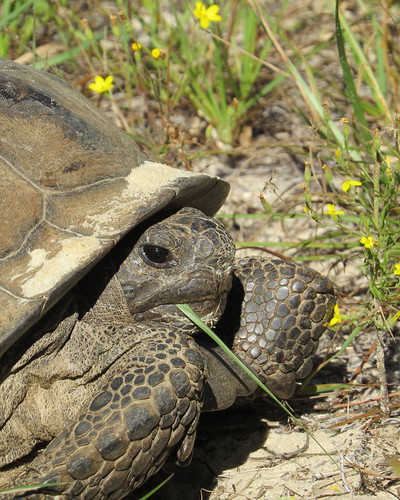
Gopher Tortoise
Gopher Tortoise. Photo by Dirk Stevenson of the Orianne Society.
Did you know the Forest Legacy Program is the only federal grant program focused on the permanent protection of important private forestland, conserving over 2.5 million acres to date?
This incentive-based and voluntary program managed by the U.S. Forest Service conserves working forests and environmental benefits for communities. It does this through land acquisition and conveyance to state management as well as through the establishment of conservation easements that allow families to maintain ownership of their land.
Forest Service researchers estimate that nearly 600,000 acres of forest are lost to development every year, with similar trends projected into the future. As demographic, commercial and climate change pressures intensify and threaten the integrity of some of the nation’s most treasured landscapes, the U.S. Forest Service has consistently supported efforts to assist and empower private landowners to conserve private lands.
One of these efforts is the Land and Water Conservation Fund (LWCF), which is funded through earnings from offshore oil and gas leasing royalties.
The LWCF expired last fall, but this Spring Congress reauthorized the fund with $450 million to continue this important work in coming years. With these and other funds, the Forest Service has been able to provide $100 million for 20 proposed projects across the country in 2017. These projects help families and communities preserve private forests while protecting and knitting together intact landscapes.
Selected projects are frequently championed by local communities that recognize the potential of this program to conserve not only the land and its resources, but the cultural identity that defines their landscapes.
One great example of what can happen when people utilize this program is the Lentile Longleaf Pine Tract in Georgia. This locally-driven work to protect a significant contiguous longleaf pine tract will secure the largest gopher tortoise tract in the state that includes over 1,800 acres of forested wetlands and cypress ponds, and provides the region with the many other benefits forests provide. Protected by land acquisition of over 7,000 acres of working forestland, the tract will buffer against imminent agricultural development that has fragmented wildlife habitat through much of the state.

Navajo and Hopi Expand the Community Collaborative Rain, Hail and Snow Network

From the #USDA:


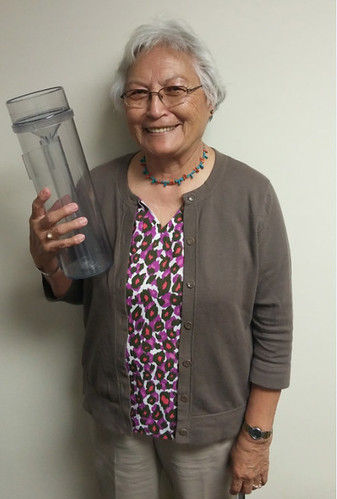
Susie Wauneka
Susie Wauneka is a member of the Navajo Nation and has been an avid CoCoRaHS observer since December 2015.
Susie Wauneka has discovered a unique way to serve her community; by watching the weather. Wauneka is a proud member of Navajo Nation and is a Navajo Community Health Representative, providing critical health care services for members of the Nation. In December 2015, she discovered yet another way to serve—by using a Community Collaborative Rain, Hail and Snow (CoCoRaHS) precipitation gauge to track the amount of rain and snow that falls.
The CoCoRaHS network is a unique grassroots network of thousands of trained volunteers of all ages and backgrounds working together to improve meteorological science by measuring and reporting precipitation amounts (rain, hail, and snow). CoCoRaHS is the largest provider of daily precipitation observations in the United States. The data from these observations are used by USDA and theNational Oceanic and Atmospheric Administration (NOAA) for tools such as the United States Drought Monitor.
Like many weather-monitoring projects, CoCoRaHS was borne out of a disaster, the Spring Creek flood that struck Fort Collins, Colorado in July 1997, killing five people.  In response to the flood, a team at the Colorado Climate Center at Colorado State University led by Nolan Doesken, developed a network of volunteer observers along the Colorado Front Range. During the 2000s, CoCoRaHS expanded beyond Colorado to become a national network, even reaching the White House that joined CoCoRaHS in 2015 using a gauge monitored by the National Park Service.
“Precipitation is our water supply,” said Nolan Doesken, State Climatologist for Colorado and the founder and director of CoCoRaHS. “What falls from the sky varies greatly from year to year and also from place to place even just a few miles apart. Volunteers do a fantastic job of helping track precipitation locally and nationally.  The more volunteers who help out, the better we can track and appreciate this critical resource.”
In March 2016, President Obama issued a Presidential Memorandum on Drought which outlined six goals to better coordinate Federal support for drought-related efforts, help communities reduce the impact of current drought events, and prepare for future droughts. Goal One focuses on data collection and integration and outlines the need for the Federal government to better facilitate Citizen Science initiatives throughout the country. In carrying out this goal, USDA and NOAA have been working to expand the reach of CoCoRaHS gauges into the Southwest, a region typically data-sparse.
Recently, with funding from the Natural Resources Conservation Service, USDA purchased 72 CoCoRaHS gauges for Navajo and Hopi Tribal lands. The gauges were delivered by National Weather Service (NWS) Scientists to Navajo Nation chapter houses and to the 15 villages on the Hopi Reservation. NWS staff have begun to train volunteers to accurately report precipitation. Susie Wauneka is just one of the observers whose measurements now contribute to filling the data gap in the Southwest.
Through the expansion of the CoCoRaHS initiative, USDA and NOAA are engaging citizens in the process of collecting data and ultimately working to create more drought-resilient communities. Community and tribal leaders throughout the Southwest now have the opportunity to help our nation become more drought resilient through better data.
For more information or to become a CoCoRaHS observer please visit http://www.cocorahs.org/.
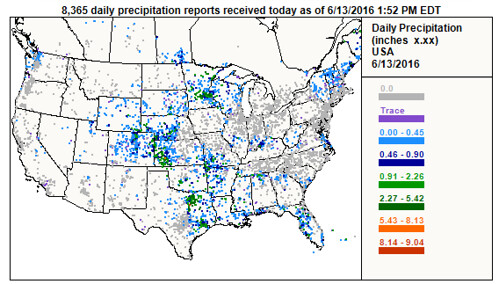
Daily Precipitation Reports chart
CoCoRaHS is the largest provider of daily precipitation observations in the United States.

Students Intrigued Enough to ‘Worm’ Their Way into Ag Science

From the #USDA:


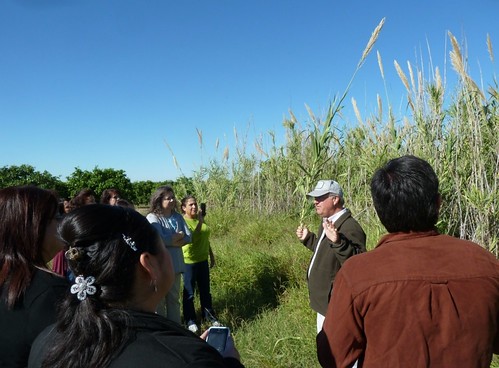
Future Scientists Program teachers in the field with ARS research entomologist John Goolsby
Future Scientists Program teachers in the field with ARS research entomologist John Goolsby, learning about his research on bio-control for Giant Reed (Arundo donax) in the Rio Grande Valley.
This post is part of the Science Tuesday feature series on the USDA blog. Check back each week as we showcase stories and news from USDA’s rich science and research portfolio.
The goal of USDA’s Hispanic-Serving Institutions National Program (HSINP) Future Scientists Program is to enhance the scientific knowledge of teachers, helping them to become more effective in encouraging student interest and progress in science. Teachers in the program attend two-day summer institutes at Agricultural Research Service (ARS) labs nationwide, where scientists introduce them to various research projects. ARS researchers share scientific knowledge with the teachers, who then share it with their students to encourage them to become future scientists.
One of the catalysts for this lofty goal is a tiny, inconspicuous and innocuous caterpillar—the corn earworm that wreaks havoc in corn fields nationwide as an agricultural pest.  This program began in 2003.  I brought 10 teachers into the ARS Southern Plains Agricultural Research Center (SPARC) in College Station, Texas, for a summer institute that included teachers studying in corn research plots searching for corn earworm caterpillars in 100-degree heat! It was the first time I made caterpillars the focus of this program.
Since then, the program has expanded to include students visiting various ARS research labs. I have also harnessed the caterpillar’s “intrigue factor,” since students are intrigued by insects.  They are intrigued by the magic of metamorphosis—particularly when the caterpillar transforms into a beautiful moth.  They are intrigued that they can learn by observation.  They are intrigued enough to ask questions about the worm and then conduct research projects to find answers. The ARS Southeast Area insectary in Stoneville, Mississippi, generously supplies the program with all the worms we need.
Students conduct research on the worms and then make presentations at the end of their school year at their local ARS lab at a Future Scientists Student Research Presentation Day. They also take tours and learn about other research projects at the labs.
One student who presented in 2004 subsequently became a student summer worker at SPARC while in high school, continued working while studying entomology at junior college, and has just received a scholarship to attend Texas A&M University.
This year, his teacher brought four of her current fifth-graders to present their research on the worm.  These are just four of the 86,000 students (grades K through 12) whom we have interacted with in the past 21 years of the Future Scientist Program. During that time, 5,600 teachers have studied Ag Science at 36 of the ARS labs nationwide.

Thursday, June 9, 2016

The Nutrient Challenge of Sustainable Fertilizer Management

From the #USDA:


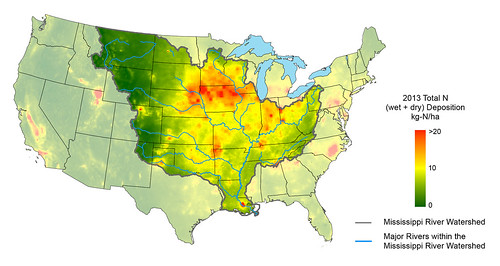
Map of nitrogen deposition in the United States.
This post is part of the Science Tuesday feature series on the USDA blog. Check back each week as we showcase stories and news from USDA’s rich science and research portfolio.
It’s a case of “darned if you do, darned if don’t.”
The global population is projected to reach 9.7 billion by 2050 and we will have to grow a lot more food to feed all of those people.  Some might think we would need to use a lot more fertilizer; however, too much fertilizer—nitrogen and phosphorus—can be disastrous to ecosystems, affecting the water, land, air, and biodiversity.  The nutrient challenge is to improve fertilizer efficiency to produce more food and energy crops while creating less pollution.
Each year farmers apply millions of tons of manufactured fertilizer, of which 40-80 percent is lost to the environment.  Unfortunately, fertilizer run-off that ends up in lakes, rivers, and estruaries can lead to eutrophication, which is harmful to the ecosystem.  Eutrophication is a process where fertilizer stimulates dense marine and fresh water plant growth, which can lead to the death of animal life due to lack of oxygen.  Eutrophication is responsible for the 2014 algae bloom in Lake Erie that poisoned drinking water in Toledo, Ohio.
At sea, eutrophication may lead to dead zones; there are nearly 500 eutrophic and hypoxic (low oxygen) zones around the world, including 12 in the Chesapeake Bay.  Excess fertilizer also plays a role in acidification and is linked to unhealthy bleached coral.
NIFA is working to monitor and mitigate the effects of excess fertilizer and prevent its occurrence in the first place.  One example is NIFA support of the National Atmospheric Deposition Program, which tracks how airborne nitrogen is deposited in the United States and contributes to the dead zone in the Gulf of Mexico.  The agency provides $500,000 in Hatch Act funding for state agricultural experiment station research and coordinates $1.8 million per year of interagency funding in support of the program
NIFA has also provided millions of dollars from various grant programs to support fertilizer-related research, education and extension projects.  These efforts include improving the efficiency of fertilizers, promoting more effective use of fertilizers, mitigating and reducing strategies, and developing precision technology.
The fertilizer industry has recognized the problem.  The U.S. Fertilizer Institute and the International Plant Nutrition Institute promotes the use of the “4Rs” as a management practice for farmers. The 4Rs include: right source/kind (match the fertilizer type to crop needs); right time (make nutrients available when the crop needs them); right rate (match the amount of fertilizer to crop needs); and the right place (keep nutrients where crops can use them).
Nitrogen use efficiency is quantifiable; the more efficient the uptake of nitrogen by the plant, the less escapes into the environment.  Existing and future NIFA-supported research, coupled with the application of the 4Rs, will help solve the nutrient challenge.
NIFA invests in and advances agricultural research, education and extension and seeks to make transformative discoveries that solve societal challenges.

Saturday, June 4, 2016

The Wonders of Wood Buildings

From the #USDA:


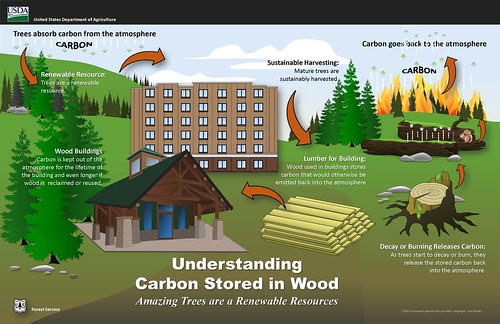
Understanding Carbon Stored in Wood infographic
Forests and wood products are powerful tools to help mitigate the impacts of climate change. (Click to view a larger version)
Trees do plenty of work to sequester carbon on their own, but many forests are not as healthy as they should be due to fire suppression and climate change. This can leave trees vulnerable to large scale insect damage, fire or drought, and much of the carbon stored by forests is lost to the atmosphere as trees die.
The U.S. Forest Service is committed to the storage of carbon using wood products through the green building and wood products strategy. This strategy involves putting people to work in rural communities, enhancing resiliency of our ecosystems, and sequestering carbon by promoting the use of wood products in large building construction.
By using wood instead of, or along with, concrete and steel, large amounts of carbon can be stored in the walls of homes and offices, significantly reducing emissions associated with the production of other materials. Also, using sustainable timber harvests for emerging wood product technologies like cross-laminated timber, can stimulate local economies in timber country while sequestering carbon in long-term wood products.
Cross laminated timber is a wood panel made of layers of dried lumber boards stacked in alternating directions, glued and pressed to form solid panels. These panels have extraordinary strength and are being used as walls, roofs, and floors. D.R. Johnson Mill in Riddle, Oregon announced recently that it will be the first U.S. mill certified to produce cross-laminated timber for high rise construction.
Putting our own green building strategy to work, the Forest Service is working to increase the use of locally milled timber in all new agency buildings and facilities. Since 2011, we have used wood to build the Angeles National Forest Supervisor’s Office, Camino Real Ranger Station, Corvallis Laboratory, Juneau Laboratory, and Enomee Ranger District Office.
And in the private sector projects like the Bullitt Center in Seattle are showcasing the use of sustainable, Forest Stewardship Council certified wood products to efficiently create new buildings that will last and become testaments to sustainable forest management. The Bullitt Center sequesters 1,703 metric tons of carbon in its walls.
The trees in our national forests can help mitigate the effects of climate change in so many ways, and the Forest Service is committed to helping neighboring communities by promoting sustainable development with trees and wood.

Wednesday, June 1, 2016

Climate Hubs Help APHIS Adapt to Climate Change

From the #USDA:


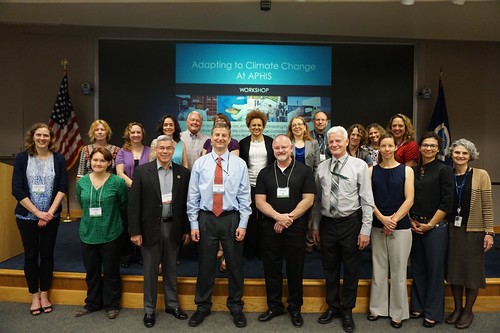
Climate Change Adaptation Workshop participants
Participants in the climate change adaptation workshop. Photo credit: Joseph Vorgetts
All this month we will be taking a look at what a changing climate means to Agriculture. The ten regional USDA Climate Hubs were established to synthesize and translate climate science and research into easily understood products and tools that land managers can use to make climate-informed decisions. The Hubs work at the regional level with an extensive network of trusted USDA agency partners, technical service providers, University collaborators, and private sector advisers to ensure they have the information they need to respond to producers that are dealing with the effects of a variable climate. USDA’s Climate Hubs are part of our broad commitment to developing the next generation of climate solutions, so that our agricultural leaders have the modern technologies and tools they need to adapt and succeed in the face of a changing climate.
How important will climate change considerations be in your work in the next 3-5 years?  That was one of the questions USDA employees were asked in mid-April at the start of a two-day workshop at the Animal and Plant Health Inspection Service (APHIS) in Riverdale, Maryland.  The hands-on training session, facilitated by APHIS’ Climate Change Working Group, the Forest Service, Northern Forests Climate Hub and the Northern Institute of Applied Climate Science, was designed to help APHIS employees from various program and support units incorporate climate change considerations into their actual projects.
The workshop emphasizes a structured yet flexible adaptation approach developed by the Forest Service to integrate climate change considerations into project planning and activities. The five-step process includes 1) defining the area of interest, 2) assessing climate change impacts, 3) evaluating management objectives, 4) identifying and implementing adaptation tactics, and 5) monitoring and evaluating the effectiveness of the actions.
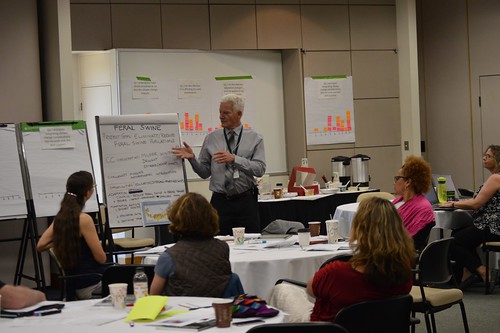
APHIS’ Thomas Hall leading group discussion
APHIS’ Thomas Hall leads a group discussion about climate change and feral swine management. Photo credit: John Scott
Workshop participants used this process to analyze how climate variability and uncertainty and shifting geography might affect APHIS’ mission in addressing the presence and movement of agricultural pests and diseases.  For instance, would exotic animal and plant species—already proven to be adaptable to changing conditions—be better equipped than native species to survive climate change?  How might storm surges aid in the spread of wood-borne pests?  How might certain changes in climate in other countries affect shipping routes, import seasons, and other trade issues?
The workshop challenged participants to consider new approaches to adapting to climate change. A majority predicted they would apply the adaptation workbook process to another project in the next year.  Nearly every respondent said they would share what they had learned with people inside andoutside the agency.
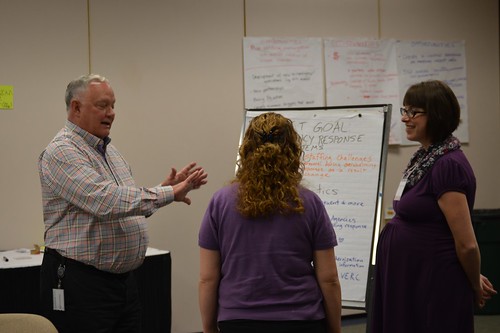
APHIS’ Richard Walker discussing possible effects of climate change
APHIS’ Richard Walker discusses the possible effects of climate change on emergency management response, with APHIS’ Denise Sylvester (center, an investigation and compliance specialist) and Danielle Shannon (right, USDA Northern Forests Climate Hub coordinator). Photo credit: John Scott
As to the question about how likely climate change considerations would be in their work in the next 3-5 years?  On a scale of 1-10, workshop participants, on average, rated that an 8.
Like the climate, the times, they are a-changing too.
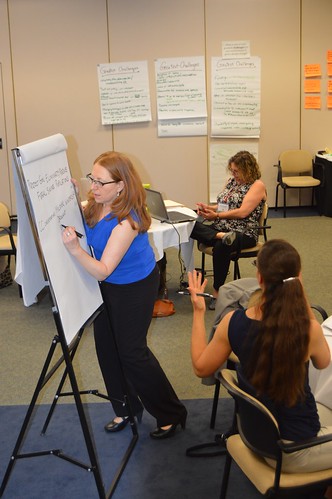
APHIS’ Marlene Cole recording a group's brainstorming efforts
APHIS’ Marlene Cole records a group’s brainstorming efforts regarding climate change on feral swine management. Photo credit: John Scott

Climate Data Tools for Informed Decisions

From the #USDA:


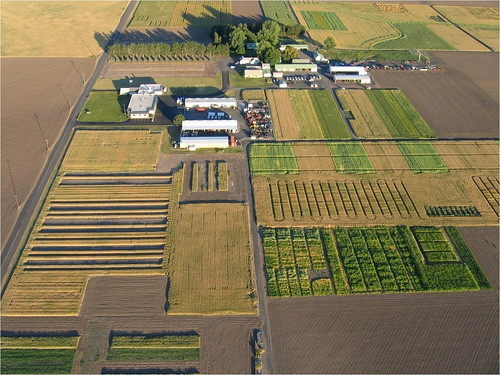
Aerial view of GRACEnet test plots
Aerial view of GRACEnet test plots at the Columbia Plateau Conservation Research Center in Pendleton, Oregon. Photo by Oregon State University.
This post is part of the Science Tuesday feature series on the USDA blog. Check back each week as we showcase stories and news from USDA’s rich science and research portfolio.
Responding to Climate Variability is one of the goal areas of the REE Action Plan.  The objective is to develop science-based knowledge to address climate variability, position agricultural communities to reduce emissions of greenhouse gases, and enhance carbon sequestration.
Many valuable USDA accomplishments for the year 2015 were the result of cross-divisional teams that developed useful tools to support decision-makers with research-based data.  Knowing weather and climate patterns–driving forces behind the success or failure of cropping systems–is vital information to land managers.  One such tool, AgroClimate, supported by REE and the National Oceanic and Atmospheric Administration (NOAA), helps users manage climate risk with tools that provide information on crops best suited to grow in their region, based on water availability and the amount of water a crop will use.
Useful to Usable (U2U) is an integrated research and extension project funded by the REE working to improve farm resilience and profitability in the North Central United States by transforming existing climate data into usable products for the agricultural community.  The goal is to help producers make better long-term plans on what, when, and where to plant, and how to manage crops for maximum yields and minimum environmental damage.
Understanding the impact of climate change on agricultural production and food security is crucial to help feed, clothe, and fuel a growing world population.  REE joined with multiple institutions to model the economic responses of global agriculture to scenarios of climate change through 2050, including changes in harvested area, international trade, production, consumption, and price.   All scenarios modeled show the potential for significant increases in prices for food and agricultural commodities, raising important concerns about food security, particularly for poor households.
Ensuring nutritional security and supplying the calories for an ever-growing population presents a major challenge because of a combination of factors.  REE has formed transdisciplinary teams to enable agriculture to adapt to a changing climate through the Genetics by Environment by Management (GxExM) approach, seeking to increase actual farmer yields rather than increasing potential yields offered by crop genetic potential.
Under the heading of GRACEnet – Greenhouse gas Reduction through Agricultural Carbon Enhancement Network, REE scientists are generating information that is needed by producers, program managers, and policymakers concerning carbon storage in agricultural systems.  The goal is to develop practices that enhance carbon sequestration in soils and to provide a sound scientific basis for carbon credits and trading programs.
These achievements represent just a sample of the accomplishments across the Department in the effort to respond to changes in the climate.  USDA’s research, education, and extension programs provide the knowledge necessary to adapt agricultural and forestry production practices appropriate to changing climate and to ensure knowledge researches our many partners and the public.

Friday, May 27, 2016

Nutritional Security Through Sustainable Agriculture

From the #USDA:


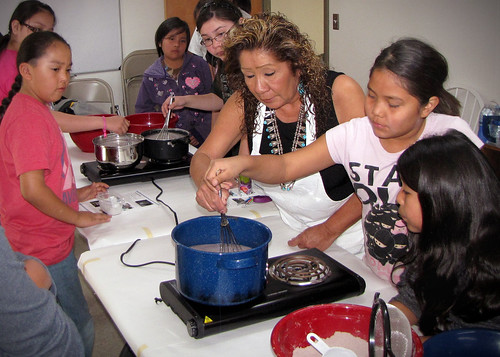
Bertha Etsitty helping 4-H members make traditional blue corn mush
Bertha Etsitty helps 4-H members make traditional blue corn mush during a club activity. Photo by Leah Platero
Nutritional security is defined as “a situation that exists when all people, at all times, have physical, social, and economic access to sufficient, safe, and nutritious food that meets their dietary needs and food preferences for an active and healthy life.”
Achieving nutritional security in the context of the burgeoning population, climate change, diminishing land and water resources, environmental degradation, and changing incomes and diets will require not just approaches to sustainably producing more food, but also smarter ways of producing food, dealing with food waste, and promoting improved nutritional outcomes.  The National Institute of Food and Agriculture (NIFA) invests in and advances agricultural research, education, and extension and seeks to make transformative discoveries that solve these societal challengesNIFA’s portfolio of support for nutritional security and sustainable agriculture includes literally thousands of impactful efforts across our nation; below are just a handful that speak to the transformative work transforming lives.  For example:
Healthy lifestyles are critical to address obesity and diabetes, which are rampant in Native American communities. To this end, Southwest Indian Polytechnic Institute in New Mexico has created the successful Seven Generations of Native Health programs, which include topics such as understanding food labels, food consumption, and cholesterol.
Almost 80 percent of the consumptive use of freshwater is in the food we consume, and agricultural irrigation accounts for 62 percent of freshwater use in the United States.  Such water use cannot be sustained in many parts of our nation, considering the intense weather events and droughts, combined with depletion of groundwater. University of Maryland researchers have developed sensors and control systems for commercial nursery and greenhouse operations that can reduce water use by 40 to 80 percent.
Many global cereal production systems are not irrigated and are located in semi-arid regions. The limited precipitation and often extreme temperatures in these regions make these systems vulnerable to climate change. To address these and associated challenges, the Regional Approaches to Climate Change project in the Pacific Northwest promotes practices that are improving soil nutrient management, diversify cropping systems, and anticipating changes in pest pressure.
Food waste losses are greatest at the level of the consumer, and reducing these losses can have global impacts.  For example, Elena, a mother of two children, experienced food insecurity because she did not have enough money to buy more food. But, after participating in the Expanded Food and Nutrition Education Program’s Plan, Shop, $ave lesson, Elena began cooking more purposefully.  “I didn’t look at what I had. Now I look at the pantry to see what I can use before I shop,” she said.  “It’s saving me money.” Thankfully, Elena now has a better idea of how much her children need, wastes less, and focuses on healthier meals – but there are many more people who are still in the dark about food economy.
NIFA invests in and advances agricultural research, education and extension and seeks to make transformative discoveries that solve societal challenges.