Search This Blog

Showing posts with label USDA. Show all posts

Sunday, April 16, 2017

View from the Malheur National Forest in North Eastern Oregon


View from the Malheur National Forest in North Eastern Oregon.

Wednesday, March 15, 2017

Sage Brush Seedlings


Sage brush seedlings grown in production fields for restoration at the USDA Forest Service Boise National Forest at the Lucky Peak Nursery.

Thursday, February 2, 2017

USDA Blog » In Texas, Tradition and Innovation are “Continuing Resolutions” between Tribe and NRCS

This year, the Natural Resources Conservation Service (NRCS) will continue its resolution to build on its partnerships with Indian Country by supporting sustainably-managed crops and innovative ways to produce crops that are compatible with tribal cultures.


USDA Blog » In Texas, Tradition and Innovation are “Continuing Resolutions” between Tribe and NRCS

Friday, January 13, 2017

Regional Partnerships Help De-Clutter Arizona Grasslands

From the #USDA:


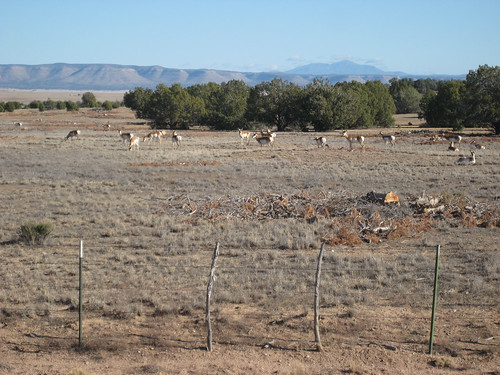
Pronghorn in Arizona
Pronghorn are able to return to brush controlled grasslands in Northern Arizona that were previously dominated by invasive-woody brush. Photo: Steve Cassady.
A popular new year’s resolution is to de-clutter our homes. But what if a clutter-free home was the only way you could survive and thrive?
Across Arizona, there is wildlife living in grasslands impacted by poorly-planned fencing and woody invasive brush. Invasive plant species, such as pinion juniper and mesquite that grow and spread quickly, create obstacles in grassland habitats that make it difficult for pronghorn and other migratory, grassland-dependent species to avoid predators.
Further, these invasives crowd out native grasses that provide food for wildlife and livestock, reduce soil erosion and help soil absorb precipitation, which is vital to replenishing supplies of groundwater and improving water quality.
USDA’s Natural Resources Conservation Service (NRCS), the Arizona Game and Fish Department, Arizona Department of Agriculture, Arizona Department of Environmental Quality, the U.S. Fish and Wildlife Service and other partners are working together to restore grassland habitat across Arizona through the Regional Conservation Partnership Program (RCPP).
In the first year alone, through RCPP, the partnership modified more than 28 miles of fence on the eastern and southern Arizona grasslands. By replacing existing fence with wildlife-friendly fencing, migrating wildlife are now able to travel easily among grasslands. Nearly 14,500 acres of wildlife habitat have been restored to native grasslands. Forty watering facilities were added across the project area, making water available to 320,000 acres of wildlife habitat.
These coordinated partnership efforts make funds for the projects go further and also make sure that the agencies do not duplicate each other’s efforts. “Because our field offices talk regularly with local partners during the planning process, we can avoid unintentionally duplicating each other’s work,” said Emily Fife, NRCS’ assistant state conservationist for programs in Arizona. “RCPP provides us the framework we need to work together.”
These conservation efforts are good for the overall environmental health of the ecosystems, and the economic health of nearby communities through recreation available in wildlife habitat.
“The RCPP allows us to focus our efforts on a larger landscape with several landowners, rather than a single landowner,” said NRCS state biologist Stu Tuttle. “This broad impact helps keep Arizona wildlife off the Endangered Species List through the recovery of their habitat.”
Since 2014, NRCS has invested a total of $825 million in 286 RCPP projects nationwide, bringing together more than 2,000 conservation partners who have committed an estimated $1.4 billion in financial and technical assistance.
Secretary Vilsack today announced USDA is accepting pre-proposals for Fiscal Year 2018 RCPP funding. NRCS will award up to $252 million dollars to locally driven, private-public partnerships that improve the nation’s water quality, combat drought, enhance soil health, support wildlife habitat, and protect agricultural viability.
Pre-proposals are due April 21. For more information on how to apply, visit the RCPP website.
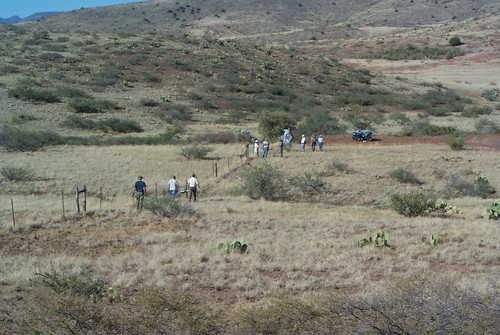
People walking beside fence
The bottom barb wire on a fence is replaced with smooth wire at least 20 inches from the ground fence to remove a barrier for pronghorn movement between healthy grassland habitats. Photo: Rana Tucker.

Thursday, January 12, 2017

Here’s a New Year’s Resolution that You’ll Want to Keep

From the #USDA:


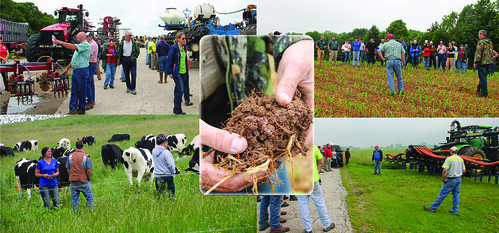
A composite of farm field days participants
Farm field days show participants the most innovative farming methods.
The New Year is here and most of us are making resolutions about how to improve our lives in 2017. Well, we at the Natural Resources Conservation Service believe that learning about farming and conserving natural resources should be at the top of everyone’s list of resolutions. How can you make that happen? By signing up for a farm field day. Field days will give you plenty of opportunities to learn about how good agriculture is done and boost your knowledge of how to conserve and protect natural resources.
If you’re fortunate enough to be in or near Wisconsin, be sure to visit the Lower Fox River Watershed. It’s just south of Green Bay and home to the Great Lakes Demonstration Farm Network where you can see leading-edge conservation practices that are specifically designed to help farmers reduce how much phosphorus enters Green Bay and improve water quality in the Great Lakes.
Created by the USDA Natural Resources Conservation Service (NRCS) and the Great Lakes Commission, the Great Lakes Demonstration Farm Network, the first of its kind in Wisconsin, highlights conservation systems that are best suited for farms and farmers in the Lower Fox River Watershed. At field days, members of the network show aggies and non-aggies alike how traditional and new conservation systems can reduce soil erosion and nonpoint source pollution that picks up and carries away natural and human-made pollutants, depositing them into lakes, rivers, wetlands, coastal waters and ground waters.
What will you see and learn at one of the network’s field days? Here are a couple of examples. Visitors to a field day held this summer by operator Scott Theunis at the Tinedale Farm in Wrightstown saw some great examples of innovative conservation systems in action. Scott highlighted conservation on his dairy operation. If you were there, you would have seen how planting radish and applying cover crops can improve soil health, and been able to compare the condition of a corn field that has not been tilled with one that was tilled with conventional methods.
“This is an example of the commitment these demonstration farms are making,” said Barry Bubolz, NRCS District Conservationist and Area Great Lakes Restoration Initiative Coordinator. “Trying something out of the box and learning from trials to help other farmers, and figuring out what works.”
At another field day in the Lower Fox, Dan Brick, of Brickstead Dairy in Greenleaf, highlighted the application of manure on a corn field. His visitors saw a manure surface applicator unit capable of putting 10,000 gallons of manure on the field. It was done without disturbing the soil, and Brick and neighboring farmers could not see (or smell) any evidence during the time of the application.
Dan’s guests also saw runoff caused by rain enter an edge-of-field monitoring station on his property. Edge-of-field monitoring helps farmers improve and verify the effectiveness of agricultural conservation practices and systems installed on their farm. The monitoring equipment is installed along the edge of a field and the quality of water draining from the field is tested year-round for a period of four years.
“We can show how producer’s investments pay off, in putting conservation practices on the ground,” said Tom Krapf, NRCS Assistant State Conservationist. “This shows the general public how producers are connected and how we’re helping farmers improve area water quality.”
With many field days held April through August nationwide, there’s sure to be one near you. Contact your local USDA Service Center to ask about farm field days in your area. And while you’re at it, speak with the folks at your local NRCS about how they can help you protect and conserve natural resources on your property and in your community.
Happy New Year!
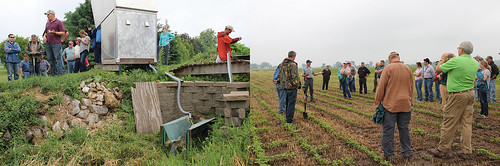
A composite of participants learning about the edge-of-field monitoring station and other approaches
Participants learned how the edge-of-field monitoring station works and various interseeding approaches.

Wednesday, December 28, 2016

Between Two Worlds: Frank Lake heals the land using modern science and traditional ecological knowledge

From the #USDA:


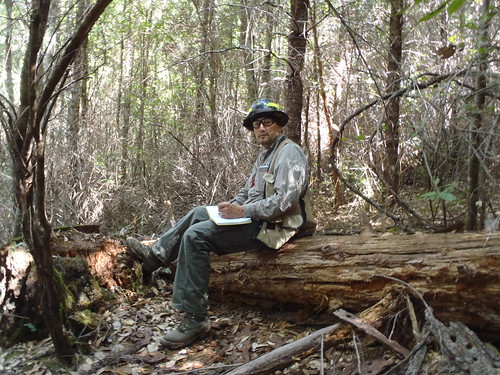
Frank Lake, research ecologist with the U.S. Forest Service’s Pacific Southwest Station, jots down some field notes after visiting a forest study plot in northern California. (Photo Credit: Kenny Sauve, Western Klamath Restoration Partnership).
Frank Lake grew up learning traditional practices from the Karuk and Yurok Tribes. He developed an interest in science which led to his career choice as a research ecologist with the U.S. Forest Service’s Pacific Southwest Research Station. As a young man, he didn’t realize how unusual the experience was of spending time in two parallel worlds.
The Megram Fire of 1999 was a turning point for Lake, and the Forest Service as well. It was one of California’s largest wildland fires ever and the agency grappled with how to restore salmon in the burned over watershed. Lake knew that local tribal elders considered “fire as medicine,” and an important part of the ecosystem. The link between fire and fish is through water, they told him, and “water is sacred to all life.” Fires could reduce the number of trees in overly dense forests and improve spring flow needed by rivers to support healthy fisheries.
“With the Megram Fire, we experienced how a big fire affected fish and watersheds, and the Forest Service really started to consider traditional ecological knowledge (TEK),” Lake said. Over the last 15 years, federal agencies established government-to-government consultations with regional tribes and other information sharing opportunities.  Lake wanted to learn more as an ecologist.
One recent example of this collaboration is Lake’s research on forests regarding canopy cover. The elders shared with Forest Service scientists the degree of tree canopy cover they considered ideal for their cultural needs. By correlating the characteristics of preferred landscapes, the scientists were able to reduce the number of study plots needed to complete their research, with a substantial savings of time and money.
“We needed to bring the tribal point of view into a contemporary context to achieve multiple resource objectives, such as mitigating hazardous fuels in a forest and restoring fire as a natural process that promotes good things like water and desired vegetation for traditional foods and basket making.”
 “Contemporary use of TEK to achieve desired management outcomes for an ‘all lands-all hands’ restoration approach is supported by USDA,” Lake said. “The next step with the Western Klamath Restoration Partnership is implementation, bringing TEK into forest research, planning and other landscape restoration strategies.”

Getting a School Garden Blooming

From the #USDA:


Administrator Audrey Rowe visiting the Young Women’s STEAM Academy at Balch Springs Middle School
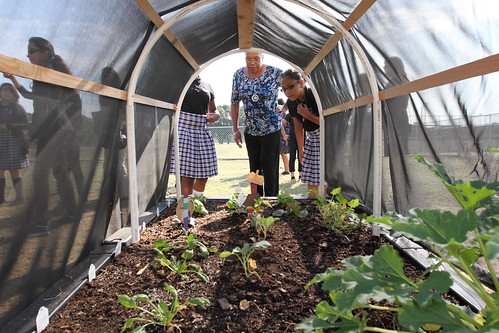
Administrator Audrey Rowe visits the Young Women’s STEAM Academy at Balch Springs Middle School, where students established a school garden as part of their culinary arts program.
School gardens are gaining popularity across the country. In Texas, nearly 3,000 schools participate in farm to school activities. Some of these schools work with Texas A&M AgriLife Extension’s Learn, Grow, Eat, and Go program. Jeff Raska, a school garden specialist with the AgriLife Extension, works with numerous programs and offers practical advice to schools establishing a school garden. Here, he discusses the importance of a strong school garden committee.
By Jeff Raska, Texas A&M AgriLife Extension Dallas County Texas
A school vegetable garden can be a wonderful outdoor classroom for studying natural science. Having worked with school gardens on and off for more than 25 years, I have seen many great school garden programs bloom, and then fade as time passes and school priorities change. For the last seven years, I’ve had the privilege of working with school gardens as a 4-H Club program assistant for Dallas County and have had the benefit of seeing a wide range of needs and challenges that schools face when trying to start a garden. However, the most successful programs have a few important things in place.
One of the first common elements is a dedicated garden committee. The committee can include teachers, parents, community members or school support staff. It’s important to have certain duties assigned to each member. For example, there needs to be a point person who reaches out for help when needed and maintains accountability. This is important because if the garden is funded by outside resources, such as grants or corporate sponsors, certain benchmarks must be met. I have honestly tried to talk some schools out of pursuing a school garden because they didn’t have a committee structure in place. The committee is important for success.
The committee needs to determine why they want to invest time and resources into a school garden program, and how it will benefit the students.  The committee should write a list of goals they want to accomplish and the benefits the school garden will bring. Then, they need to balance those benefits with the costs involved such as the startup and yearly maintenance fees; the time it will take out of someone’s daily school duties; the team it will require to schedule and carry out a garden program; and how they will incorporate the garden into the school’s lesson plans.  The committee can be responsible for start-up funding and long-term maintenance costs, as well as material procurement and maintenance schedules.
The committee should research and recommend a school garden curriculum that best fits the schools lesson plans and goals. I recommend the Learn Grow Eat Go Curriculum developed by the Texas A&M AgriLife Junior Master Gardener team through a USDA research grant.  It not only incorporates the horticultural aspects, but also teaches nutrition, cooking and a classroom exercise plan for a complete healthy living model. I incorporate a nutrition element in all school programs I teach (being primarily Title 1 schools) because nutrition education is important in low-income communities.
The people on the committee will change as the years pass (kids and parents move up, teachers move schools, principals change) so a good foundation committee needs to be established and put in place to keep the garden blooming for years to come. I never use the word sustainable in horticultural systems, as no natural eco system just sustains itself.  In the same way that an ecosystem evolves to climatic changes, understand that school garden programs must also plan to evolve to be able to enjoy long-term success.
Students showing Administrator Rowe a cucumber
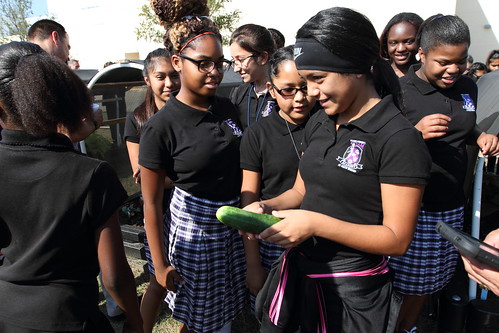
Students show Administrator Rowe a cucumber proudly harvested from their garden. Members of the school staff, the Texas AgriLife Extension and parent volunteers all helped build and maintain the garden.

Friday, December 23, 2016

Seeing is Believing: Soil Health Practices and No-Till Farming Transform Landscapes and Produce Nutritious Food

From the #USDA:


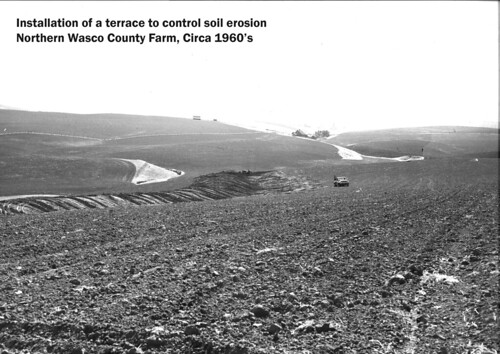
Before image of Wasco County
Beginning in 1935, the agency helped countless farmers in the region install structures that would reduce soil erosion and prevent sediment from leaving crop fields. Photo: NRCS.
This month, we’re highlighting 12 important gifts given to us when we conserve natural resources: soil, food, plants, wildlife, people, health, protection, recreation, air, water, technology and the future. NRCS’ mission is to conserve the full range of natural resources, but soil health is our foundation. And it’s the first conservation gift that we’re going to highlight. And without soil, we couldn’t celebrate with food. We encourage you to give the gift of conservation this season!
Curbing Soil Erosion
Soil is the foundation for a healthy environment. If you need proof that no-till farming works, look no further than the rolling hills of north-central Oregon.
For decades, this region was dominated by winter wheat farms that used extensive tillage to control weeds during fallow years. It was the conventional way of farming in the area, from the early 1900’s through the 1980’s.
But over time, soil erosion became a serious threat.
Many people living in the region recall stories of roads, houses, and other buildings being buried in silt mud after major rain events. Evidence of severe soil erosion can still be witnessed today in the large gullies that were once roadside ditches.
Enter the Soil Conservation Service (SCS)—now named the Natural Resources Conservation Service (NRCS). Our agency was formed to prevent another Dust Bowl. Beginning in 1935, the agency helped countless farmers in the region install structures like diversions, sediment basins and grassed waterways that would reduce soil erosion and prevent sediment from leaving crop fields. Conservation practices including terraces and no-till farming—a conservation practice that grows crops without disturbing the soil—dramatically reduce soil erosion.
In fact, many farmers have said that if they had to return to conventional tillage, they would rather stop farming because it’s so taxing on themselves and the land.
Increasing Healthy Soils
Healthy soil is the foundation for healthy food. Jay Galusha and the five generations of the Galusha family who have farmed this rugged land, understand no-till and soil health are good for the land and people.
Galusha farms 400 acres of hay land and 220 acres of corn on his Fairfield Dairy Farm in Williamstown, Massachusetts.
“I’ve got quite a bit of hilly ground, so spreading manure’s a challenge. Corn planting is a challenge,” said Jay Galusha. “I’ve got some steep ground. That’s where no-till fits right in.”
In no-till agriculture, the farmer uses a no-till planter to create a narrow furrow just large enough for seed to be placed.  By not plowing or disking, cover crop residue remains on the surface, protecting the soil from crusting, erosion, high summer temperatures and moisture loss.  Additionally, the soil structure remains intact and improves every year.
No-till farming increases the amount of water that infiltrates into the soil, organic matter retention and cycling of nutrients. It can reduce or eliminate soil erosion. Done in conjunction with cover crops, it increases the amount and variety of microbial life in the soil, which makes soils more resilient and full of nutrients.
Galusha plants rye and hay as cover crops. The sugars exuded by the hay and rye feed microbes in the soil and helps with soil aggregation, which results when soil particles bind to each other more strongly than to adjacent particles. The spaces between the aggregates provide pore space for retention and exchange of air and water. No-till planting into a cover crop encourages earthworms, which feed on the residue and help with the aggregation process. They also create pores and add nutrients.
Earthworms pull the plant residue down into its hole where it attracts bacteria and fungi, which it eats, along with the residue. Then the channel is lined with slime from the worm’s body and is higher in nitrogen, phosphorous, potassium and calcium than the surrounding soil.
“It’s thousands of dollars of savings and it works. It’s so easy. It’s just easy,” said Galusha.
And conservation is beneficial on any scale. NRCS continues to help farmers and ranchers bolster the health, productivity and vigor of their soils. Nationwide, NRCS offers science-based guidance, resources and financial assistance programs to help farmers install soil conservation practices on private lands. To find out what opportunities are available in your area, contact a local USDA Service Center near you.
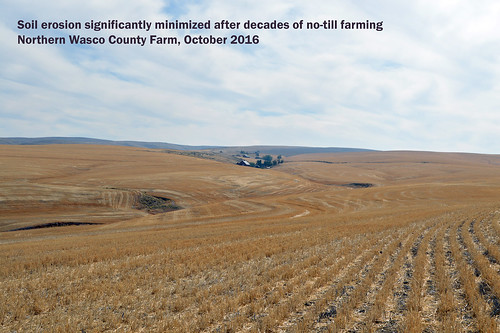
After image of Wasco County
And now, decades later in 2016, the landscape has transformed across Wasco County. Photo: NRCS.

One-Stop Shopping for Federal Scientific Collections

From the #USDA:


The USDA Nematode Collection
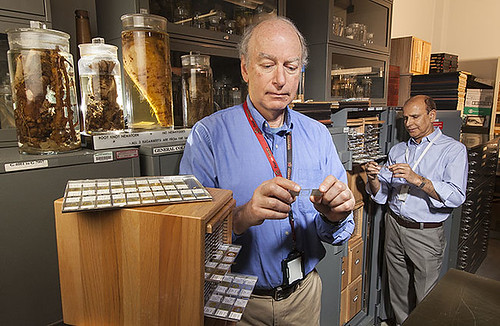
The USDA Nematode Collection is one of the largest and most valuable in existence. Online listings of more than 38,000 specimens are among dozens of important scientific collections that USDA makes available on the Internet. Photo credit: USDA
Federal agencies act as custodians of hundreds of diverse scientific collections that contain everything from plant and animal specimens, tissues, and DNA to microbes, minerals, and moonrocks. These collections are part of the country’s science infrastructure, and support work in fields that include public health and safety, agriculture, trade, homeland security, medical research, trade, and environmental monitoring.
Agencies have been working to improve access to information about these collections and expand opportunities for their use. Now, through a joint effort between the USDA and Smithsonian Institution, an Interagency Working Group on Scientific Collections (IWGSC) has been cataloging them in a newly established Registry of U.S. Federal Scientific Collections (USFSC) managed by the Smithsonian.
This registry provides unprecedented access to information about more than 125 scientific collections managed by more than 475 Federal institutions. Agencies will continue to add collections to the registry over the coming months. Scores of them are maintained by USDA, while others maintained by other agencies provide access to information that is quite useful to people involved in food and farming issues. Among the collections already listed, those include the following:
The National Animal Germplasm Program Database contains a collection of 885,000 samples from 44,400 animals (livestock, poultry, aquatic species and insects). The collection provides a secure backup of genetic resources in the event of catastrophic events, plus a source of genetic variability readily used by public and private sector to reintroduce genetic variation into specific populations and provide researchers with genomic material for a wide array of experimentation.
USDA’s Soil Sample Archive contains over 212,000 soil samples with associated analytical data and site metadata. It is playing an essential role in developing mid-infrared spectrometry techniques that farmers can use for rapidly identifying the soil properties that guide decisions about irrigation and fertilizer application. It is also used as to develop a method for identifying hydric soils that do not develop the color patterns typically used to identify wetland soils.
The Madison Wood Collection (MADw), located in the U.S. Forest Service’s Laboratory of Wood Anatomy, contains 28,700 wood specimens of which 65 percent are from the Americas. The rest come primarily from Asia and Africa and also from Australia, Europe, and the Pacific Islands. The country with the most specimens is the United States, with 8,300 specimens. The information in this collection is of great value to users of wood and wood products and others who rely on scientific names as a key to reliable information on wood properties.
The USDA Nematode Collection Database is one of the largest and most valuable collections in existence of the microscopic, wormlike animals which include parasites of insects, plants or animals. The database contains over 38,000 species entries from world-wide sources which can be used for taxonomic research and reference purposes. A broad range of data is stored for each specimen, including species, host, origin, collector, date collected and date received.  It also provides data on nematode hosts, occurrence and distribution.
The U.S. National Entomological Collection contains about 450,000 insect specimens online, and includes genetic samples and primary type, specimen, and species inventories. They are part of the more than 33 million taken care of by three government agencies: the Agricultural Research Service Systematic Entomology Laboratory, The Smithsonian Institution, and the Walter Reed Army Institute of Research’s Biosystematics Unit.
Following guidelines developed by the IWGSC, more than a dozen federal departments and agencies have developed policies specifying approaches to improve the management of these and other federal scientific collections to help ensure they will remain viable and be expanded as needed to support future research and agency missions. Completed policies are posted on the IWGSC clearinghouse.
In coming months, agencies will add more collections to the Registry and more agencies will complete their collections policies. The IWGSC also plans to find ways to strengthen the contributions of federal scientific collections to priority areas of national interest, such as emerging infectious diseases, food security, soil healthmicrobiome research, and open science. It will seek opportunities for greater coordination internationally among institutions that maintain scientific collections. These are among the tasks the IWGSC will continue to pursue as it continues its efforts to maximize the returns from the Federal investment in important scientific collections.

Monday, December 19, 2016

Vermont Says ‘Thank You’ to Massachusetts for Fighting Invasive Beetle

From the #USDA:


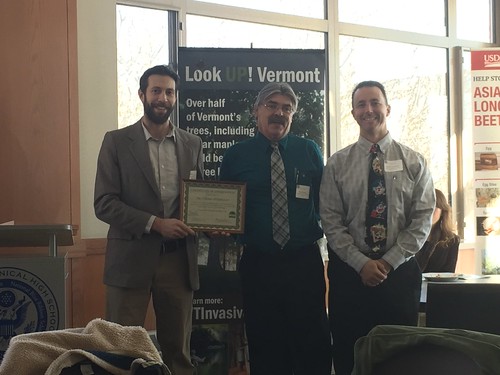
Matt Gordon with Paul Moosey and Rob Antonelli
Matt Gordon, Executive Director of the Vermont Maple Sugar Makers Association, holds a certificate of appreciation for the City of Worcester accepted by Paul Moosey, Commissioner of Public Works and Parks, and Robert Antonelli, Assistant Commissioner of Public Works and Parks.
The Vermont maple syrup industry is well aware that an invasive, tree-killing insect could threaten the production of its delicious, all-natural commodity.  So on December 13, just four days before National Maple Syrup Day on December 17, the Vermont Maple Sugar Makers Association and Vermont state officials hosted a special pancake and maple syrup breakfast to thank partners for supporting the Asian longhorned beetle (ALB) eradication program in Massachusetts.
Why would people in Vermont make breakfast for their neighbors in Massachusetts?  Vermont’s Forest Health Program Manager Barbara Schultz told the group how much the Massachusetts ALB eradication effort has improved the local landscape, municipal budgets, and the daily life of citizens.  The Asian longhorned beetle poses a significant threat to our northeastern forests and the insect could spread throughout the region and devastate maple sugaring in Vermont if it’s not eradicated in Massachusetts.
Since the beetle was detected in Worcester County, Massachusetts in 2008, communities within the quarantine area have cooperated in the removal of over 35,000 trees. The beetle prefers to attack maple trees the most out of the 12 different types of trees it can develop in and emerge from.
With the maple syrup industry valued at $131 million annually, maple sugar makers are right to want the beetle stopped and eliminated from within the U.S.  Attendees included representatives from the cities and towns impacted by the ALB quarantine, the Greater Worcester Land Trust, the Worcester Tree Initiative and state legislators representing Worcester County.  Representatives from the USDA, Animal and Plant Health Inspection Service’s ALB Eradication Program staff were available to answer questions and discuss program activities, including the need to be vigilant and report damage during the winter months.
Signs of Asian longhorned beetle devastation include:
  • Perfectly round exit holes, about the size of a dime or smaller, in tree trunks and branches.
  • Shallow oval or round scars in the bark, where the adult beetle has chewed an egg site.
  • Sawdust-like material, called frass, on the ground around the tree or in the branches.
  • Dead branches or limbs falling from an otherwise healthy-looking tree.
More information about the Vermont Maple Sugar Makers Association is available on the web at http://vermontmaple.org/.   For information about the Vermont Department of Forests, Parks and Recreation, visit http://fpr.vermont.gov/.  Learn more about how you can help fight the ALB at APHIS’ website: https://www.aphis.usda.gov/pests-diseases/alb.
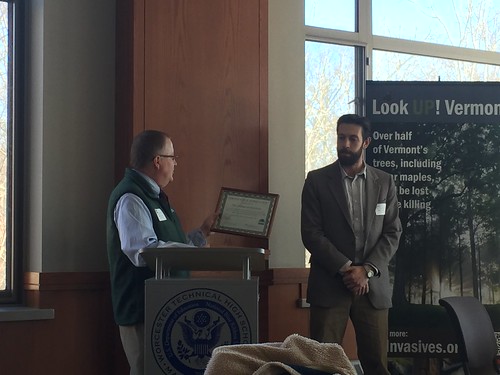
Steven Sinclair with Matt Gordon
Steven Sinclair, Director of Forests for the State of Vermont, with Matt Gordon, Executive Director of the Vermont Maple Sugar Makers Association, present certificates of appreciation to town administrators.

Thursday, December 15, 2016

12 Gifts of Conservation

From the #USDA:


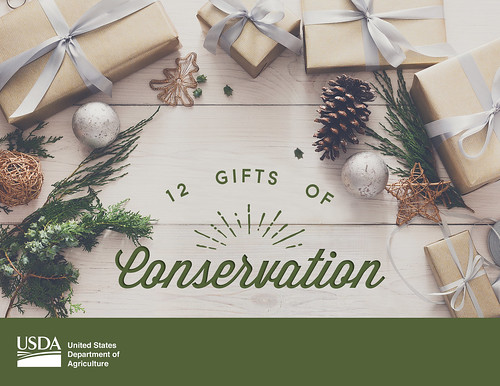
12 Gifts of Conservation graphic
12 Gifts of Conservation graphic. Created by: Jenn Cole
Holidays are a time to enjoy the warm comforts of home and family. A time to reflect and give thanks for life’s blessings. This month, we’re going to highlight important gifts given to us when we conserve natural resources: soil, food, plants, wildlife, people, health, protection, recreation, air, water, technology and future.
Unlike a single wrapped present, conservation is a gift to the whole world, and to the future. Each breath of air, sip of water and bite of food you will ever take, exists because of it. Were the world not continuously renewed, it would soon be consumed and barren. Conservation is the gift that keeps on giving.
Mother Nature is the perfect conservationist. At USDA’s Natural Resources Conservation Service we study nature. One of our goals is to help growers mimic natural systems. The closer they come to matching those systems, the better the results. The voluntary conservation efforts of America’s farmers and ranchers benefit us all.
And conservation is beneficial on any scale. When you plant a small backyard garden, you send positive impacts rippling through the world. You provide habitat for billions of living things, from microbes to wildlife. Your plants clean the air, and their roots and leaves prevent erosion, while building underground reservoirs of water and soil health. Your garden would mean the world to many creatures, and a healthier world for us all.
Our agency was formed to prevent another Dust Bowl. Our mission has since expanded to conserve the full range of natural resources, but soil health is our foundation. And it’s the first of 12 gifts we will highlight this December.
Happy Holidays to you and your family from NRCS! We encourage you to give the gift of conservation. As always, we’re here to help.

Monday, December 5, 2016

World Soil Day – A Time to Celebrate the Foundation of Agriculture

From the #USDA:


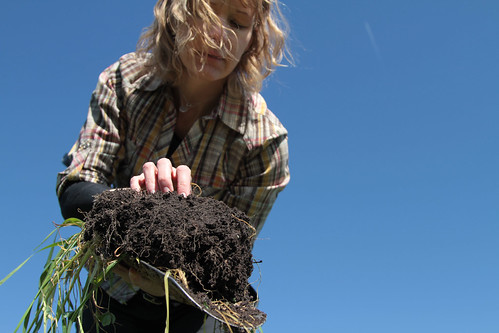
Amy Overstreet holding soil
Amy Overstreet, NRCS Public Information Officer, created a video series for the 2015 International Year of Soils to raise awareness and appreciation for everything that soil provides.
Last year during the International Year of Soils (IYS), I had the incredible opportunity to help the USDA-Natural Resources Conservation Service (NRCS) spread the word about the many life-giving functions of soil. As part of this effort, I traveled to New York City to attend the kickoff ceremony for IYS at the United Nations, which was held on World Soil Day.
In 2014, the United Nations General Assembly designated December 5 as World Soil Day. It is observed this day each year to honor the birthday of King Bhumibol Adulyadej of Thailand, the world’s longest reigning monarch, who passed away in October. He played a pivotal role in the promotion of soil science and conservation, and was a leader in sustainable land resource management.
It was so exciting to gather with world leaders to salute the soil! I was excited to meet conservationists from across the globe who were committed to protecting and improving the foundation of our world’s ability to produce an adequate and healthy food source. The message was loud and clear; we must do all we can to protect and improve soil resources because the food we eat is directly related to the health of the soil in which it grows. Soil quality impacts so many other critical elements like water quality, biodiversity, wildlife habitat, plant growth, and crop production.
World Soil Day graphic
A growing number of America’s farmers are implementing management systems to improve the health and function of their soil. These soil health farmers understand that soil is alive and they utilize practices that promote a healthy soil ecosystem. Fully functioning soil provides an environment that sustains and nourishes plants, soil microbes and beneficial insects.
These conservation-minded farmers are coming together on social media to share their experiences through groups like Carolina Cover Crop Connection and South Dakota Soil Health Coalition. They are excited to show and tell others about their success with soil health management.
On World Soil Day, I am proud that the work of NRCS’ dedicated conservationists helps farmers plan and implement conservation practices that support a healthy soil ecosystem. Farmers are sequestering more carbon, increasing water infiltration, improving wildlife and pollinator habitat—all while harvesting better profits and often better yields. Soils are vulnerable to carbon loss through degradation, but conservation practices like no-till, cover cropping, and diverse crop rotations can build and restore soil health.
This World Soil Day, take time to thank the soil and all that it provides. Our very existence depends upon it! Whether you are a farmer, a backyard gardener, or live in the city, remember that without soil, we could not survive. Check out this NRCS video series about the many things that depend on healthy soil—many which we take for granted. Whether it’s the food we eat, the homes in which we dwell, or the medicines that heal us, it all started with the soil.
NRCS salutes the farmers and landowners who are doing their part to protect and improve soil health. Happy World Soil Day!
Amy Overstreet, NRCS Public Information Officer
Amy Overstreet, NRCS Public Information Officer, created a video series for the 2015 International Year of Soils to raise awareness and appreciation for everything that soil provides.