Search This Blog

Wednesday, May 25, 2016

Forest Service Rookie an International Inspiration

From the #USDA:


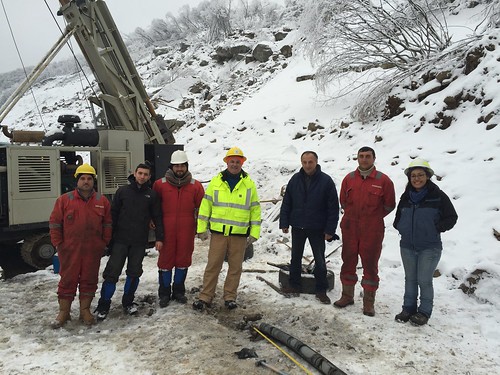
Angelica Perez-Delgado with an international drilling crew
Angelica Perez-Delgado (far right) with an international drilling crew, worked on disaster relief in the nation of Georgia as one of her first assignments with the Forest Service. Photo credit: U.S. Forest Service
Six months after being hired by the U.S. Forest Service, Angelica Perez-Delgado made a major impact, including international assistance to the country of Georgia, on her way to being named Rookie of the Year for the Pacific Southwest Region late in 2015.
When a major storm event triggered a landslide in the Black Sea facing nation of Georgia in early this past year, destroying roadways, the country turned to the U.S. Forest Service for assistance. Almost immediately, Perez-Delgado started assisting the Forest Service project team for Georgia with support in mapping and computerized drawings.
The recent Chico State University grad, from Burney, Calif., was hired by the Shasta-Trinity National Forest as a Civil Engineer less than one year after graduating college and was already involved in an important international project.
“She did a great job with email instructions and coming up with the product that was needed in the summer of 2015 right after the landslide,” said Rene Renteria, geotechnical and dams group leader with the U.S. Forest Service. “When I had the opportunity to create a team to go over to Tbilisi, Georgia this past January through February, I wanted her civil engineering skills. I was impressed right away with her go-to attitude.”
For Georgia, Perez-Delgado designed the new roadway alignment and tunnel location outside the boundaries of the landslide using LIDAR, Autocad and Civil 3D.  She provided everything needed, including plan and profile drawings and calculations in metric, to begin construction for emergency response.
Angelica provided drawings of what the roads should look like to include a retaining wall, culverts and estimates on how much the costs would be for local contractors. Oftentimes, her work included standing outside in minus 10 degree Celsius doing surveys.
That didn’t stop her from getting the job done, in fact, Perez-Delgado was more concerned about her colleagues in Georgia. “They have such a crazy work ethic there,” she said.  “One guy didn’t even have a warm coat or gloves, but here he was out there with me in such cold weather. I told him to take a break and warm up his hands in the car.”
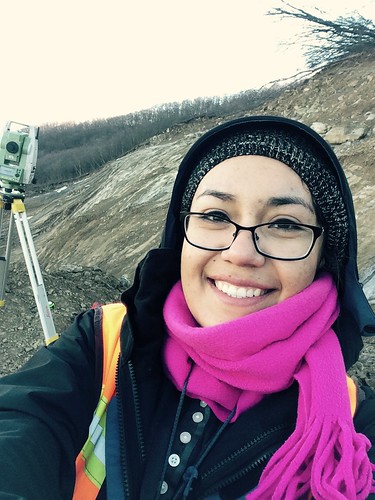
Angelica Perez-Delgado
Angelica Perez-Delgado takes a selfie in the freezing temperature of winter in the mountain of the nation of Georgia.

Tuesday, May 24, 2016

World Turtle Day

From NOAA Fisheries Service:


#WorldTurtleDay Leatherback sea turtles are the largest turtles on Earth. They're also one of the most endangered. Learn more about this#SpotlightSpecies here: http://www.nmfs.noaa.gov/pr/species/turtles/leatherback.html

Good news for turtles on #WorldTurtleDay!

From USFWS Southeast Region:


Good news for turtles on #WorldTurtleDay!

The listing of the common snapping, Florida softshell, smooth softshell and spiny softshell turtles under CITES will require exporters to obtain a permit before shipping turtles overseas, helping the United States better control trade to ensure it is legal. http://1.usa.gov/1WdnQYb (Photo: Florida softshell turtle, Lucy Mills)

Monday, May 23, 2016

Biocontrol Staff Are Modern-Day MacGyvers in the Fight Against Invasive Beetle

From the #USDA:


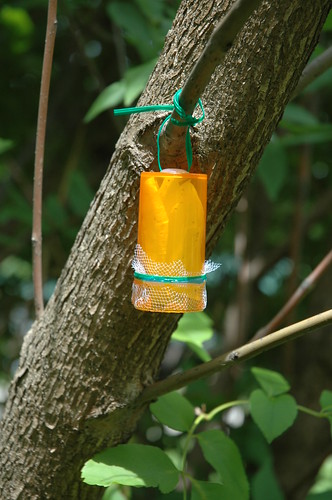
Oobinator 2.0 on a tree
The streamlined design of Oobinator 2.0 improved the distribution of the wasps—each Oobinator containes 50 wasps that could be positioned at four distinct locations throughout the field site. Stingless wasps disperse in the field to search for EAB eggs that will serve as a host for its offspring.
Emerald ash borer (EAB) beetle is an invasive wood boring beetle, first detected in July 2002 in southeastern Michigan. The pest attacks and kills ash trees and it is responsible for the death and decline of tens of millions of ash in 25 states. EAB lives under the bark and when people move EAB-infested firewood they unknowingly move the pest. During EAB Awareness Week (May 22-28) leaveHungryPests behind and don’t move firewood.
Do you remember the eighties television show MacGyver? Science genius turns secret agent. Each week Angus MacGyver—armed with only a pen, aerosol spray can and a Swiss Army knife—successfully disarms the bomb and saves the day! The following week, it’s a shoe horn, jumper cables and a screwdriver…then a thermos, belt buckle….you get the drift. Sixty minutes of ingenious, nail-biting problem-solving.
Although the show’s final episode aired almost 25 years ago, the spirit of Angus lives on at the USDA’s Emerald Ash Borer (EAB) biological control production facility, where USDA is strategically rearing natural enemies to combat this destructive pest.  Mass rearing biocontrol agents (stingless wasps) is a delicate process that’s time-sensitive, labor-intensive, and laden with problem-solving opportunities.
Case in point, the smallest wasp, Oobius agrili, which uses the EAB egg as a host and food for its offspring. This tiny crusader is comparable in size to the head of a pin. Now imagine needing to construct a shipping container to keep the wasps alive and safe while en route to EAB-infested areas, and a release system to allow the wasps to disperse and hunt for EAB eggs. Additionally, this all-in-one device needs to be low-cost, lightweight and easy to handle. Confronted with this challenge, USDA’s biocontrol facility staff channeled their ‘inner MacGyver’ to pioneer a solution.
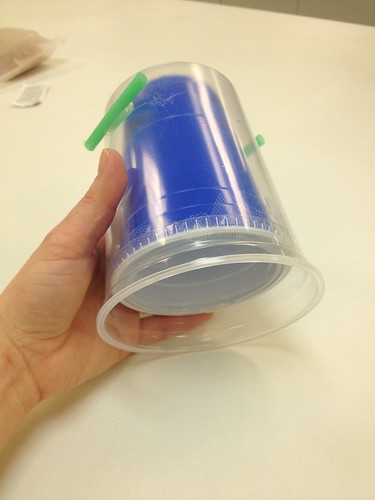
First generation of the Oobinator
The first generation of the Oobinator enabled the release of 200 or more stingless wasps at the field sites.
Armed with a clear plastic food container, Solo cup and top, drinking straw, tulle fabric and a hot glue gun, the staff improvised the first wasp shipping-container-release-system design. It worked and was promptly named, Oobinator.
While the Oobinator was a fully-functioning, autonomous biocontrol dispersal unit that was also recyclable, it was larger than it needed to be and a bit bulky. Not surprisingly, after a couple of years the biocontrol staff started thinking about how to streamline and improve the original pattern. This time, armed with a plastic medicine container and cap, twist ties, tulle fabric and a hot glue gun, the staff produced the next generation of the Oobinator.
The Oobinator 2.0 is substantially smaller and lighter than its predecessor. It ships in conventional commercial packaging and costs only .16 cents compared to the .67 cents of the original design—a savings of 76 percent. This year, the staff will assemble about 3,000 new Oobinators to supply over 130 biocontrol release sites with Oobius agrili—in Colorado, New Hampshire, North Carolina, Louisiana, Minnesota, and 15 other States with EAB infestations.
Undeniably, the EAB biological control facility benefits from a resourceful and creative team.
Along with this success, the staff has macgyvered numerous other tools and gadgets to improve outcomes, increase efficiencies, and deliver more stingless wasps to EAB-infested areas.
For more information about EAB Biocontrol, please visit: https://www.aphis.usda.gov/publications/plant_health/2014/faq_eab_biocontrol.pdf.
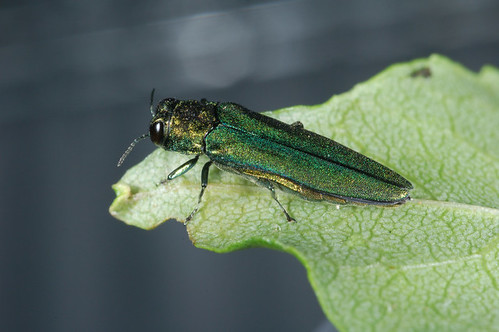
The emerald ash borer beetle on a leaf
The emerald ash borer beetle.

Research Confirms Continued, Unabated and Large-Scale Amphibian Declines

From the U.S. Geological Survey (USGS):


Research Confirms Continued, Unabated and Large-Scale Amphibian Declines -- Local Action Key to Reversing Losses: New USGS and Penn State University research (http://on.doi.gov/22lKYU0) suggests that even though amphibians are severely declining worldwide, there is no smoking gun – and thus no simple solution – to halting or reversing these declines. The research confirms evidence that the average decline in overall amphibian populations is 3.79 percent per year, with the decline rate more severe in some regions, such as the West Coast and the Rocky Mountains. If this rate remains unchanged, these species would disappear from half of the habitats they occupy in about 20 years. Implementing conservation plans locally will be key in stopping amphibian population losses. Though every region in the United States suffered declines, threats differed among them:

*Human influence from the Mississippi River east, including the metropolitan areas of the Northeast and the agricultural-dominated landscapes of the Midwest
*Disease, particularly a chytrid fungus in the Upper Midwest and New England
*Pesticide applications east of the Colorado River
*Climate changes across the Southern U.S. and the West Coast

#amphibiandeclines U.S. Fish and Wildlife ServiceNational Park Service U.S. Department of the Interior #ARMI

Photo: American bullfrogs at the Atlanta Botanical Garden, Georgia. Photo courtesy of Alan Cressler, USGS

Sunday, May 22, 2016

EPA Awards Nearly $16 Million to Clean Up New England Brownfields

From EPA:


News Release
U.S. Environmental Protection Agency
New England Regional Office
May 20, 2016
Contact: Emily Bender, (617) 918-1037

EPA Awards Nearly $16 Million to Clean Up New England Brownfields
Funds help protect health and the environment; Revitalize communities

 BOSTON – EPA has announced it will be awarding $15,994,000 in Brownfield grants to municipalities and organizations working in all six New England states to protect people’s health by assessing and cleaning up contaminated parcels in New England communities.
The grants, funded by EPA’s Brownfields Assessment, Revolving Loan Fund, and Cleanup grant program, provide communities with the funding they need to assess, clean up and redevelop contaminated properties, boost local economies and leverage jobs while protecting public health and the environment.
In the six New England states, EPA is awarding 38 separate grants to 35 different organizations. The funding is part of $55.2 million in EPA Brownfields investments awarded across the country this year.
“EPA’s Brownfields program has helped assess abandoned or derelict properties in communities across the region, cleaning them so they can return to productive use,” said Curt Spalding, regional administrator of EPA’s New England office. “When we put a dollar into brownfields, the community gets back $17 in the jobs and economic opportunities. Cleaning and revitalizing contaminated sites not only makes our communities cleaner, it also makes economic sense.”
In New England, since the beginning of the Brownfields program, EPA has awarded 374 assessment grants totaling $99.1 million, 73 revolving loan fund grants and supplemental funding totaling $90 million and 261 cleanup grants totaling $66.7 million. These grant funds have paved the way for more than $1.4 billion in public and private cleanup and redevelopment investment and for nearly 8,859 jobs in assessment, cleanup, construction and redevelopment. These investments and jobs target local, under-served and economically disadvantaged neighborhoods – places where environmental cleanups and new jobs are most needed.
In New England, the following Brownfields grants are being awarded this year:
Connecticut – $1,184,000
City of Shelton, $200,000 (cleanup)
Northwest Regional WIB, $200,000 (job training)
Naugatuck Valley Council of Governments. $400,000 (assessment)
City of Norwich, $384,000 (assessment)
Maine - $7,340,000
Southern Maine Planning and Development Commission, $820.000 (revolving loan fund)
Southern Maine Planning and Development Commission, $300,000 (assessment)
Town of Berwick, $600,000 (cleanup for Prime Tanning)
Marble Block Redevelopment Corp., $200,000 (cleanup)
Greater Portland Council of Governments, $400,000 (assessment)
City of Portland. $800,000 (revolving loan fund)
Town of Lisbon, $200,000 (assessment)
City of Gardiner, $200,000 (assessment)
City of Gardiner $200,000 (cleanup)
Town of Wilton, $200,000 (cleanup)
Midcoast Economic Development District, $820,000 (revolving loan fund)
City of Belfast, $400,000 (assessment)
City of Old Town, $400,000 (assessment)
Eastern Maine Development Corp., $400,000 (assessment)
Hancock County Planning Commission, $400,000 (assessment)
Piscataquis County Economic Development Council, $400,000 (assessment)
Northern Maine Development Commission, $200,000 (assessment)
Washington County Council of Governments, $400,000 (assessment)
Massachusetts – 4,650,000
Greylock Flume Inc., $200,000 (cleanup)
City of Adams, $400,000 (assessment)
City of Chicopee, $600,000 (cleanup
Town of Lee, $300,000 (assessment)
Town of Plymouth, $600,000. Cleanup of Revere Copper)
Massachusetts Department of Environmental Protection, $400,000 (assessment)
City of Everett, $200,000 (assessment)
City of Gardner, $600,000 (cleanup of Garbose Metals)
Town of Merrimack, $530,000 (cleanup of Coastal Metals)
Merrimack Valley Planning Commission, $820,000 (revolving loan fund)
New Hampshire - $800,000
Upper Lake Sunapee Regional Planning Commission, $400,000 (assessment)
Lakes Region Planning Commission, $400,000 (assessment)
Rhode Island - $1,220,000
RI Department of Environmental Management, $400,000 (assessment)
RI Infrastructure Bank, $820,000 (revolving loan fund)
Vermont - $800,000
Windham Regional Commission, $400,000 (assessment)
Chittend\en Country Regional Planning Commission, $400,000 (assessment )
More information:
Brownfields grants by state: http://cfpub.epa.gov/bf_factsheets/
National EPA Brownfields info: http://www.epa.gov/brownfields/
#  #  #

U.S. EPA Awards Nearly $2.7 Million to Assess and Clean Up Contamination in Arizona, California and Nevada

From EPA:


For Immediate Release: May 20, 2016
Media Contact: Michele Huitric, huitric.michele@epa.gov
U.S. EPA Awards Nearly $2.7 Million to Assess and Clean Up Contamination in Arizona, California and Nevada
SAN FRANCISCO – Today, the U.S. Environmental Protection Agency announced that projects in Arizona, California and Nevada will receive a combined $2,692,000 in federal funds to assess and clean up historically contaminated properties, also known as brownfields, for reuse and development. Awarded through the Assessment, Revolving Loan Fund and Cleanup (ARC) grant program, these funds are part of $55.2 million being invested in 131 communities across the country.
“EPA is committed to helping communities safely clean up abandoned and contaminated sites and transform them into assets,” said Alexis Strauss, EPA’s Acting Regional Administrator for the Pacific Southwest. “These projects will provide valuable economic support to these communities while protecting public health and the environment.”
ARC grants can be used to either assess a brownfield site (including inventory work and cleanup planning) or to conduct cleanup activities. This helps communities to recycle vacant and abandoned properties for new, productive reuses.
The Arizona, California and Nevada recipients are:
Gila County Industrial Development Authority (Ariz.) - $400,000 Assessment Grant: The Industrial Development Authority (IDA) will conduct 50 assessments at former industrial and commercial properties in the rural mining towns of Globe, Miami, and Claypool. The assessments, which will occur along 6 miles of US 60, will focus on commercial properties that can provide economic redevelopment opportunities. The IDA intends for the assessments to complement existing grassroots efforts set forth by the community.
Association of Bay Area Governments (Cities of Oakland, San Leandro, Hayward and Alameda County, Calif.) - $550,000 Assessment Grant:  The Association of Bay Area Governments (ABAG) will support brownfield assessments in Oakland, San Leandro, Hayward and the Ashland and Cherryland neighborhoods of Alameda County.  The coalition will focus efforts on a 15-mile corridor of downtowns and mixed-use neighborhoods. These areas were prioritized because they have adopted plans for sustainable, location-efficient redevelopment that also support the Bay Area's regional vision for an equitable, low-carbon future.
City of Richmond (Calif.) - $400,000 Assessment Grant: The City of Richmond will conduct brownfields assessments in five neighborhoods: Coronado, Santa Fe, Pullman, Iron Triangle, and Belding Woods. These neighborhoods, which have been identified as underserved, are bisected by railroads and are bordered to the southwest by Interstate 580. The city will also use the grant to plan for redevelopment projects, including affordable housing and recreational facilities.
Sonoma County Community Development Commission (Calif.) - $392,000 Assessment Grant: The Sonoma County Community Development Commission will conduct up to 23 environmental site assessments. The assessments, which are focused on petroleum and hazardous substances, will target the Roseland neighborhood in Santa Rosa. Assessments completed under this grant will help to expand an ongoing mixed-use revitalization project in the community and will support new transit investments to reduce air pollution.
City of Mt. Shasta (Calif.) - $200,000 Cleanup Grant: The City of Mt. Shasta will clean up the eight-acre site of a former lumber mill. The mill, which operated from the 1900s until the late 1960s, is contaminated with petroleum hydrocarbons. Cleanup will allow the development of the Landing Commercial Park, which includes plans for commercial, industrial, and recreational space, an RV Park, and a community amphitheater.
Nevada City (Calif.) - $200,000 Cleanup Grant: The city will clean up the Providence Mine, which was a productive gold mine for 68 years but is now abandoned. The mine is contaminated with metals, including mercury, arsenic, and cadmium. Cleanup of this site will allow the city to expand a recreational trail that is easily accessible from their downtown area and will reduce the community’s exposure to contaminated soil.
City of Henderson (Nev.) - $550,000 Assessment Grant: The City of Henderson will use the grant to conduct assessments along an 8-mile segment of the Boulder Highway Corridor (State Route 582), a key gateway between Las Vegas, Henderson, the Hoover Dam and Boulder City. The Boulder Highway has a long history of industrial and auto-related uses, including dealerships, auto-body shops and gas stations. Many properties along the highway are now abandoned and redevelopment is hampered by the potential presence of contamination. The grant will help the city implement the Southern Nevada Strong Regional Plan, which seeks to revitalize the Boulder Highway into an attractive, thriving, and functional corridor.
These grants advance EPA’s broader commitment to coordinating federal investments to help environmentally overburdened, underserved, and economically distressed communities address local priorities. Aligning federal resources allows agencies to better meet communities’ needs and communities to more effectively reap the benefits of collaborative investments. ARC grantees demonstrate a high level of preparedness to undertake specific projects, as they have firm commitments of leveraged funds to move projects forward.
There are an estimated 450,000 abandoned and contaminated waste sites in America.  Since the inception of the EPA’s Brownfields Program in 1995, cumulative brownfields program investments have leveraged more than $20 billion from a variety of public and private sources for cleanup and redevelopment activities. This equates to an average of $17.79 leveraged per EPA brownfields dollar expended. These investments have resulted in nearly 109,000 jobs nationwide. EPA’s Brownfields Program empowers states, communities and other stakeholders to work together to prevent, assess, safely clean up, and sustainably reuse brownfields sites.
More on EPA’s Brownfields Program: https://www.epa.gov/brownfields
More on successful Brownfields stories: https://www.epa.gov/brownfields/brownfields-success-stories
# # #