Search This Blog

Showing posts with label PNNL Lab. Show all posts

Thursday, March 9, 2023

Diverse Approach Key to Carbon Removal

 PNNL News:


Meeting the world’s climate goals will take more than one form of carbon removal

SHARE

March 9, 2023

RICHLAND, Wash.—Diversification reduces risk. That’s the spirit of one key takeaway from a new study led by scientists at the Department of Energy’s Pacific Northwest National Laboratory. The effective path to limiting global warming to 1.5 degrees Celsius by the end of this century likely requires a mix of technologies that can pull carbon dioxide from Earth’s atmosphere and oceans.


Overreliance on any one carbon removal method may bring undue risk, the authors caution. And we’ll likely need them all to remove the necessary amount of carbon dioxide—10 gigatons annually—to secure just 1.5 degrees of warming by 2100.


The new work, published today in the journal Nature Climate Change, outlines the carbon-removing potential of six different methods. They range from restoring deforested lands to spreading crushed rock across landscapes, a method known as enhanced weathering.


This study marks the first attempt to incorporate all carbon dioxide removal approaches recognized in U.S. legislation into a single integrated model that projects how their interactions could measure up on a global scale. It does so while demonstrating how those methods could influence factors like water use, energy demand or available crop land.


The authors explore the potential of these carbon removal methods by modeling decarbonization scenarios: hypothetical futures that demonstrate what kind of interactions could crop up if the technologies were deployed under varying conditions. They explore pathways, for example, where no climate policy is applied (and warming rises to 3.5 degrees as a result).


A second pathway demonstrates what amount of carbon would need to be removed using the technologies under an ambitious policy in which carbon emissions are constrained to decline to net-zero by mid-century and net-negative by late-century to limit end-of-century warming to below 1.5 degrees.

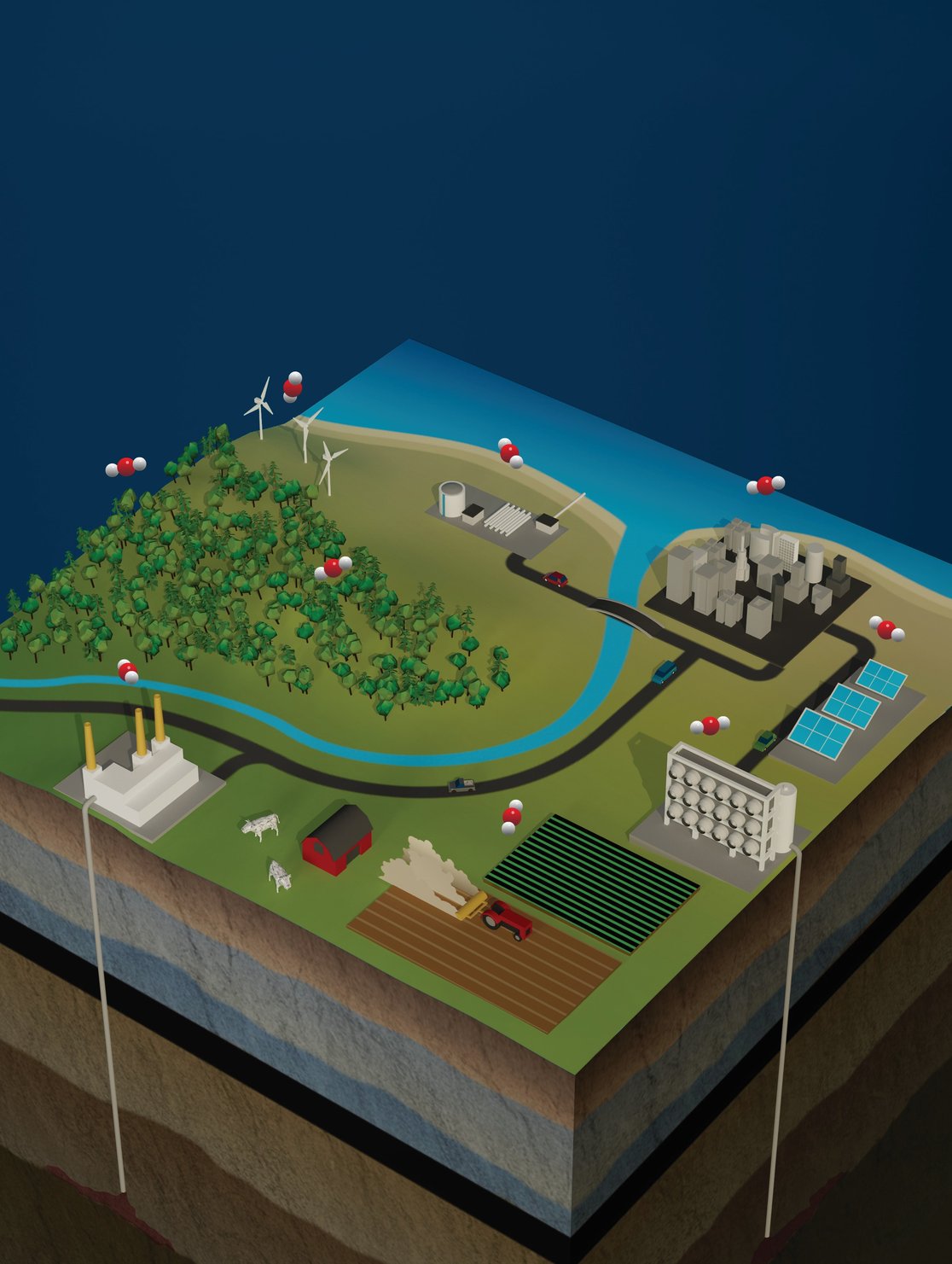
Each carbon dioxide removal method brings unique benefits and tradeoffs. This image depicts the methods under study at PNNL and recognized in U.S. legislation: direct ocean capture, biochar, enhanced weathering, direct air capture with carbon storage, afforestation and bioenergy with carbon capture and storage. Floating carbon dioxide molecules hover above the landscape. (Image by Nathan Johnson | Pacific Northwest National Laboratory)

The third scenario follows the same emissions pathway but is paired with behavioral and technological changes, like low material consumption and rapid electrification. In this scenario, these societal changes translate to fewer overall emissions released, which helps reduce the amount of residual greenhouse gas emissions that would need to be offset with carbon removal to meet the 1.5-degree goal.


To meet that target—the original goal of the Paris Agreement—the authors find that roughly 10 gigatons of carbon dioxide must be removed per year. That amount remains the same even if countries were to strengthen efforts to reduce carbon dioxide emissions from all sources.


“Bringing us back down to 1.5 degrees by the end of the century will require a balanced approach,” said lead author PNNL scientist Jay Fuhrman, whose work stems from the Joint Global Change Research Institute. “If one of these technologies fails to materialize or scale up, we don’t want too many eggs in that basket. If we use a globally diverse portfolio of carbon removal strategies, we can mitigate risk while mitigating emissions.”


Some of the technologies stand to contribute a great deal, with the potential to remove several gigatons of carbon dioxide per year. Others offer less, yet still stand to play an important role. Enhanced weathering, for example, could remove up to four gigatons of carbon dioxide annually by mid-century.


Under this method, finely ground rock spread over cropland converts carbon dioxide in the atmosphere into carbonate minerals on the ground. It is among the most cost-effective methods identified in the study.


In comparison, direct ocean capture with carbon storage, where carbon dioxide is stripped from seawater and stored in Earth’s subsurface, would likely remove much less carbon. On its own, the nascent technology is prohibitively expensive, according to the authors. Pairing this method with desalination plants in regions where demand for desalinated water is high, however, could drive down the cost while delivering more meaningful carbon reductions.


In addition to the removal methods mentioned above, the technologies under study include biochar, direct air capture with carbon storage, and bioenergy paired with carbon capture and storage.


Each of the technologies modeled brings unique advantages, costs and consequences. Many of those factors are tied to specific regions. The authors point out Sub-Saharan Africa as an example, where biochar, enhanced weathering and bioenergy with carbon capture and storage stand to contribute significant reductions.


Yet the authors find much work is needed to address greenhouse gases other than carbon dioxide, like methane and nitrous oxide. Many of these non-CO2 gases are several times more potent while simultaneously more difficult to target than carbon dioxide.


While some of the removal methods examined within the new paper are well-studied, their interactions with other, newer methods are less clearly understood. The work originates from the Joint Global Change Research Institute, a partnership between PNNL and the University of Maryland where researchers explore interactions between human, energy and environmental systems.


Their work focuses on projecting what tradeoffs may flow from a range of possible decarbonization scenarios. The authors seek to better understand how these methods interact so that policymakers may be informed in their efforts to decarbonize.


"This study underscores the need for continued research on carbon dioxide removal approaches and their potential impacts," said corresponding author and PNNL scientist Haewon McJeon. "While each approach has its own unique benefits and costs, a diverse portfolio of carbon dioxide removal approaches is essential for effectively addressing climate change. By better understanding the potential impacts of each approach, we can develop a more comprehensive and effective strategy for reducing greenhouse gas emissions and limiting global warming."


In addition to Fuhrman and McJeon, PNNL authors include Candelaria Bergero and Maridee Weber. Seth Monteith and Frances M. Wang of the ClimateWorks Foundation, as well as Andres F. Clarens, Scott C. Doney and William Shobe of the University of Virginia also contributed to this work. This work was supported by the ClimateWorks Foundation, the Alfred P. Sloan Foundation, and the University of Virginia Environmental Resilience Institute.

Friday, February 24, 2023

Plastic Upcycling to Close the Carbon Cycle

 PNNL News Release:


A new PNNL-developed process produces fuel quickly at mild temperature, with few byproducts

SHARE

February 23, 2023

RICHLAND, Wash.—There’s a lot of potentially useful raw materials bound up in used face masks, grocery bags and food wrap. But it has been much cheaper to keep making more of these single-use plastics than to recover and recycle them.


Now, an international research team led by the Department of Energy’s Pacific Northwest National Laboratory has cracked the code that stymied previous attempts to break down these persistent plastics. They reported their discovery in today’s issue of Science.

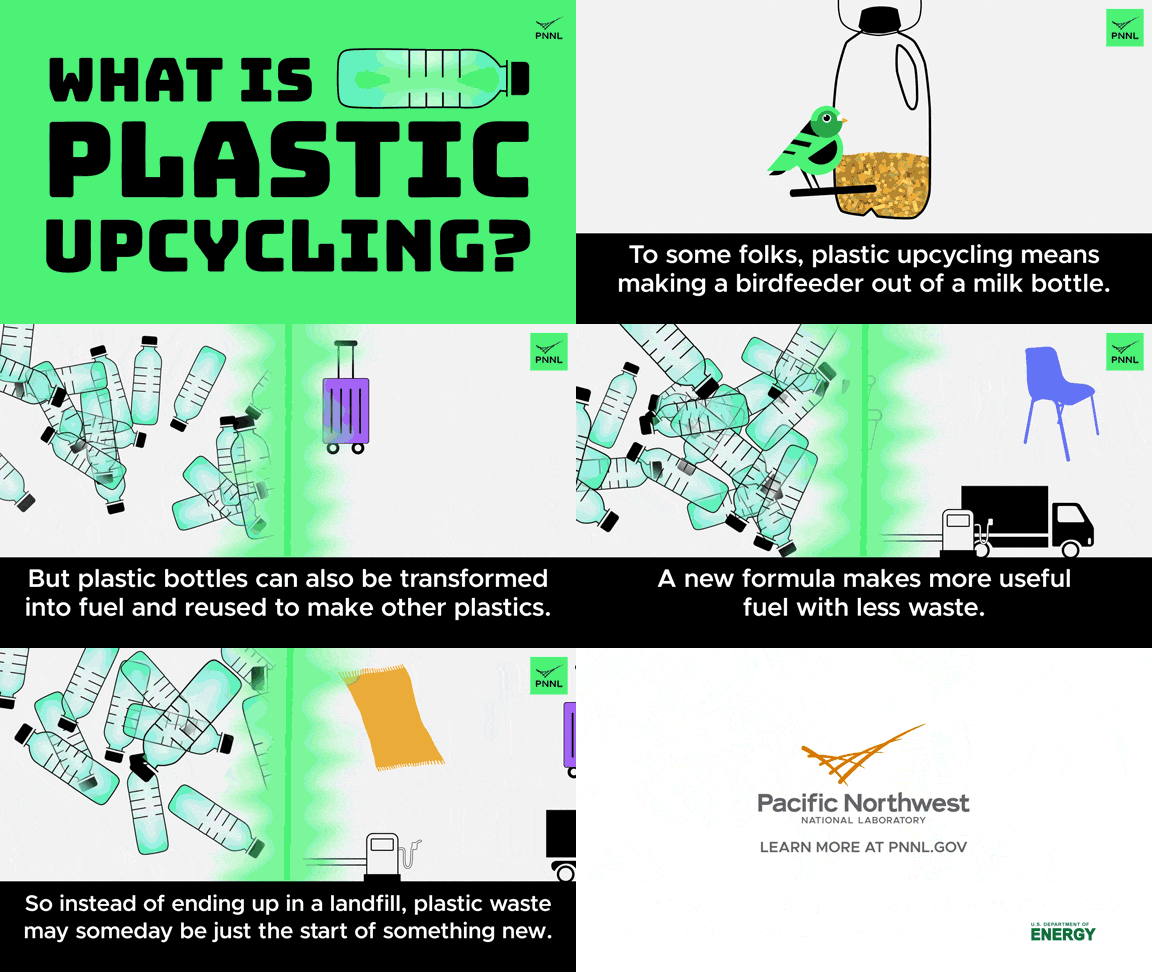
A newly developed plastic upcycling process works for low-density polyethylene products (LDPE, plastic resin code #4), such as plastic films and squeezable bottles, and polypropylene products (PP, plastic resin code #5) that are not typically collected in curb-side recycling programs in the United States. (Animation by Sara Levine | Pacific Northwest National Laboratory)

Low temperature and reaction control

Typically, recycling plastics requires ‘cracking’ or splitting apart the tough and stable bonds that also make them so persistent in the environment. This cracking step requires high temperatures, making it expensive and energy intensive.


The novelty here is combining the cracking step with a second reaction step that immediately completes the conversion to a liquid gasoline-like fuel without unwanted byproducts. The second reaction step deploys what are known as alkylation catalysts. These catalysts provide a chemical reaction currently deployed by the petroleum industry to improve the octane rating of gasoline.


Crucially in the current study, the alkylation reaction immediately follows the cracking step in a single reaction vessel, near room temperature (70 degrees C/158 degrees F).


“Cracking just to break the bonds results in them forming another one in an uncontrolled way, and that's a problem in other approaches,” said Oliver Y. Gutiérrez, a study author and chemist at PNNL. “The secret formula here is that when you break a bond in our system, you immediately make another one in a targeted way that gives you the end product you want. That is also the secret that enables this conversion at low temperature.”


In their study, the research team, co-led by scientists from the Technical University of Munich, Germany, pointed to separate, recent developments by the petroleum industry to commercialize the second part of the process reported here for crude oil processing.


“The fact that industry has successfully deployed these emerging alkylation catalysts demonstrates their stable, robust nature,” said Johannes Lercher, a senior author of the study, director of PNNL’s Institute for Integrated Catalysis, and professor of chemistry at TUM. “This study points to a practical new solution to close the carbon cycle for waste plastic that is closer to implementation than many others being proposed.”


In their study, the researchers note a limitation on their findings. The process works for low-density polyethylene products (LDPE, plastic resin code #4), such as plastic films and squeezable bottles, and polypropylene products (PP, plastic resin code #5) that are not typically collected in curb-side recycling programs in the United States. High-density polyethylene (HPDE, plastic resin code #2) would require a pretreatment to allow the catalyst access to the bonds it needs to break.


Seeing waste plastic as future fuel and new products

Petroleum-based plastic waste is an untapped resource that can serve as the starting material for useful durable materials and for fuels. More than half of the 360 million tons of plastics produced globally each year are the plastics targeted in this study. But looking at a mountain of plastic and seeing its value requires an innovator’s mindset, a chemist’s ingenuity, and a realist’s understanding of the economics involved. These scientists are trying to change the dynamic by applying their expertise in efficiently breaking chemical bonds.


“To solve the problem of persistent waste plastic, we need to reach a critical point where it makes more sense to collect it and return it to use than to treat it as disposable,” said Lercher. “We’ve shown here that we can make that conversion quickly, at mild conditions, which provides one of the incentives to move forward to that tipping point.”


This research study, published Feb. 24, 2023, was supported by the Department of Energy Office of Science.

Friday, March 26, 2021

BIOCRUDE PASSES THE 2,000-HOUR CATALYST STABILITY TEST


SEWAGE AND FOOD WASTE BIOCRUDE CONVERSION PROCESS REACHES MAJOR MILESTONE


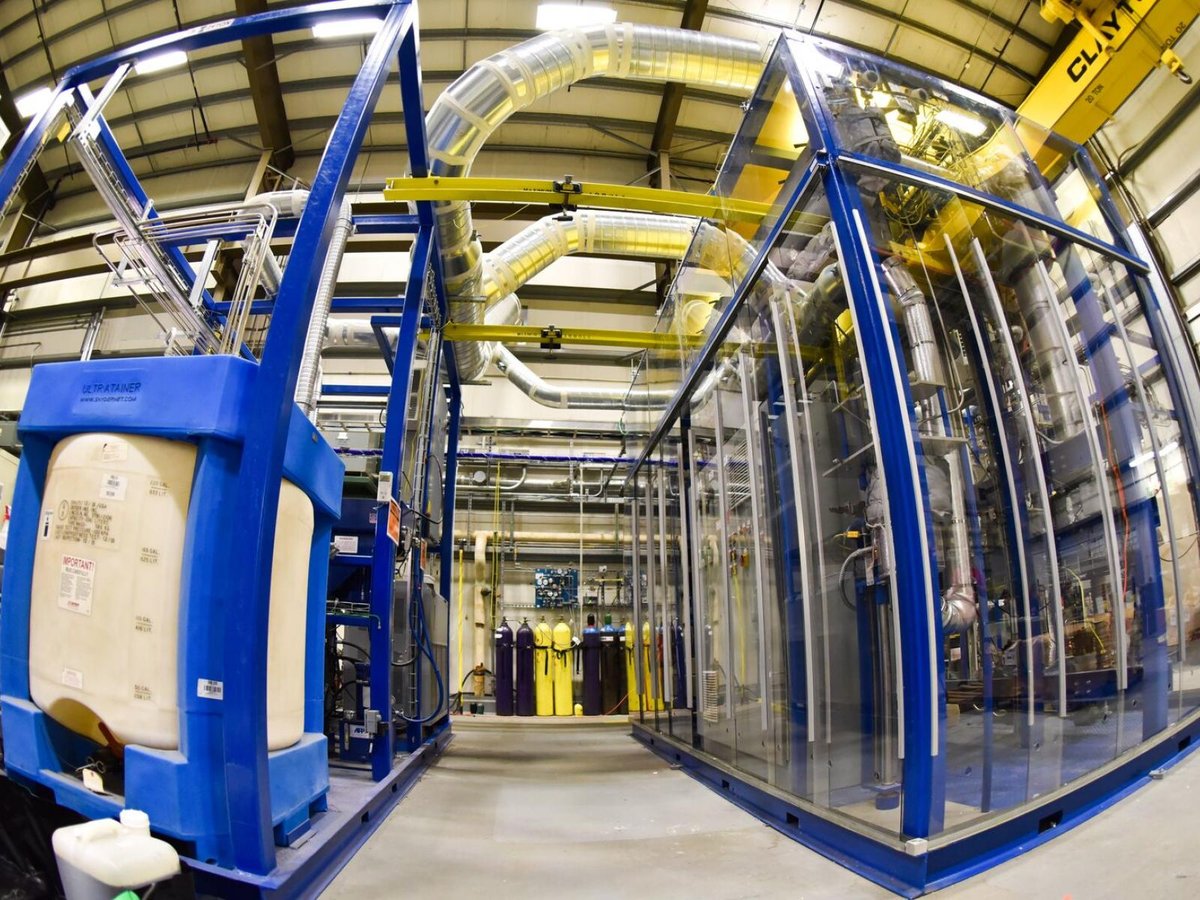
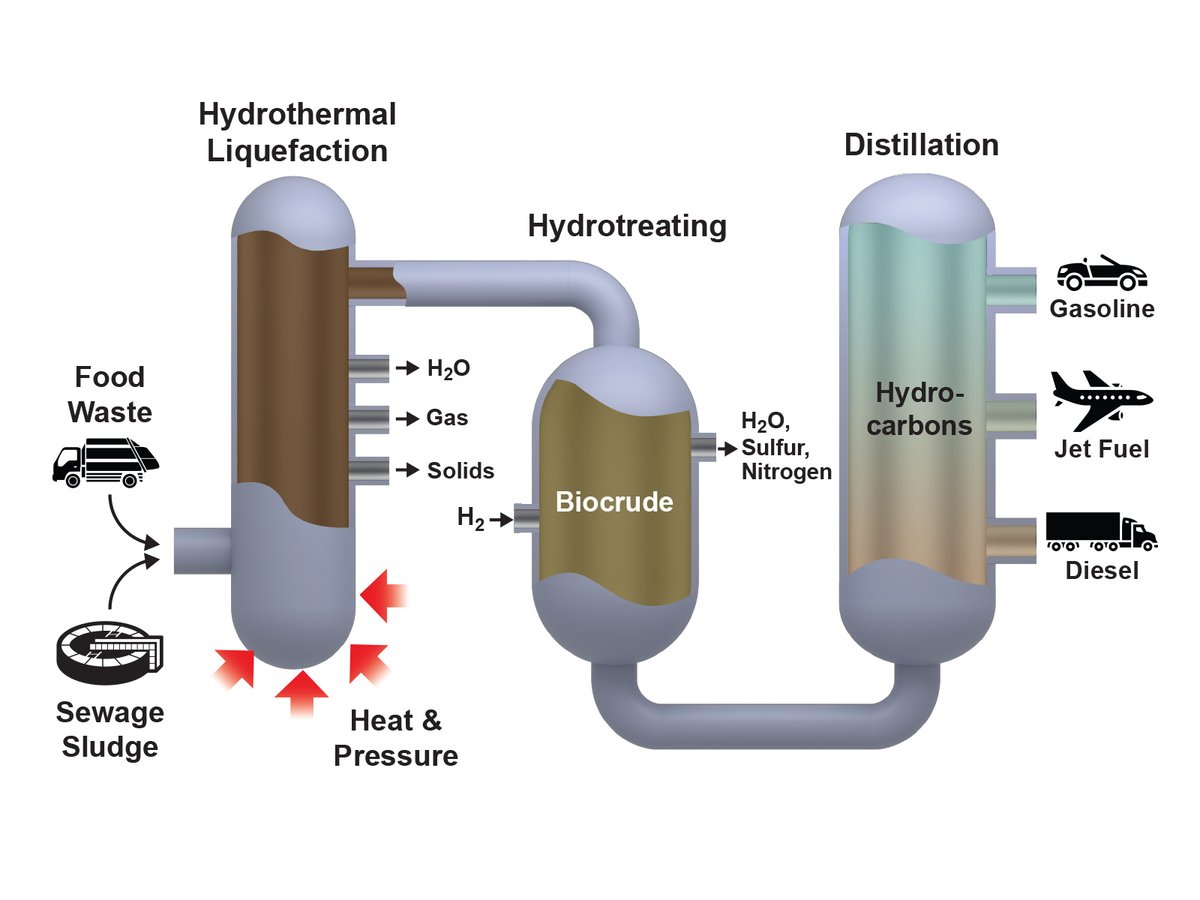
This reactor turns wet waste into biocrude, which in turn feeds a refining step that turns biocrude into fuels for transportation. 
Share!
March 25, 2021
RICHLAND, WASH.―A large-scale demonstration converting biocrude to renewable diesel fuel has passed a significant test, operating for more than 2,000 hours continuously without losing effectiveness. Scientists and engineers led by the U.S. Department of Energy’s Pacific Northwest National Laboratory conducted the research to show that the process is robust enough to handle many kinds of raw material without failing.

“The biocrude oil came from many different sources, including wastewater sludge from Detroit, and food waste collected from prison and an army base,” said John Holladay, a PNNL scientist and co-director of the joint Bioproducts Institute, a collaboration between PNNL and Washington State University. “The research showed that essentially any biocrude, regardless of wet-waste sources, could be used in the process and the catalyst remained robust during the entire run. While this is just a first step in demonstrating robustness, it is an important step.”

The milestone was first described at a virtual conference organized by NextGenRoadFuels, a European consortium funded by the EU Framework Programme for Research and Innovation. It addresses the need to convert biocrude, a mixture of carbon-based polymers, into biofuels. In the near term, most expect that these biofuels will be further refined and then mixed with petroleum-based fuels used to power vehicles.  

“For the industry to consider investing in biofuel, we need these kinds of demonstrations that show durability and flexibility of the process,” said Michael Thorson, a PNNL engineer and project manager.

Biocrude to biofuel, the crucial conversion

Just as crude oil from petroleum sources must be refined to be used in vehicles, biocrude needs to be refined into biofuel. This step provides the crucial “last mile” in a multi-step process that starts with renewables such as crop residues, food residues, forestry byproducts, algae, or sewage sludge. For the most recent demonstration, the biocrude came from a variety of sources including converted food waste salvaged from Joint Base Lewis-McChord, located near Tacoma, Wash., and Coyote Ridge Corrections Center, located in Connell, Wash. The initial step in the process, called hydrothermal liquefaction, is being actively pursued in a number of demonstration projects by teams of PNNL scientists and engineers.

EED_1267_ILLUS.2e_revised23March

Wet wastes from sewage treatment and discarded food can provide the raw materials for an innovative process called hydrothermal liquefaction, which converts and concentrates carbon-containing molecules into a liquid biocrude. This biocrude then undergoes a hydrotreating process to produce bio-derived fuels for transportation. (Illustration by Michael Perkins | Pacific Northwest National Laboratory)

The “last mile” demonstration project took place at the Bioproducts, Sciences, and Engineering Laboratory on the Richland, Wash. campus of Washington State University Tri-Cities. For 83 days, reactor technician Miki Santosa and supervisor Senthil Subramaniam fed a constant flow of biocrude into carefully honed and highly controlled reactor conditions. The hydrotreating process introduces hydrogen into a catalytic process that removes sulfur and nitrogen contaminants found in biocrude, producing a combustible end-product of long-chain alkanes, the desirable fuel used in vehicle engines. Chemist Marie Swita analyzed the biofuel product to ensure it met standards that would make it vehicle-ready.

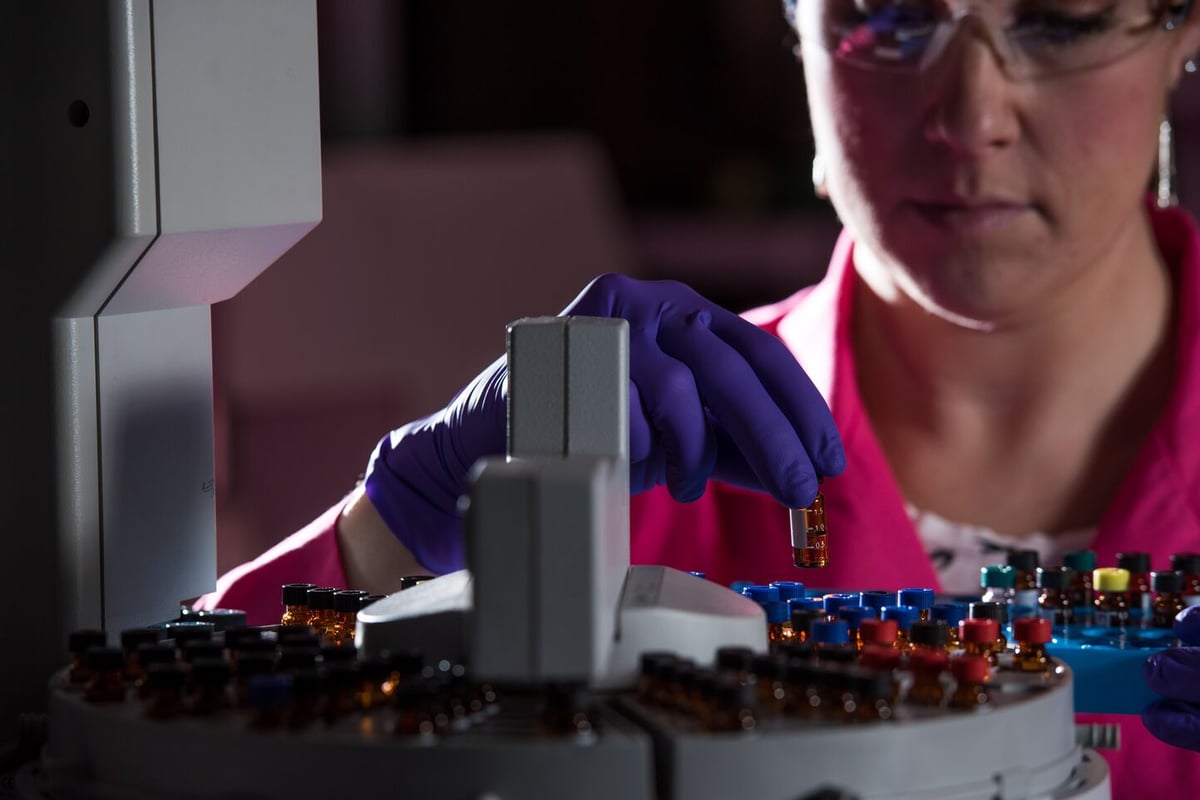
Marie Swita tests sample purity

Analytical chemist Marie Swita tests biofuel samples to measure purity. (Photo by Andrea Starr | Pacific Northwest National Laboratory)

Diverting carbon to new uses

“Processing food and sewage waste streams to extract useful fuel serves several purposes,” said Thorson. Food waste contains carbon. When sent to a landfill, that food waste gets broken down by bacteria that emit methane gas, a potent greenhouse gas and contributor to climate change. Diverting that carbon to another use could reduce the use of petroleum-based fuels and have the added benefit of reducing methane emissions.

The purpose of this project was to show that the commercially available catalyst could stand up to the thousands of hours of continuous processing that would be necessary to make biofuels a realistic contributor to reducing the world’s carbon footprint. But Thorson pointed out that it also showed that the biofuel product produced was of high quality, regardless of the source of biocrude―an important factor for the industry, which would likely be processing biocrude from a variety of regional sources.

Web Size-PooptoFuel_30

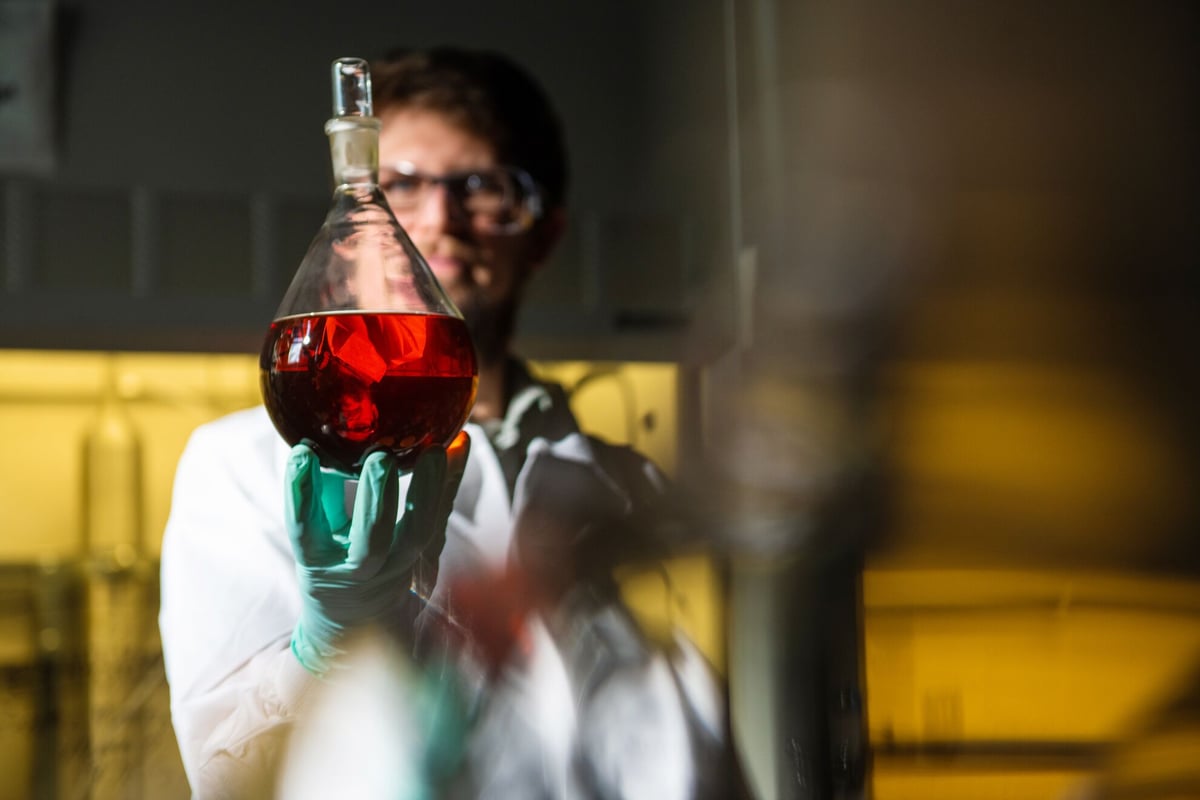
Justin Billing, shown here, and his PNNL colleagues are advancing technologies and approaches to convert different kinds of materials, including food waste, into biofuels. (Photo by Andrea Starr | Pacific Northwest National Laboratory)

Indeed, knowing that transporting biocrude to a treatment facility could be costly, modelers are looking at areas where rural and urban waste could be gathered from various sources in local hubs. For example, they are assessing the resources available within a 50-mile radius of Detroit, Mich. There, the sources of potential biocrude feedstock could include food waste, sewage sludge and cooking oil waste. In areas where food waste could be collected and diverted from landfills, much as recycling is currently collected, a processing plant could be up to 10 times larger than in rural areas and provide significant progress toward cost and emission-reduction targets for biofuels.

Commercial biofuels on the horizon

Milestones such as hours of continuous operation are being closely watched by investor groups in the U.S. and Europe, which has set aggressive goals, including being the first climate-neutral continent by 2050 and achieving a 55% reduction in greenhouse gas emissions by 2030. “A number of demonstration projects across Europe aim to commercialize this process in the next few years,” Holladay said.

The next steps for the research team include gathering more sources of biocrude from various waste streams and analyzing the biofuel output for quality. In a new collaboration, PNNL will partner with a commercial waste management company to evaluate waste from many sources. Ultimately, the project will result in a database of findings from various manures and sludges, which could help decide how facilities can scale up economically.

“Since at least three-quarters of the input and output of this process consists of water, the ultimate success of any industrial scale-up will need to include a plan for dealing with wastewater,” said Thorson. This too is an active area of research, with many viable options available in many locations for wastewater treatment facilities.

DOE's Bioenergy Technologies Office has been instrumental in supporting this project, as well as the full range of technologies needed to make biofuels feasible.