Search This Blog

Friday, July 9, 2021

EPA Orders Allied BioScience to Stop Selling and Distributing SurfaceWise2

 U.S. EPA News Release:


EPA Orders Allied BioScience to Stop Selling and Distributing SurfaceWise2

Contact Information: 

EPA Press Office (press@epa.gov)

WASHINGTON (July 8, 2021) —The U.S. Environmental Protection Agency (EPA) has issued a Stop Sale, Use or Removal Order (SSURO) to Allied BioScience for their product SurfaceWise2. SurfaceWise2, a residual antimicrobial surface coating, was previously authorized for emergency use in Arkansas, Oklahoma, and Texas to help address the COVID-19 pandemic.  EPA investigations found the company was marketing, selling, and distributing SurfaceWise2 in ways that were inconsistent with the Federal Insecticide, Fungicide, and Rodenticide Act (FIFRA), EPA’s regulations, and the terms and conditions of the emergency exemption authorizations. Specific use sites included American Airlines aircraft and airport facilities and two orthopedic facilities in Texas. 

As a result, EPA issued a SSURO that requires Allied BioScience, the product manufacturer, to immediately stop selling and distributing SurfaceWise2. The SSURO will remain in effect unless revoked, terminated, suspended or modified in writing by EPA.

“Pesticides can cause serious harm to human health and the environment, which is why EPA requires their registration before being distributed for use,” said Larry Starfield, EPA acting assistant administrator for the Office of Enforcement and Compliance Assurance. “EPA is committed to holding companies accountable for not adhering to federal environmental laws.”  

Additionally, EPA is revoking SurfaceWise2 emergency exemptions for Arkansas and Texas due to the company misconduct described above and scientific concerns regarding product performance. 

Since January, new data have become available, leading EPA to comprehensively review new and existing information. EPA laboratory testing indicates the product's performance is less reliable under real-world conditions, particularly when it is exposed to moisture or abrasion. Therefore, based on all the available efficacy data for SurfaceWise2, EPA does not support its continued emergency use.

Given the product’s limited approved scope of use and CDC guidance that states the risk of transmission for SARS-CoV-2 by touching a contaminated surface is considered to be low, removing this unregistered product from the market does not endanger human health or limit the fight against the virus. EPA has registered many other products for decontaminating surfaces when the need arises. 

Background:

In August 2020, after reviewing the available data and information, EPA issued the initial SurfaceWise2 emergency exemption for specific locations under Section 18 of FIFRA. SurfaceWise2 was expected to kill coronaviruses like SARS-CoV-2 on surfaces for up to seven days when used as a supplement to a List N disinfectant. List N is a list of products that EPA expects will kill SARS-CoV-2, the coronavirus that causes COVID-19, when used according to the label directions.

In January 2021, EPA revised the terms and conditions under which SurfaceWise2 could be used after an initial review of internal laboratory data revealed that exposure to moisture could adversely impact the product’s durability, reducing its residual efficacy. EPA’s revised terms of use applied to Texas and two additional states that received emergency use exemptions in January—Arkansas and Oklahoma.

In May 2021, EPA received a revocation request from Oklahoma indicating the emergency situation was no longer applicable in the state. Today, EPA is accepting Oklahoma’s rationale and revoking the state’s emergency exemption on those grounds. This action is in addition to revoking the emergency exemptions for Arkansas and Texas.

Section 18 of FIFRA authorizes EPA to exempt state and federal agencies from provisions of FIFRA and allow unregistered uses of pesticides to address emergency conditions. Under such an exemption, EPA allows limited use of a pesticide in defined geographic areas for a finite time once EPA confirms the situation meets the statutory definition of "emergency condition" and the product will not cause unreasonable adverse effects on human health or the environment.

To ensure emergency exemptions are effectively addressing an emergency, EPA’s regulations require additional recordkeeping and reporting beyond those that apply to registered pesticides. EPA’s regulations also include provisions for EPA to unilaterally modify or revoke emergency exemptions if deemed necessary.

For additional information on the coronavirus: www.epa.gov/coronavirus.

Members of the public can help protect our environment by identifying and reporting environmental violations. Learn more here: https://www.epa.gov/enforcement/report-environmental-violation-general-information.

                                                                             # # #

Thursday, July 1, 2021

EPA Finalizes Cleanup Plan to Address Groundwater Contamination in the Townships of Cinnaminson and Delran, Burlington County, New Jersey

 U.S. EPA News Release:


EPA Finalizes Cleanup Plan to Address Groundwater Contamination in the Townships of Cinnaminson and Delran, Burlington County, New Jersey


New York (July 1, 2021) — The U.S. Environmental Protection Agency (EPA) has finalized its cleanup plan to address groundwater contamination in Cinnaminson and Delran. The final decision, in the form of a Record of Decision (ROD), addresses contaminants in groundwater at the site by using pump, treat, and discharge methods that will capture groundwater contamination that can pose serious health risks. To further protect public health, EPA will conduct long-term monitoring of the groundwater, in addition to other protective measures.

“This decision reflects close coordination with the New Jersey Department of Environmental Protection as well as with the Townships of Cinnaminson and Delran to ensure the groundwater contaminants are properly treated and that the environment is secure,” said Acting Regional Administrator Walter Mugdan. “This Record of Decision, which is critically important to community members in Cinnaminson and Delran, builds on earlier decisions at the site in which EPA called for the installation of vapor recovery systems at impacted properties and a groundwater pump and treatment system, and ensured the sufficiency of the existing landfill caps at the site.”

Due to the nature and complexity of the contamination at the Cinnaminson Groundwater Contamination Superfund Site, the investigations and cleanup of the site have been conducted in four Operable Units (OUs). This finalized cleanup plan focuses on Operable Unit 4 which addresses groundwater contamination outside of areas already under remediation or investigation as part of OUs 1, 2, and 3. The properties of SLI Landfills, Messer LLC (formerly Linde LLC and BOC Gases) and Detrex Corporation are the primary identified sources of the OU4 groundwater contamination.

Under the finalized cleanup plan announced today, EPA will target highly concentrated portions of the contaminated groundwater near the source areas by using a pump and treat remedy. EPA will also implement institutional controls, such as restricting the use of groundwater from the site, to prevent and reduce human exposure to contaminated groundwater until the cleanup goals are met. Furthermore, EPA will require periodic collection and analysis of groundwater samples to verify that the level and extent of contaminants are declining.

On September 17, 2020, EPA released for public comment the proposed plan regarding its cleanup plan to address groundwater contamination at OU4 of the site. EPA held a virtual public meeting on October 1 to inform the public of EPA’s preferred remedial alternatives and to receive public comments.

To read the EPA’s Record of Decision and to view EPA’s responses to public comments, please visit https://www.epa.gov/superfund/cinnaminson

Follow EPA Region 2 on Twitter at http://twitter.com/eparegion2 and visit our Facebook page, http://facebook.com/eparegion2

21-046 

Wednesday, June 30, 2021

EPA, New Mexico Farm & Livestock Bureau Sign Pact to Expand Support for Sustainable Farming

 U.S. EPA News Release:


EPA, New Mexico Farm & Livestock Bureau Sign Pact to Expand Support for Sustainable Farming


Media contacts: Jennah Durant at r6press@epa.gov or 214 665-2200


DALLAS – (June 30, 2021) Recently, the U.S. Environmental Protection Agency (EPA) and the New Mexico Farm & Livestock Bureau (NMF&LB) signed a three-year Memorandum of Understanding (MOU) to expand joint activities supporting the agencies’ shared goal of well-managed, sustainable farms. The agreement is the first among states in EPA Region 6, which also includes Arkansas, Louisiana, Oklahoma and Texas.

The MOU formalizes a partnership between the two agencies to expand collaboration communication, education and outreach, and promoting training on agricultural practices that are good for business and the environment. The agencies will also work to recognize and promote examples of environmental stewardship within the agriculture community and to the general public.

“This agreement will strengthen the partnership between EPA and the New Mexico agriculture community and expand areas of collaboration,” said Acting Regional Administrator David Gray. “Finding more common ground will bring us closer to the goal of prosperous, well-managed farms and ranches that incorporate sustainable practices and environmental stewardship.”

“We are excited to join this collaboration with EPA as we work to share information between organizations on how best to support economically viable and sustainable agricultural practices,” said Chad Smith, NMF&LB CEO. “Farmers and ranchers have a vested interest in the protection and improvement of water and soil resources, and this partnership will move us towards this shared goal.”

Under the MOU, the agencies intend to:

  • Enhance coordination and communication by holding annual meetings to discuss priorities, activities, effective approaches and opportunities to collaborate; share updates throughout the year on relevant programs, policies and activities and coordinate on areas of common interest
  • Promote education and outreach to foster open dialog between EPA and the agriculture community; identify success, challenges and opportunities to work together
  • Recognize agriculture environmental stewardship by developing a new program for these efforts; highlight these achievements to the public and broader agricultural communities.

EPA and NMF&LB also plan to collaborate on an annual report highlighting collective achievements as a result of the MOU and plans for the following year.

Connect with EPA Region 6:

On Facebook: https://www.facebook.com/eparegion6 

On Twitter: https://twitter.com/EPAregion6

Activities in EPA Region 6: https://www.epa.gov/aboutepa/epa-region-6-south-central


# # #

Tuesday, June 29, 2021

U.S. Navy enters agreement with U.S. EPA to upgrade Pearl Harbor-Hickam Wastewater Treatment Plant

 U.S. EPA News Release:


U.S. Navy enters agreement with U.S. EPA to upgrade Pearl Harbor-Hickam Wastewater Treatment Plant
Agreement will prevent plant’s elevated toxic pollutants from entering Pearl Harbor

HONOLULU – Today, the U.S. Environmental Protection Agency (EPA) has announced a Federal Facility Compliance Agreement (FFCA) with the U.S. Navy to complete major upgrades to the Joint Base Pearl Harbor-Hickam Wastewater Treatment Plant. The plant treats domestic and industrial wastewater from the Navy’s Pearl Harbor facilities and has exceeded its discharge limits to the Pacific Ocean under the Clean Water Act.

“The Navy’s lack of proper operation and maintenance of the treatment plant has led to excessive toxic pollution discharges into Pearl Harbor and unacceptable worker safety risks,” said Amy Miller, EPA Pacific Southwest Regional Director of Enforcement and Compliance Assurance. “EPA is pleased with the Navy’s commitment to improving wastewater infrastructure and protection of coastal waters.”

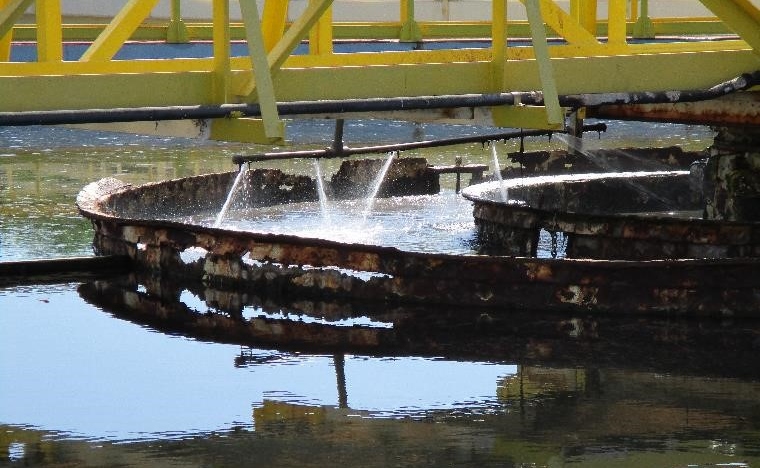
The plant is owned and operated by the U.S. Navy and provides service for up to 40,000 people. EPA has found that the plant has exceeded its discharge limits under the Clean Water Act for cadmium, zinc, oil and grease, pH, and total effluent toxicity. Additionally, the plant has had numerous operation and maintenance violations, including algae growth, warped and disconnected parts, cracked concrete tanks, and severely corroded equipment.

In October 2019, the U.S. Navy found structural defects from an excessively corroded and thinned concrete floor in the outflow pump station. The station is a critical component of the plant that requires regular maintenance. Failure of the pump station could result in uncontrolled discharges of effluent and could damage treatment systems, as well as compromise worker safety.

Under today’s agreement with EPA, the U.S. Navy must replace, repair, or refurbish the plant’s three primary clarifiers, five of the six secondary clarifiers, and the effluent pump station by December 31, 2024. In addition, the U.S. Navy must develop a plan to prevent and respond to potential infrastructure failures at the plant. This work will allow the plant to come into and remain in full compliance with all applicable laws and regulations related to the discharge of treated wastewater into the ocean.

https://us.vocuspr.com/Publish/518041/vcsPRAsset_518041_119500_661ad839-e69b-4d15-b354-7805a59f1cf7_0.jpg
Caption: Corroded center baffle on secondary clarifier. Photograph by K. Kirkeby.

This settlement furthers EPA’s National Compliance Initiative to reduce the number of U.S. facilities that are in significant non-compliance, and to improve surface water quality by ensuring dischargers comply with permit requirements.

For more information on this initiative, please visit: https://www.epa.gov/enforcement/national-compliance-initiative-reducing-significant-non-compliance-national-pollutant.

Learn more about EPA’s Pacific Southwest Region. Connect with us on Facebook and on Twitter.

Comparing the electric Ford F-150 Lightning to the Tesla Cybertruck