Search This Blog

Wednesday, January 20, 2016

Tufted Titmouse

January 20, 2016

From the U.S. Fish and Wildlife Service:


In the fall and winter, tufted titmice are known to hoard food, taking one seed at a time from bird feeders and stashing them nearby! 

Photo: Tufted titmouse courtesy of Mark Moschell/Creative Commons. https://flic.kr/p/D5eiVf

The Atchafalaya Basin

From the U.S. Geological Survey (USGS):


Further south along the Atchafalaya River begins the largest wetland and swamp in the country, the Atchafalaya Basin. This is a delicate ecosystem, made up of cypress swamps in the north and saltwater marshes in the south. 

As the floodwaters move in, they stir up the existing system, overflowing banks, lifting sediments from the bottom, adding nutrients and dissolved oxygen to areas that aren't used to them, etc.

The Basin is used to these regular floods. In fact, just like forests in the West needing regular forest fires, the Basin needs regular floods to maintain its healthy ecosystem.

However, also like western forests, human activity has altered the Basin, so the regular flooding can result in unintended side effects, like extra nutrients causing low oxygen zones (hypoxia). This can lead to fish kills.

Image shows a cypress swamp near Bayou Pigeon, Louisiana. Image credit: Alex Demas, USGS, on Thursday, January 14, 2016. #USGS #Science#2015flood #flooding #Louisiana

Most large birds of prey are solitary, but not bald eagles!

From USFWS National Wildlife Refuge System:


Most large birds of prey are solitary, but not bald eagles! Large numbers will gather where the fishing is good. Food fights can look dramatic, but seldom result in injuries, and they are not nearly as serious as disputes over nesting territory. 
Photo by Robert Conrad/Audubon Photography Awards. The next deadline is February 19:http://bit.ly/1T4SMqA
National wildlife refuges where you can see bald eagles: http://1.usa.gov/1SsvpYC

Tuesday, January 19, 2016

American Avocets

From USFWS Migratory Birds:


We're kicking off #birdyear! Help celebrate 100 years of bird conservation and be a part of something big.

A century ago – when unregulated shooting of birds and the use of feathers for fashion were the norm - something unprecedented happened. In response to popular pressure from many corners, in 1916 the U.S. government signed a treaty with Great Britain (on behalf of Canada) to protect birds that spend time in both countries. It was the first time two nations had acted to protect birds across borders. The Migratory Bird Treaty and the resulting Migratory Bird Treaty Act--which allowed the treaty to function under domestic law--established the first system of comprehensive wildlife management on a national level. This laid the foundation for wildlife protection over the last century, from the continued development of the USFWS National Wildlife Refuge System to passage of the Endangered Species Act, and further treaties with Mexico, Japan and Russia.

The U.S. Fish and Wildlife Service marks this conservation milestone in the company of the many partners who work to conserve birds and their habitats every day. Our goals are to create awareness, promote key actions, increase support, and expand opportunities for people to engage in the conservation of migratory birds.

You can be part of the celebration! Attend a Centennial event, use bird-friendly practices around your home or office, participate in citizen science initiatives – and more. Join the conversation on Facebook, Twitter, Instagram and the web and use the hashtag #birdyear.

Being social is about sharing, so share your great bird photos with us on Facebook, or in our Flickr group -http://www.flickr.com/groups/birdyear. Sign up for Centennial updates at http://www.fws.gov/lists/migratorybirdtreatycentennial. Find educational materials, bird conservation timelines and much more at http://www.fws.gov/birds/mbtreaty100/

Let’s join together and make this a true “Year of the Birds”!

American Avocets, Bear River Migratory Bird Refuge/USFWS

Shawnee National Forest's Camel Rock Coming Soon to a Pocket near You

From the #USDA:


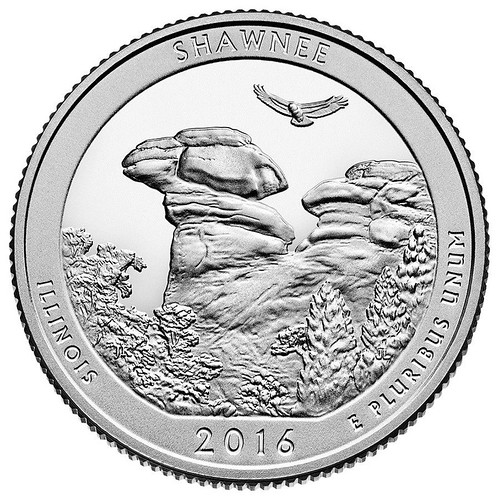
Shawnee National Forest’s Camel Rock on the United States Mint's new America the Beautiful Quarter
Shawnee National Forest’s Camel Rock is as depicted on the United States Mint’s new America the Beautiful Quarter.
When hiking through amazing sandstone rock formations in the U.S. Forest Service’s Shawnee National Forest, in Illinois, one particular formation inevitably catches your attention, a camel stoically perched overlooking a spectacular landscape. It is this striking image, called Camel Rock, that was selected to represent the Shawnee National Forest on the newest America the Beautiful Quarter.
Started in 2010, each year the United States Mint issues a quarter with the reverse (tails) side depicting a national site or park. The Shawnee is one of only five national forests to be recognized in the program.
The Shawnee National Forest’s reverse side image was designed by Justin Kunz and sculpted by Jim Licaretz. It depicts a close view of Camel Rock and a red-tailed hawk soaring in the sky.
Camel Rock is situated in the Shawnee’s Garden of the Gods Recreation Area, which is considered by many in Illinois to be a national treasure.
The United States Mint and Shawnee National Forest will host an event February 4, 2016 to debut the new quarter at Southeastern Illinois College in Harrisburg.
Although Camel Rock is amazing, there is so much else to see and do in the Forest’s 286,400 acres from rock-climbing, orienteering and long-distance pedestrian to equestrian trails. And, while you’re there, remember to take a selfie with your quarter by the real deal!
    

More plastic than fish in oceans by 2050 - Jan. 19, 2016

The world is flooded with plastic garbage.


There will be more plastic than fish in terms of weight in the world's oceans by 2050, the World Economic Forum warned Tuesday.


More plastic than fish in oceans by 2050 - Jan. 19, 2016

Palm Warbler

From the U.S. Fish and Wildlife Service Midwest Region:


Palm warblers spend summers in the upper Midwest and Canada. In the fall, they take off for the warm southern shores and Caribbean! 

Photo: Palm warbler courtesy of Brian Garrett/Creative Commons. https://flic.kr/p/CbNDxi