Search This Blog

Tuesday, July 21, 2015

The Climate Hubs Tool Shed - An Inventory of Relevant Tools to Help Land Managers Respond to Climate Variability

From the #USDA:


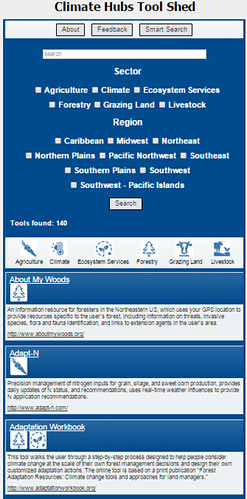
Climate Hubs Tool Shed screenshot
Users can search using keywords, user-friendly categories, or a combination of variables via the advanced search feature. (Click to enlarge)
Producers want tools that can help implement adaptation strategies to reduce climate-related pressures and ensure the quality of production. They also need information about the effects of climate change on production systems. These range from management of labor resources in specialty crop production, to market demand for nursery crops, to marketing of locally grown produce. The Climate Hubs Tool Shed can be used to develop innovative management systems that increase profitability and product quality across all systems.
Launched in early 2014, USDA’s Regional Climate Hubs were established to deliver science-based knowledge, practical information, and program support to farmers, ranchers, forest landowners, and resource managers. To this end, the Hubs are excited to announce the release of the Climate Hubs Tool Shed. The Tool Shed is an online, searchable database of tools (data-driven, interactive websites and mobile apps) that can assist land managers, land owners, and extension professionals in adapting working lands to the impacts of climate change. Users can search using keywords, user-friendly categories, or a combination of variables via the advanced search feature. While many of these tools were developed specifically to adapt to climate variability, several were developed to aid in mitigating the indirect effects of climate change such as drought, pests, wildfire, and extreme weather.
The Climate Hubs Tool Shed is an excellent resource for managing the effects of climate change on working lands. Consolidating the tools in one place helps users find the best tool for their specific need. So take a look at the Tool Shed on the Climate Hubs Website. Feedback is always welcome, and can be provided via the “Feedback” button on the site. The Climate Hubs Tool Shed was developed by the Southeast Climate Hub, but is relevant and can be used by land managers across the country. Special thanks to Sarah Wiener, Emrys Treasure, and Steve McNulty of the Southeast Climate Hub for seeing this project to completion.
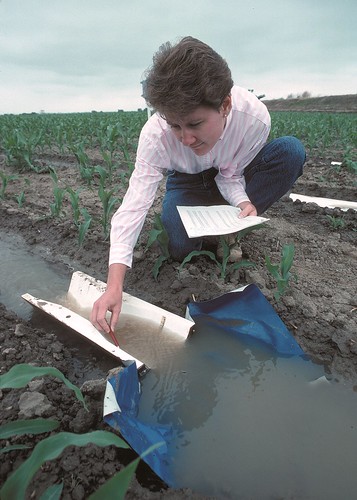
Woman working near irrigation
Producers need information about the effects of climate change on production systems, like irrigation for example.
    

Monday, July 20, 2015

Could the next Burmese python be a lizard from South America? | Miami Herald

This month, a two-foot tegu identified as No. 1125 scampered through a bramble of thick sawgrass in the southern Everglades, a tiny backpack carrying a GPS tracker attached to her back and a string of purple party beads secured around her belly.
No. 1125 has a mission: to reveal the secret life of Argentine tegus.


Read more here: http://www.miamiherald.com/news/local/environment/article27872386.html#storylink=cpy


Could the next Burmese python be a lizard from South America? | Miami Herald

Topeka shiner fishling

From Neosho National Fish Hatchery:


New Report Highlights Sage Conservation Successes, Stories

From the #USDA:


Signing an agreement supporting sage grouse conservation
SGI today unveiled a new report that highlights the people and partnerships responsible for sage grouse conservation efforts on private lands.
Statistics associated with the Sage Grouse Initiative (SGI) are quite impressive. Since 2010, more than 1,100 ranchers have teamed up with USDA’s Natural Resources Conservation Service (NRCS) in the partnership led by the agency to conserve habitat on 4.4 million acres, an area of working lands twice the size of Yellowstone National Park. The partnership has invested more than $424 million, of which more than 75 percent are invested in the highest priority areas.
NRCS helps restore habitat for sage grouse, an iconic, at-risk bird of the American West, by restoring and protecting key landscapes through removal of encroaching conifers, up by 14-fold, and through the establishment of conservation easements, up by 18-fold. While these numbers are indeed important, they do not share the real story. It’s the people and partnerships behind the numbers that truly matter as they are the ones that actually put the conservation on the ground. These conservation heroes and their tremendous accomplishments are highlighted in the brand new publication called “Success on the Range,” unveiled today by SGI.
The report puts the power of voluntary conservation on private lands on full display. Each story made possible by rallying around a shared vision of achieving world class wildlife through sustainable ranching.  All partners — states, conservation districts, wildlife and agricultural groups, land trusts and federal partners – working hand in hand with western ranchers to accelerate implementation of conservation actions.
Their stories provide true testament to not only what’s possible when we all pull in the same direction, but what the likely outcome will be. SGI perfectly illustrates how wildlife and agriculture can not only coexist, but thrive in harmony.
While today we celebrate the unprecedented success achieved over the past five years, we also recognize that our work is not yet complete. Lessons learned are being translated into new opportunities and actions as we continue to scale up the effort. New partnerships, like the one that was forged today in Montana, give hope that even larger successes lie on the horizon.
The memorandum of understanding signed today in Helena, Montana will formally link the state, NRCS and the Soil and Water Conservation Districts of Montana, Inc. as joint partners to conserve privately owned working rangelands using win-win solutions showcased in SGI. This collaboration is especially important in Montana, where 70 percent of all sage grouse habitat occurs on privately owned grazing lands.
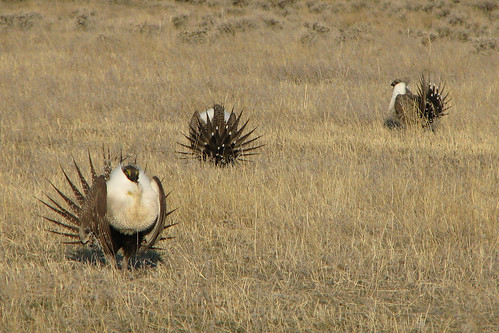
Sage grouse in their natural habitat
NRCS, the state of Montana, and the Soil and Water Conservation Districts of Montana, Inc. today signed a memorandum of understanding aimed to drive sage grouse conservation in the state.
    

#USDARoadTrip: USDA Innovates to Meet Your Needs

From the #USDA:


A person holding a digital map on a smart phone
Digital maps available for your smart phone help visitors find their way around U.S. Forest Service forests and grasslands.
USDA is in the solutions business. And now more than ever, we’re committed to working beside farmers, ranchers, rural businesses and partners to find innovative and collaborative solutions that meet the ever-evolving interests of the American people.
This week, as part of our USDA summer road trip, we’ll take you through a few of our signature advancements from recent years that help us to better serve your needs, including a series of mobile and web based applications that allow you to interact with USDA programs and services your way.
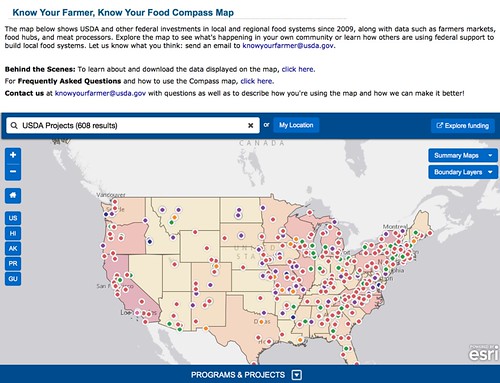
KYF2 Compass screenshot
Updated in May 2015, the Compass map shows you the local foods landscape in your community and around the country. Data includes USDA and other federally supported local food projects, farmers markets, food hubs, meat processors and more! Now fully searchable. (Click to enlarge)
For example, did you know your personal calorie number may not be based solely on your height and weight? Research shows us that age, gender, activity level, weight, weight loss history, and goal weight might all play a role in determining the calories you need every day–which means individual dietary needs can differ slightly from person to person.
That’s exactly the idea behind a new USDA collaboration with the National Institutes of Health (NIH) that is working to address the individualized health requirements of the American people by empowering them to tailor their healthy diet to their own dietary needs. Starting today, NIH’s free Body Weight Planner is now offered to the USDA SuperTracker’s 5.5 million registered users and can help you make a plan to reach your goal weight and then maintain it afterward. Read more about the announcement, and then start your planning today.
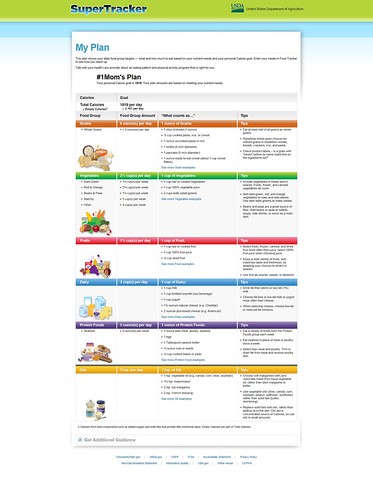
1Mom SuperTracker graphic
This image shows a daily food plan, which tells how much of each food group to eat to get the necessary nutrition while staying within a calorie allowance. (click to enlarge image)
This week, and throughout the rest of July, we’ll continue to make stops across USDA’s technology and investments corridor to look at some of the innovative ways USDA is working to advance our work for the American people and drive the rural economy. Stay tuned to #USDARoadTrip to see how USDA is working in all corners of our nation to build a stronger, more sustainable America through partnership, progress and promise.
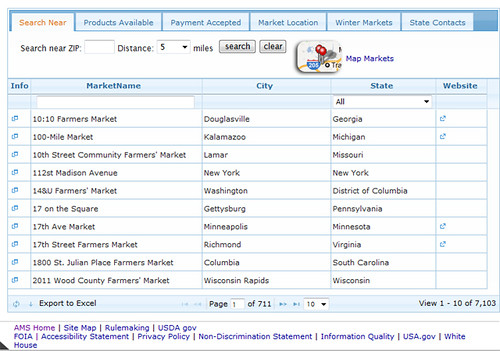
The USDA National Farmers Market Directory screenshot
The USDA National Farmers Market Directory. With a few easy clicks, market managers can add their farmers market to the more than 7,000 markets already listed in the directory.

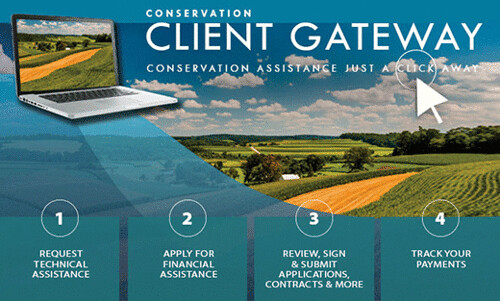
Conservation Client Gateway homepage screenshot
Conservation Client Gateway is a secure new website that lets farmers and ranchers request conservation assistance, review and sign documents, track payments and more.
    

Patience & Persistence

From the U.S. Fish and Wildlife Service:


"Knowing trees, I understand the meaning of patience. Knowing grass I can appreciate persistence." - Hal Borland

Eastern Dobsonfly

From Great River and Clarence Cannon National Wildlife Refuges:


This Eastern Dobsonfly, approx. 2 inches in length, is actually in its larval stage. Dobsonflies are long-lived insects with the larvae typically living for 2 or 3 years underwater before pupating and becoming winged adults. The larvae are predaceous and snatch nearly anything that swims or ambles by, including other aquatic insects, small fish, and so on. The adults, which can exceed 3.5 inches, only live a few days or a week and do not eat during this stage.