Search This Blog

Friday, May 29, 2015

Technology Helping us Follow the Food Path

From the #USDA:


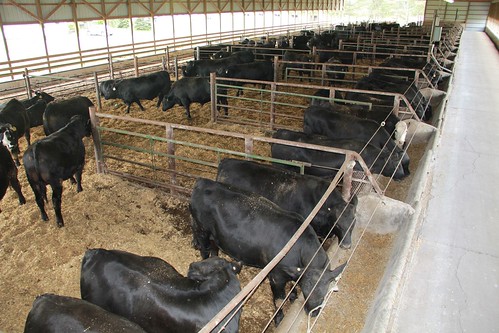
Cattle at a farm
A 2011 FSMIP grant awarded Michigan State University matching funds to develop a pilot project to explore ways to improve local and regional beef production and marketing systems. Photo courtesy of Michigan State University.
It is amazing to see such an array of meats available in today’s grocery stores. Traveling across the country in my role at USDA, I hear from so many folks that want to know where their beef comes from, what the animal was fed or how was it raised.  I also know farmers have a real commitment to their crops and animals and are happy to share their stories with customers.
Farmers markets are one way for small producers to tell consumers directly where their products were grown or raised.  However, mid-sized farms face unique challenges as they are too large to dedicate the time and resources to participate in farmers markets, but too small to compete effectively in large commercial markets.  New technology could make connecting consumers to mid-sized farmers easier no matter where meat is purchased.
 The Federal-State Marketing Improvement Program (FSMIP), administered by USDA’s Agricultural Marketing Service (AMS), awarded Michigan State University a matching grant in 2011 for a pilot project to explore ways to improve local and regional beef production and marketing systems.  Researchers studied the process of using the information contained on the ear tag to create a two-dimensional (2D) barcode label that would follow each piece of meat destined for the consumer.  The 2D barcode can store large amounts of information and can operate as a portable database when scanned by camera-equipped mobile devices.  The large database could contain a wealth of knowledge that the consumer may want to know about their food.
The project created an internet-accessible database with farm, processing and animal details stored on the radio frequency identification (RFID) ear tag.  The process caused little or no disruption of the routine tasks in both the farm operations and the meat processing facility.  The transfer of RFID to 2D labels resulted in 100% accuracy in tracing the beef through the supply chain.  Based on the modest cost of the systems tested, it appears that relatively simple traceability systems could be developed costing 1 to 2% of wholesale value.
Many research questions are yet to be answered both on the consumer side and the processing side before this technology can be widely adopted.  MSU is poised to continue this work which will be of interest to mid-sized beef producers and consumers across the country.
Earlier this year, FSMIP authorized over $1 million in matching grant funds.  It is yet another example of the people’s department investing in American agriculture.  These funds support research projects like the MSU project to explore changes in marketing, transporting, and distributing U.S. agricultural products.  USDA is committed to supporting innovative technology solutions and other means to keep up with consumer demand, making sure that the future of agriculture is bright.
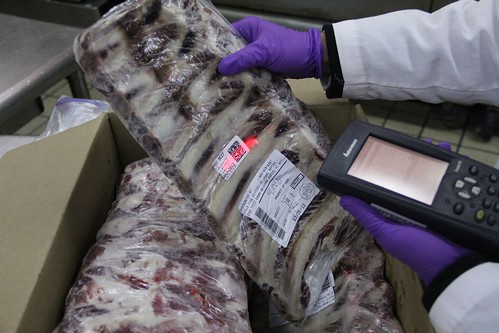
A person scanning a meat product
Researchers studied the process of using the information contained on the ear tag to create a two-dimensional (2D) barcode label that would follow each piece of meat destined for the consumer. The 2D barcode can store large amounts of information and can operate as a portable database when scanned by camera-equipped mobile devices. Photo courtesy of Michigan State University.
    

In Conversation with #WomeninAg: Cory Carman

From the #USDA:


Cory Carman, a fourth generation family rancher in eastern Oregon
Cory Carman is a fourth generation family rancher in eastern Oregon. She is the owner and operator of Carman Ranch, serves on the Oregon Farm Service Agency State Committee, and encourages women in agriculture to “change what farmers look like”.
As part of our ongoing #womeninag series, we are highlighting a different leading woman in agriculture each month.  This month, we profile Cory Carman. Cory’s family has been ranching in Wallowa, Oregon since 1913. After graduating from Stanford with an environmental policy degree and working in Washington, DC and in Los Angeles, Cory returned to rural Oregon in 2003.  She now runs Carman Ranch with her husband, Dave Flynn and business partner Jill McLaran. 
Today, Carman Ranch specializes in grass fed beef and is engaged in multiple cooperative habitat and ecosystem restoration projects.  Cory works with local ranchers to explore collective marketing options for locally raised beef to restaurants, wholesalers and other buyers in Oregon.
Cory loves being part of a rural community and spending time on the ranch with David and their three children, as well as in Portland with chefs and buyers. In 2012, Cory was featured in a White House Google Plus Hangout profiling six leading women in local agriculture. She also is the only woman serving on the Oregon Farm Service Agency State Committee. USDA recently announced that the nomination period for local Farm Service Agency county committees begins Sunday, June 15, 2014. More information is available at www.fsa.usda.gov/elections.
We talked with Cory about why women need to “work smarter” on the farm, and why it’s important for women to take on more leadership roles in their businesses and their communities to “change what farmers look like”.
How do you start your day?
My kids get on the bus at 7 am and my husband heads outside to work.  I pour myself a cup of coffee and sit on the couch so I can look out at the cows and the mountains.  It’s the time of the day I get to appreciate the peace of where we live, without interruptions.
Who are your role models in agriculture?
I’m most inspired by producers who dig into a place and learn about the nuances of production in their landscape, its unique soil, wildlife and seasonal changes.  These people have a depth of understanding of a place that is hard to duplicate.  There are so many of these farmers across the nation. 
My grandmother lived on our family ranch for 90 years.  She had a profound knowledge of our land; where the water pooled when it rained, when the elk moved down, the hidden draws where the cows hid.  It’s a special type of wisdom that one can only be gained by spending many decades on the land.  Wendell Berry writes most eloquently about these experiences and I think he communicates a type of patience that’s easy to dismiss in our age of technology and instant gratification.
Who do you think are the most influential women in agriculture — past or present?
I think women tell incredible stories about agriculture that change the way we perceive our practices and cause us to question the status quo.  Rachel Carson’s writing prompted a huge change in how we think about pesticides.  Nicollete Niman, Jane Black and Maryn McKenna are just a few women writing thoughtful, well-researched stories that, regardless of whether you agree with their conclusions, are prompting important conversations about how we produce food. 
In my day-to-day life, I think Temple Grandin has had an incredible influence on how we operate in the cattle industry.  Nearly every beef processing plant I visit points to changes they’ve made due to her observations and insight.
In addition to being on the ranch, you also serve on some public Boards and Commissions.  How are women contributing to these organizations?
I think women are contributing on several levels. They bring their unique perspective to leadership roles.  Agriculture remains a very physical occupation and on average, we just aren’t as strong as our male counterparts.  So we have to work smarter, not harder, and we have to manage relationships and be strategic.  These are great perspectives to bring into challenging or contentious conversations.
I can’t count the number of times a man tells me, “You don’t look like a rancher.” When I serve on boards with these men, they learn that I know what I’m talking about because I am a rancher, and they can adjust their idea of exactly what a rancher looks like.
I would encourage any woman in agriculture who is interested to serve on a board or commission, locally or nationally, to do so. It is a very rewarding experience.
Where do you currently sense the most energy and excitement happenings in women in agriculture?
Women have been an integral part of agriculture since humans have been growing food.  But in recent memory, they have often been on the sidelines.  I see that shifting and it’s exciting.  Women are appearing more frequently in leadership roles in both the public and private sector, and men are embracing the change. 
In my world of livestock production, we’re seeing a lot of women take on the role of communicating what’s happening on the ranch.  They are adding immense value to what’s produced by creating new marketing channels through telling the story of where and how the animals are grown.  Consumers are looking for those types of connections.
What are you watching, reading or listening to?
I’m reading a fantastic historical fiction novel about World War II called “All the Light We Cannot See”, I’m in love with a bluegrass trio called The Stray Birds, and I can’t stop watching Gabe Brown’s YouTube videos on improving soil health.
How do you spend the free time you have?
I love to go running.  We’re so lucky to have endless dirt roads with no traffic.  Almost every time I go, I feel like I’m part of a photo shoot for a running magazine.  I also love to hike in the mountains, and we go backpacking or camping every chance we can get away.
In seven words or less, what is some advice you would offer to the next generation of women in agriculture?
Change what farmers looks like.
From farmers and scientists to policy makers and communicators, women are at the forefront of agriculture.  Check out previous Conversations with #womeninag with Anne Alonzo, Administrator of USDA’s Agricultural Marketing Service;  cattlewoman Minnie Lou Bradley of Bradley 3 Ranch; National Young Farmers Coalition founder Lindsay Lusher Shute; Dean of the College of Agriculture at Virginia State University Dr. Jewel Hairston; and founder and editor-in-chief of Civil Eats Naomi Starkman. You can continue to follow our conversation with #womeninag on Storify.
Is there a leading women in agriculture you would like to hear from?  Send us your suggestions using #womeninag or via email at agwomenlead@usda.gov.
    

The Role of a Vegetation Ecologist

From the #USDA:


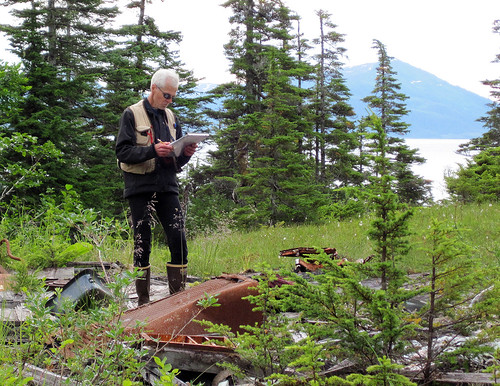
Robert L. DeVelice, a vegetation ecologist on the Chugach National Forest monitoring invasive plants
Robert L. DeVelice, a vegetation ecologist on the Chugach National Forest, monitors invasive plants. (Forest Service photo)
Vegetation ecologists play an essential role in the U.S. Forest Service. They research the abundance and location of flora in their region as well as the factors that influence how the plants flourish. All nine Forest Service regions and most forests have ecologists on staff, representing a variety of interests. Some ecologists are fascinated by fungi, while others focus on lichens, wildflowers and other elements of biodiversity. In addition, plant ecologists and botanists provide quite a bit of support to the other disciplines and program areas within the Forest Service.
Robert L. DeVelice, a vegetation ecologist on the Chugach National Forest, fits the role well. His wealth of education, experience and personal interests have benefited both the forest and the local community. He grew up in New Mexico, received a Bachelor of Science in forestry from the University of Montana, a Masters in agronomy with a focus on forest soils from New Mexico State University, and a Ph.D. in plant ecology. When he arrived in Alaska in 1992, he was quite interested in native plants, their distribution and ecological occurrences across the landscape.
“I always had an appreciation of natural landscapes,” DeVelice said. “There was always a big attraction in coming to Alaska because I knew the forests here, especially on the Chugach, were primarily driven by natural processes.”
DeVelice said that the occurrence of non-native plant species in Alaska is fairly rare, and the plants are restricted in their distribution across the landscape. For this reason, Alaska is an exceptional place to see vegetation in its primarily natural process-driven state.
The 5.4-million-acre Chugach National Forest, the second-largest single forest in the nation, has a diversity of environments that range from rainforest to interior forest to wetlands. This richness produces abundant botanical life.
“For example, the Prince William Sound area contains spectacular glaciers and huge variety of temperate rainforest vegetation types,” said DeVelice. “The Kenai Peninsula has a flavor more similar to the boreal sections of Interior Alaska, with vegetation that includes trees like aspen that are not common elsewhere on the Chugach. The Copper River Delta, on the other hand, contains a rich array of wetland vegetation.”
DeVelice developed a hierarchal vegetation classification for mapping and describing biodiversity across the landscape. The project was started 1988 by his predecessor (Susan L. Boudreau) who conducted plant sampling on Montague Island in Prince William Sound. Since then, DeVelice and his colleagues have sampled over 2,000 ocular macro plots.
In the 2,000 plots that were established on the Chugach, over 500 plant species were represented. That is one-third of the whole flora of the State of Alaska, which is indicative of the diversity and richness of the area.
When asked what he considers to be one of his most important contributions as a vegetation ecologist, DeVelice refers to “Assessing the extent to which roadless areas complement the conservation of biological diversity” published in the prestigious journal Ecological Applications.
The work assesses the contribution that inventoried roadless areas on National Forest System lands could make toward building a representative network of conservation reserves in the United States. Including roadless areas expands representation of a range of ecological conditions, increases the area of reserves at lower elevations, and increases the number of areas large enough to provide refugia for species needing large tracts relatively undisturbed by people.
While DeVelice has made significant contributions to ecology research for the Forest Service, one of his favorite pastimes is bringing his love of native flora to the community at large. Last year, he led the Botany Challenge 49 on the Falls Creek Trail 20 miles east of Anchorage. This area adjacent to the Seward Highway has quite a high diversity of plants. The goal for the hikers was to locate 49 species of plants (in honor of Alaska being the 49th state) within two hours. Their trip started at sea level and ended at an elevation of 1,200 feet.
“The Falls Creek area is immensely beautiful and includes verdant forests, species rich shrublands, and a lively stream,” said DeVelice.
Sometimes DeVelice’s community outings are as simple as nature walks with kids to look for leaves. Other outings are much more strenuous.
DeVelice is an avid runner and rock climber. He ran the Western States 100-Mile Endurance Run in California 11 times. He also leads local epic runs that last from two to four hours. Established in 2000, these events are non-competitive training runs that take the athletes through rugged terrain, thick vegetation, and even Southcentral Alaska’s bitter winter weather.
In addition to his professional and social advocacy for the botanical riches of Alaska, DeVelice’s love for wildflowers reaches a personal level. He and his wife Jeannie named their daughter Linnaea after his favorite flower, Linnaea borealis, or twinflower. Carolus Linnaeus, for which the flower was named, is considered the father of binomial nomenclature for plants.
Through his various endeavors, DeVelice ensures his passion and knowledge are shared with future generations who will become the next stewards of the natural resources that he loves.
    

Thursday, May 28, 2015

Protecting Clean Water While Respecting Agriculture

From the USDA:


Today the Environmental Protection Agency released its new Clean Water Rule to help provide greater clarity on certain aspects of the Clean Water Act.
The Clean Water Act has successfully reversed the effects of harmful pollution in America’s waters for over 40 years. However, recent Supreme Court cases caused tremendous confusion over which waters the Act would continue to cover. There was broad agreement among Members of Congress, farmers and ranchers and other business owners that more clarity was needed to define precisely where the Clean Water Act applies.
USDA urged the EPA to listen to input from farmers and agri-business owners who need clear expectations and long-term certainty so they can effectively run their operations. EPA is seeking to provide that certainty with the development of this Clean Water Rule, and we appreciate that Administrator McCarthy and her staff have made a very concerted effort to incorporate the agricultural community’s views.
The following is a blog from EPA Administrator Gina McCarthy and Assistant Secretary of the Army for Civil Works Jo-Ellen Darcy on the Clean Water Rule and agriculture.
Cross-posted from the Environmental Protection Agency blog:
By EPA Administrator Gina McCarthy and Assistant Secretary of the Army for Civil Works Jo-Ellen Darcy
Today, EPA and the Army finalized a rule under the Clean Water Act to protect the streams and wetlands we depend on for our health, our economy, and our way of life.
The Clean Water Act has protected our health for more than 40 years—and helped our nation clean up hundreds of thousands of miles of waterways that were choked by industrial pollution, untreated sewage, and garbage for decades.
But Supreme Court cases in 2001 and 2006 put protection of 60 percent of our nation’s streams and millions of acres of wetlands into question. At the same time, we understand much more today about how waters connect to each other than we did in decades past. Scientists, water quality experts, and local water managers are better able than ever before to pinpoint the waters that impact our health and the environment the most.
Members of Congress, farmers, ranchers, small business owners, hunters, anglers, and the public have called on EPA and the Army to make a rule to clarify where the Clean Water Act applies, and bring it in line with the law and the latest science. Today, we’re answering that call.
Every lake and every river depends on the streams and wetlands that feed it—and we can’t have healthy communities downstream without healthy headwaters upstream. The Clean Water Rule will protect streams and wetlands and provide greater clarity and certainty to farmers, all without creating any new permitting requirements for agriculture and while maintaining all existing exemptions and exclusions.
The agencies did extensive outreach on the Clean Water Rule, hosting more than 400 meetings across the country and receiving more than a million public comments. EPA officials visited farms in Arizona, Colorado, Maryland, Mississippi, Missouri, New York, Pennsylvania, Texas, and Vermont. 
Our nation’s original conservationists—our farmers, ranchers, and foresters—were among the most crucial voices who weighed in during this process.  Farmers have a critical job to do; our nation depends on them for food, fiber, and fuel, and they depend on clean water for their livelihoods.
Normal farming and ranching—including planting, harvesting, and moving livestock—have long been exempt from Clean Water Act regulation, and the Clean Water Rule doesn’t change that. It respects producers’ crucial role in our economy and respects the law. We’d like give a few more specifics on our final rule, starting with what it doesn’t do.
  • The rule doesn’t add any new permitting requirements for agriculture.
  • It doesn’t protect new kinds of waters that the Clean Water Act didn’t historically cover. It doesn’t regulate most ditches and excludes groundwater, shallow subsurface flows, and tile drains. And it doesn’t change policy on irrigation or water transfers.
  • It doesn’t touch land use or private property rights. The Clean Water Rule only deals with the pollution and destruction of waterways.
  • Again, our rule doesn’t touch long-standing Clean Water Act exemptions and exclusions for agriculture. It specifically recognizes the crucial role farmers play and actually adds exclusions for features like artificial lakes and ponds, water-filled depressions from construction, and grass swales.
What the rule does is simple: it protects clean water, and it provides clarity on which waters are covered by the Clean Water Act so they can be protected from pollution and destruction.
Feedback from the agricultural community led us to define tributaries more clearly. The rule is precise about the streams being protected so that it can’t be interpreted to pick up erosion in a farmer’s field. The rule says a tributary has to show physical features of flowing water to warrant protection.
We also got feedback that our proposed definition of ditches was confusing. We’re only interested in the ones that act like tributaries and could carry pollution downstream—so we changed the definition in the final rule to focus on tributaries. So ditches that are not constructed in streams and that flow only when it rains are not covered.
We’ve also provided certainty in how far safeguards extend to nearby waters—the rule sets physical, measurable limits for the first time. For example, an adjacent water is protected if it’s within the 100-year floodplain and within 1,500 feet of a covered waterway. By setting bright lines, agricultural producers and others will know exactly where the Clean Water Act applies, and where it doesn’t.
Farmers and ranchers work hard every day to feed America and the world. In this final rule, we’ve provided additional certainty that they’ll retain all of their Clean Water Act exemptions and exclusions—so they can continue to do their jobs, and continue to be conservation leaders.
We appreciate everyone’s input as we’ve worked together to finalize a Clean Water Rule that keeps pollution out of our water, while providing the additional clarity our economy needs. Learn more with this fact sheet.
    

Buzzing into Action to Support Pollinator Health through Research

From the USDA:


As an ecosystem ecologist working for the U.S. Department of Agriculture, pollinators are near and dear to me.  Not only are they vital to agricultural production, providing billions of dollars in pollination services for the fruits, nuts and vegetables that contribute to a healthy diet, they are also important members of natural ecosystems, pollinating the plants that many other organisms rely on for food and habitat. Yet pollinators have been having a rocky time, lately. Beekeepers have struggled to maintain their honey bee colonies, the primary pollinators for our crops in the United States. They are managing a suite of simultaneous and interacting stressors to bee health, including severe weather episodes, inadequate nutrition, exposure to pesticides, and numerous damaging pests and diseases. Native pollinators also seem to be struggling with some of these same stressors, as well as land use change and habitat loss. Because of the incredible diversity of native pollinators, we know much less about their individual populations and the factors affecting their health.
To address these issues, we at USDA are excited to support the National Strategy to Promote the Health of Honey Bees and Other Pollinators that President Obama released last week. The National Strategy is the product of the Pollinator Health Task Force, which USDA and the Environmental Protection Agency Co-Chair. The Strategy is a comprehensive plan to work across the Federal government and with partners to address the research, education and management challenges we must overcome to sustain healthy pollinator populations. USDA has the capacity to promote pollinator health in each of these arenas. Our intramural and extramural research programs will continue to build the knowledge base we need to manage pollinators effectively, as outlined in the accompanying Pollinator Research Action Plan. Our education programs, including our partnership with 4H, as well as those carried out by our service and research agencies, will help our communities engage with pollinator issues and to take action in their own backyards. And, lastly, our conservation programs, administered through our service agencies, will help land managers adopt pollinator-friendly practices on their properties. There is a lot of work ahead, but the coordinated effort through the Task Force ensures that we are maximizing our impact and getting the most out of our programs.
To kick off our renewed effort on pollinator health, I am pleased to announce the release of four USDA reports that make progress toward the goals outlined in the National Strategy. The USDA Honey Bee Forage and Nutrition Summit report summarizes input from stakeholders on the state of current research, identifies opportunities for public-private partnering and improving bee access to healthy forage, while determining gaps in our knowledge regarding the nutritional needs of honey bees. Touching on some of the goals of the Honey Bee Forage and Nutrition Summit, the Attractiveness of Agricultural Crops to Pollinating Bees for the Collection of Nectar and/or Pollen report synthesizes information on the attractiveness of crops to bees as a food source. This information can help in mitigating potential harms to bees from agricultural practices. The USDA Varroa Mite Summit report compiles the current knowledge of the Varroa mite, an important pest of honey bee colonies, and summarizes the research, education and outreach priorities identified by our stakeholders during the summit. Lastly, the Colony Collapse Disorder and Honey Bee Health Action Plan updates the original Action Plan released in 2007 to reflect the current state of knowledge, identifies gaps in that knowledge and outlines and prioritizes research and extension activities for how USDA and EPA will work together to address the causes of Colony Collapse Disorder.
As we move forward with the National Strategy, we look forward to continued interaction with our Federal, State, Tribal, university, private and non-governmental partners. The research to support pollinator health, and the plans to put that research into action, will require the collaborative effort of all sectors.
    

Invasive Pest Invades a National Comic Strip

From the USDA:


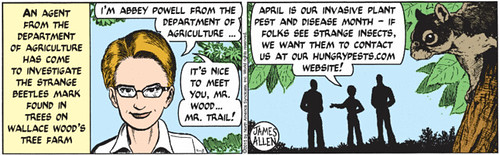
EAB Comic strip
Photo credit: Mark Trail via @ComicsKingdom
Emerald Ash Borer (EAB) Awareness week is May 17-23 and my tenure in a nationally syndicated comic strip is coming to an end, so it’s a good time to tell you how a new USDA employee wound up cartoon-ized.
The Mark Trail strip—known for its environmental themes—just finished a six-week long storyline about the invasive EAB.  The EAB, a small metallic green wood-boring beetle, destroys ash trees and is now found in 25 U.S. States.  The Mark Trail strip features “Agent Abbey Powell from the USDA” and shares information about the EAB. To view the comic—beginning with my debut—visit Mark Trail.
How did this happen? James Allen, the strip’s current author, called the APHIS Public Affairs Office with his interest in developing the storyline. I took Allen’s call and answered his questions—not suspecting at the time that I would end up in the comic!  He was curious about the EAB, which likely arrived in the US in the late 1990’s or early 2000s, in solid wood packing material.  In response, APHIS now requires that imported wood packing material be treated to kill any invasive pests that may be hitchhiking inside. 
I provided an outline of how the USDA would respond if Mark Trail contacted us about the EAB, and developed a scenario to fit into his planned storyline. I told Allen about the sticky purple traps APHIS uses to survey for EAB and the stingless wasps we release as a biological control.
“Abbey got right on the task and sent over a treasure trove of info and pictures. Details of everything… step by step procedures of their approach to identifying the insect, quarantine of the area and biocontrol practices. Abbey was so helpful, I asked her permission to put her in the strip as an agent of the USDA,” said Allen.
“She kindly obliged and sent a picture of herself. I referenced from her photo and made her a “Mark Trail-ized” character,” he added.
While I provided key messages, it was Allen who crafted the story and art for each installment. He took some scientific and other liberties—ranging from my job title (“Agent Powell” instead of public affairs specialist) to technical points concerning the biology and behavior of EAB, and the story’s ending.
Allen and I have both been flattered by the response. He said, “As I continued writing the story, her part began to grow. It seems the public’s interest grew as well. Readers at the Comics Kingdom website were posting things like ‘I searched Abbey Powell… there is one that actually works at the USDA!’ … and ‘I found her LinkedIn profile and she looks like the character in the strip!’”
I’m humbled and honored to be part of this comic strip with national reach to help raise public awareness about EAB and other invasive pests and diseases and what APHIS does to combat these threats.
See you in the funny papers!
For more information about EAB and other invasive pests, visit www.hungrypests.com.
    

Coal ash management progress: Riverbend coal ash excavation is under way to fully lined landfill - Duke Energy

CHARLOTTE, N.C. -
The first truck of excavated coal ash left the retired Riverbend power plant near Charlotte today, marking the beginning of the end for ash storage at that site as Duke Energy relocates ash to a fully lined landfill.


Coal ash management progress: Riverbend coal ash excavation is under way to fully lined landfill - Duke Energy