Search This Blog

Thursday, February 10, 2022

EPA Awards Maryland Environmental Service $1.8 million to Reduce Diesel Emissions at Port of Baltimore

 U.S. EPA News Release:


EPA Awards Maryland Environmental Service $1.8 million
to Reduce Diesel Emissions at Port of Baltimore

BALTIMORE (Feb. 10, 2022) — The U.S. Environmental Protection Agency congratulated Maryland Environmental Service (MES) today on their Diesel Emission Reduction Act (DERA) grant award of $1.8 million to replace diesel powered yard trucks, forklifts, and cargo handling equipment with less polluting equipment, and replace three drayage trucks with electric vehicles at the Port of Baltimore.

The EPA award along with $3.3 million in project partner matching funds will enable MES to replace the equipment with electric vehicles at the Port of Baltimore, which borders the neighboring Turner Station community, a community with environmental justice concerns.

“These cleaner trucks, and heavy equipment help deliver protections for those that need it most, such as the people living and working near ports, ” said EPA Mid-Atlantic Regional Administrator Adam Ortiz. “Thanks to the Diesel Emissions Reduction Act Grant Program, we are making historic investments into communities that are overburdened by pollution to address legacies of environmental injustice.”

The grant funding will assist MES, on behalf of Maryland Department of Transportation (MDOT), and Maryland Port Administration by replacing diesel trucks and other equipment serving the port with new, cleaner models.  These new units will reduce emissions of diesel particulate matter and other pollutants such as nitrogen oxides, carbon monoxide and hydrocarbons – pollutants that contribute to adverse health impacts such as respiratory and cardiovascular disease.  The beneficiaries of this project are the citizens of Baltimore and especially the Turner Station community.

“Tackling the climate crisis isn’t just necessary to improve our environment and public health – it’s also an opportunity to create jobs and greater prosperity in our state,” said Senator Chris Van Hollen, a member of the Appropriations Subcommittee on Interior, Environment, and Related Agencies. “This latest federal investment in the Port of Baltimore will both strengthen one of Maryland’s major economic engines while promoting cleaner air and advancing environmental justice throughout the region. I will continue fighting in the Senate to bring resources to Maryland to grow our economy, protect our environment, and combat climate change.”

EPA awarded $53 million through the 2021 Diesel Emission Reduction Act (DERA) National Grant program, and an additional $24 million was awarded to 49 states through the State DERA Grant program, for a total of $77 million to reduce diesel pollution in local communities.

“These funds are a big boost for clean air and climate progress and that’s great news for Baltimore communities and Maryland economies,” Maryland Environment Secretary Ben Grumbles said. “We thank EPA, MPA and all the partners of Maryland’s green port who are advancing the state’s climate and environmental justice goals by investing in our clean energy economy.”

 In selecting projects for awards, priority was given to projects that:

  • are in areas designated as having poor air quality
  • reduce emissions from ports and other goods movement facilities
  • benefit local communities
  • incorporate local communities in project planning
  • demonstrate an ability to continue efforts to reduce emissions after the project has ended

Since the start of the DERA program in 2008, EPA has awarded over $1 billion in grants and rebates to modernize the nation’s diesel fleet and speed the turnover to cleaner on- and off-road heavy-duty trucks and equipment.

In addition to DERA, following the passage of the historic Bipartisan Infrastructure Law, EPA will be making significant investments in the health, equity, and resilience of American communities. EPA will offer a total of $5 billion between fiscal years 2022 and 2026 to fund the replacement of dirtier school buses with low-or no-carbon school buses.

For more information on DERA national grants:  https://www.epa.gov/dera/national-dera-awarded-grants

More information on DERA state grants:  https://www.epa.gov/dera/state-allocations

Tuesday, February 8, 2022

EPA Fines Owner of San Joaquin Valley Almond Orchard for Clean Water Act Violations, Orders Restoration of Wetlands

 U.S. EPA Press Release:


EPA Fines Owner of San Joaquin Valley Almond Orchard for Clean Water Act Violations, Orders Restoration of Wetlands

Contact Information: Joshua Alexander, 415-972-5940, alexander.joshua@epa.gov

SAN FRANCISCO – Today, the U.S. Environmental Protection Agency (EPA) announced a settlement with Edward Lynn Brown, owner of an almond orchard near Merced, California, for violations of the federal Clean Water Act that impacted more than two acres of rare vernal pool wetlands . The settlement requires Brown to pay $212,000 in civil penalties and restore and preserve 15 acres of wetland habitat.

On March 14, 2019, EPA inspected the site. Inspectors determined that earth-moving activities by Brown had discharged fill material into waters that flow into the San Joaquin River. This work had been undertaken without obtaining a Clean Water Act Section 404 permit from the U.S. Army Corps of Engineers.

“Grading and filling wetlands of the San Joaquin River Valley without proper permitting impacts water resources and endangers California’s unique native plants and animals,” said EPA Pacific Southwest Regional Administrator Martha Guzman. “In a time of drought and climate change, it is essential to protect these rare and vital water resources and habitats from destruction.”

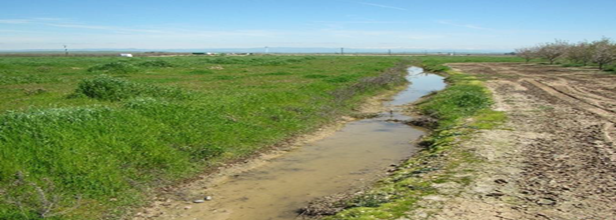
Brown’s earth-moving activities from 2016 to 2020 involved building a retention basin and access roads and planting a new almond orchard. The impacts from these activities resulted in the degradation of over two acres of vernal pool wetlands adjacent to Parkinson Creek, a tributary of the San Joaquin River that bisects the ranch. This work violated provisions of a previous 2014 EPA Order, which had required Brown to notify the U.S. Army Corps of Engineers of any proposed activity that may impact local water systems.

https://us.vocuspr.com/Publish/518041/vcsPRAsset_518041_125092_ff3f4eba-5f21-4bca-a7c6-edc5ac49f548_0.png

Image. A pond on the almond orchard that provides critical wetland habitat impacted by soil and sediment disturbances. (EPA photo)

To mitigate these negative environmental impacts, under this settlement Brown has agreed to develop a plan for removing 1.9 acres of fill material, restoring, and enhancing 2.44 acres, and preserving 12.66 acres within an 81.39-acre area within the orchard.

For more information on enforcement of Clean Water Act Section 309 visit: https://www.epa.gov/cwa-404/clean-water-act-section-309-federal-enforcement-authority.

To view information on the 2014 Clean Water Act enforcement action, visit: https://archive.epa.gov/epapages/newsroom_archive/newsreleases/f7437d2c778475d685257d94006344bc.html.

To view the 2014 public notice, visit: https://19january2017snapshot.epa.gov/www3/region9/enforcement/pubnotices/pubnotice-merced-ranch.html.

To view the proposed settlement, visit: https://www.epa.gov/publicnotices/edward-lynn-brown-merced-ca-proposed-settlement-cwa-section-309g-class-ii

To view the Consent Agreement and Final Order, visit: https://www.epa.gov/ca/cwa-09-2022-0007-edward-lynn-brown-merced-ca-proposed-settlement-cwa-section-309g-class-ii

Learn more about EPA’s Pacific Southwest Region. Connect with us on Facebook and on Twitter.

EPA Awards Cheyenne & Arapaho Tribe Part of $3.8 Million in Grants to Train Environmental Workers for Jobs Created by Bipartisan Infrastructure Law Funding

 U.S. EPA News Release:


EPA Awards Cheyenne & Arapaho Tribe Part of $3.8 Million in Grants to Train Environmental Workers for Jobs Created by Bipartisan Infrastructure Law Funding


DALLAS (Feb. 8, 2022) – Recently, the U.S. Environmental Protection Agency (EPA) announced the Cheyenne and Arapaho Tribe of Concho, Oklahoma, is among 19 organizations chosen to receive a total of $3,797,102 in grants for job training programs across the country. Job training and workforce development are an important part of the Biden-Harris Administration’s commitment to advance economic opportunities and deliver environmental justice to underserved communities to build a better America. The Tribe will receive about $200,000.

“The Bipartisan Infrastructure Law presents a once-in-a-generation opportunity to build a better America and that means new, good-paying jobs. The Brownfields Job Training grants announced today will prepare over 1,000 individuals for new environmental jobs like those,” said EPA Administrator Michael S. Regan. “This program will directly impact people’s lives, boosting the environmental workforce while helping to transform communities that need it the most.” 

“The Cheyenne and Arapaho Tribe continues to be a strong partner in leveraging EPA Brownfields funding to multiply the benefit to their community, their environment and Tribal members,” said Regional Administrator Dr. Earthea Nance. “EPA is proud to support their efforts and see their environmental programs grow and strengthen.”

Funded through EPA’s Brownfields Job Training Program, these grants provide funding to organizations that are working to create a skilled workforce in communities where assessment, cleanup, and preparation of brownfield sites for reuse activities are taking place. Individuals completing a job training program funded by EPA often overcome a variety of barriers to employment. Many of these individuals are from historically underserved neighborhoods and reside in the areas affected by environmental justice issues.

Each selected grantee will receive about $200,000.  The selected grantees are:

  • Alaska Forum, Inc.                                                                    Anchorage, Alaska
  • City of Pittsburg                                                                        Pittsburg, California
  • City of Richmond                                                                      Richmond, California
  • Los Angeles Conservation Corporation                                Los Angeles, California
  • Hunters Point Family                                                               San Francisco, California
  • Pioneer Bay Community Development Corporation         Port St. Joe, Florida
  • OAI, Inc.                                                                                      Chicago, Illinois
  • Workforce, Inc. dba Recycle Force                                        Indianapolis, Indiana
  • Civics Works, Inc.                                                                      Baltimore, Maryland
  • City of Springfield                                                                     Springfield, Missouri
  • Heartland Conservation Alliance                                           Kansas City, Missouri
  • St. Louis Community College                                                  St. Louis, Missouri
  • Pathstone Corporation                                                           Rochester, New York
  • City of Rochester                                                                      Rochester, New York
  • Laborer’s Local 17 Training and Educational Fund             Newburgh, New York
  • Cheyenne and Arapaho Tribes                                               Concho, Oklahoma
  • Auberle                                                                                      McKeesport, Pennsylvania
  • Coalfield Development Corporation                                     Wayne, West Virginia
  • Great Lakes Community Conservation Corp, Inc.               Milwaukee, Wisconsin

Rather than filling local jobs with contractors from distant cities, these organizations provide training and offer residents of communities historically affected by environmental pollution, economic disinvestment, and brownfields an opportunity to gain the skills and certifications needed to secure local environmental work in their communities. Individuals typically graduate with a variety of certifications that improve their marketability and help ensure that employment opportunities are not just temporary contractual work, but long-term careers. This includes certifications in:

  • Lead and asbestos abatement,
  • Hazardous waste operations and emergency response,
  • Mold remediation,
  • Environmental sampling and analysis, and
  • Other environmental health and safety training.

President Biden’s leadership and bipartisan congressional action have delivered the single-largest investment in national brownfields infrastructure ever. The Bipartisan Infrastructure Law (BIL) invests more than $1.5 billion through EPA’s brownfields program. Of that investment, $30 million will be invested into future Brownfields Job Training grants. During the next five years, communities, states, and tribes will have the opportunity to apply for larger grants to include and enhance the environmental curriculum in existing job training programs. This investment will help trained individuals access jobs created through brownfields revitalization activities within their communities.

EPA anticipates awarding as many as 50 additional grants to job training entities with BIL funding, beginning in fiscal year 2023. Application guidelines will be available in Spring/Summer 2022.

EPA is also planning a listening session to receive feedback from current and potential grant applicants regarding the BIL and the future of the Brownfields Job Training Grant Program. The listening session is scheduled for February 9, 2022, 12:30-2pm EST. https://usepa.zoomgov.com/j/1604678094EXITEXIT EPA WEBSITE

Since this program began in 1998, the Brownfields Job Training Program has awarded more than 352 grants. More than 19,456 individuals have completed training, and of those, more than 14,560 individuals have been placed in full-time employment in careers related to remediation and environmental health and safety. The average starting wage for these individuals is over $14 an hour. 

For more information on today’s selected Brownfields Job Training grant recipients, please visit: https://www.epa.gov/brownfields/applicants-selected-fy22-brownfields-job-training-grants

For more information on this, and other types of Brownfields grants, please visit: https://www.epa.gov/brownfields/brownfields-job-training-jt-grants


Connect with EPA Region 6: On Facebook: https://www.facebook.com/eparegion6 

On Twitter: https://twitter.com/EPAregion6    

Activities in EPA Region 6: http://www.epa.gov/aboutepa/epa-region-6-south-central   

# # #

EPA Selects Civic Works Inc. of Baltimore for $200,000 in Brownfields Job Training Grants

 U.S. EPA News Release:


EPA Selects Civic Works Inc. of Baltimore for $200,000 in Brownfields Job Training Grants

PHILADELPHIA (Feb. 8, 2020) – The U.S. Environmental Protection Agency is announcing the selection of Civic Works of Baltimore, Maryland, as one of 19 organizations to receive approximately $200,000 in grants for job training programs across the country. Job training and workforce development are an important part of the Biden-Harris Administration’s commitment to advance economic opportunities and address environmental justice issues in underserved communities to build a better America.

“The Bipartisan Infrastructure Law presents a once-in-a-generation opportunity to build a better America and that means new, good-paying jobs. The Brownfields Job Training grants announced today will prepare over 1,000 individuals for new environmental jobs like those,” said EPA Administrator Michael S. Regan. “This program will directly impact people’s lives, boosting the environmental workforce while helping to transform communities that need it the most.” 

Civic Works’ curricula will focus on brownfields assessment and cleanup training, as well as training in the areas of community involvement and site preparation for sustainability and equitable reuse and development.  Civic Works will serve only one target area: Baltimore City, Maryland, a designated Brownfields Showcase Community. 

The program will be available to all unemployed and underemployed residents with barriers to employment.  Civic Works has developed strong partnerships with organizations throughout Baltimore that have committed to providing support services to participants. 

According to Civic Works, 660 participants have graduated from Civic Works job training program since they received their first EPA grant in October 2001.  To date, Civic Works has received nine EPA Job Training Grants totaling $1.9 million dollars.

“The Brownfields Job Training program advances EPA’s focus on environmental justice efforts by providing funding for curriculum development to train local unemployed and under-employed people,” said EPA Mid-Atlantic Regional Administrator Adam Ortiz. “These Brownfields job training opportunities enable companies like Civic Works to take advantage of the jobs created by the assessment and cleanup of brownfield sites in their own communities, by filling local environmental jobs with local people.”

Funded through the Agency’s Brownfields Job Training Program, these grants provide funding to organizations that are working to create a skilled workforce in communities where assessment, cleanup, and preparation of brownfield sites for reuse activities are taking place. Individuals completing a job training program funded by EPA often overcome a variety of barriers to employment. Many of these individuals are from historically under-served neighborhoods and reside in the areas affected by environmental justice issues.

Rather than filling local jobs with contractors from distant cities, these organizations provide training and offer residents of communities historically affected by environmental pollution, economic disinvestment, and brownfields an opportunity to gain the skills and certifications needed to secure local environmental work in their communities. Individuals typically graduate with a variety of certifications that improve their marketability and help ensure that employment opportunities are not just temporary contractual work, but long-term careers. This includes certifications in:

  • Lead and asbestos abatement
  • Hazardous waste operations and emergency response
  • Mold remediation
  • Environmental sampling and analysis
  • Other environmental health and safety training

President Biden’s leadership and bipartisan congressional action have delivered the single-largest investment in national brownfields infrastructure ever. The Bipartisan Infrastructure Law (BIL) invests more than $1.5 billion through EPA’s brownfields program. Of that investment, $30 million will be invested into future Brownfields Job Training grants. During the next five years, communities, states, and tribes will have the opportunity to apply for larger grants to include and enhance the environmental curriculum in existing job training programs. This investment will help trained individuals access jobs created through brownfields revitalization activities within their communities. EPA anticipates awarding as many as 50 additional grants to job training entities with BIL funding, beginning in fiscal year 2023. Application guidelines will be available in Spring/Summer 2022.

EPA is also planning a listening session to receive feedback from current and potential grant applicants regarding the BIL and the future of the Brownfields Job Training Grant Program. The listening session is scheduled for February 9, 2022, 12:30-2pm EST. https://usepa.zoomgov.com/j/1604678094

Since this program began in 1998, the Brownfields Job Training Program has awarded more than 352 grants. More than 19,456 individuals have completed training, and of those, more than 14,560 individuals have been placed in full-time employment in careers related to remediation and environmental health and safety. The average starting wage for these individuals is over $14 an hour. 

For more information on the selected Brownfields Job Training grant recipients, including past grantees, please visit: https://www.epa.gov/brownfields/applicants-selected-fy22-brownfields-job-training-grants

Monday, February 7, 2022

EPA Hosting Public Listening Session on the Draft Strategy to Reduce Lead Exposures and Disparities in U.S. Communities

 U.S. EPA News Release:


EPA Hosting Public Listening Session on the Draft Strategy to Reduce Lead Exposures and Disparities in U.S. Communities

Pacific Northwest and Alaska regional listening session tomorrow on Feb. 8

Versión en español

Contact: Meshach A. Padilla EPA Region 10, 206-593-6182, padilla.meshach@epa.gov

SEATTLE (February 7, 2022) — The U.S. Environmental Protection Agency is hosting a series of upcoming public listening sessions on the draft Strategy to Reduce Lead Exposures and Disparities in U.S. Communities for communities and stakeholders to provide comments on the  plan.

Ongoing exposures to lead in the environment presents a health risk to many people nationwide, especially to children. Very low levels of lead in children’s blood have been linked to adverse effects on intellect, concentration, and academic achievement. The draft Lead Strategy lays out approaches to strengthen public health protections, address legacy lead contamination for communities with the greatest exposures, and promote environmental justice.

“Underserved and overburdened communities are often disproportionately exposed to lead, which can cause life-long negative effects,” said Carlton Waterhouse, EPA Deputy Assistant Administrator for the Office of Land and Emergency Management. “Today, we are inviting all communities exposed to lead and other stakeholders to share their perspectives so that EPA can ensure that our draft Strategy to Reduce Lead Exposures and Disparities in U.S. Communities is as comprehensive as possible.”

EPA’s Region 10 will hold a public listening session tomorrow on February 8 at 6:00 p.m. PT. Registration is required to attend and the link to register can be found at: https://usepa.zoomgov.com/meeting/register/vJIscu6qqj8pGmpjPcVsd6ClK1w1lJHEzOw. Interpretation and disability access support will be provided.

During the listening session, participants will have an opportunity to share comments on the draft Lead Strategy with EPA senior officials and managers. Those interested in speaking may sign up for a 3-minute speaking slot at the time of registration.

Those who are unable to attend the Region 10 event are encouraged to attend any of the other regional listening sessions or to submit comments via the Federal Regulations docket at: https://www.regulations.gov/docket/EPA-HQ-OLEM-2021-0762.

For details on the draft Lead Strategy, the virtual listening sessions, or how to provide public comment, please visit: https://www.epa.gov/lead/draft-strategy-reduce-lead-exposures-and-disparities-us-communities.

# # #

Friday, February 4, 2022

Statement by Regional Administrator Martha Guzman on the Drinking Water Emergency at Joint Base Pearl Harbor-Hickam and the Plan for EPA Inspections

 U.S. EPA News Release:


Statement by Regional Administrator Martha Guzman on the Drinking Water Emergency at Joint Base Pearl Harbor-Hickam and the Plan for EPA Inspections

SAN FRANCISCO – EPA Regional Administrator for the Pacific Southwest Martha Guzman issued the following statement today regarding EPA’s ongoing efforts to ensure a safe drinking water supply at Joint Base Pearl Harbor-Hickam and the Red Hill Bulk Fuel Storage Facility. The EPA announced its intent to conduct inspections at the facility within weeks.

Statement from Regional Administrator Guzman:

EPA, an independent regulatory and executive agency, is committed to ensuring clean water for the residents of Hawaii and ensuring that the O’ahu aquifer is protected. The agency has been on the ground with an emergency response team since the earliest days following the November 2021 release and EPA Deputy Administrator Janet McCabe recently visited to see firsthand the ongoing work and engage with stakeholders. As Deputy Administrator McCabe has conveyed, EPA will continue to work diligently and leverage its authorities to ensure a safe drinking water supply.

As co-regulators with the Hawaii Department of Health, under the 2015 Joint Administrative Order on Consent (AOC), EPA has been engaged in a longstanding partnership with the state to require actions from Navy to take steps to ensure that the groundwater resource in the vicinity of the facility is protected and to ensure that the facility is operated and maintained in an environmentally protective manner, including groundwater monitoring and the completion of a comprehensive risk assessment. In connection with that ongoing work, the EPA and the Hawaii Department of Health are taking active measures in their oversight of the Navy’s groundwater monitoring to ensure the protection of the O’ahu aquifer.

Given the recent events impacting the drinking water supply, and EPA’s ongoing regulatory and oversight responsibilities related to the AOC, EPA will, within weeks, be conducting an underground storage tank inspection and a Spill Prevention, Control, and Countermeasure (SPCC) and Facility Response Plan (FRP) inspection at Joint Base Pearl Harbor-Hickam. The focus of the inspections will be to assess compliance with regulations governing underground storage tanks, aboveground tanks, and associated fuel transfer piping.

A copy of the letter notifying Navy of this action is available at: https://www.epa.gov/system/files/documents/2022-02/notice-of-inspection-at-joint-base-pearl-harbor-hickham-2022-02-04.pdf

More information about EPA’s actions with regard to Red Hill can be found at: https://www.epa.gov/red-hill