Monday, April 4, 2016
Cheetos in crosshairs of deforestation controversy
Cheetos in crosshairs of deforestation controversy: When you think about deforestation, Cheetos probably don't come to mind as a culprit. Yet the neon orange snack food has infuriated an activist group that wants to save the rainforests.

Male sagebrush lizards
From the U.S. Fish and Wildlife Service, Mountain-Prairie Region:

Male sagebrush lizards do push-ups to display their bright blue sides to warn off other males. (Greg Schechter / CC)

Male sagebrush lizards do push-ups to display their bright blue sides to warn off other males. (Greg Schechter / CC)
The Little-Known Threat to Wild Turkeys
From the #USDA:
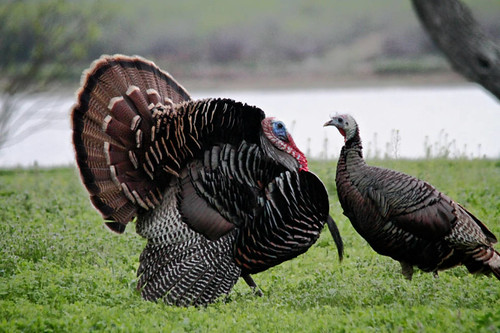
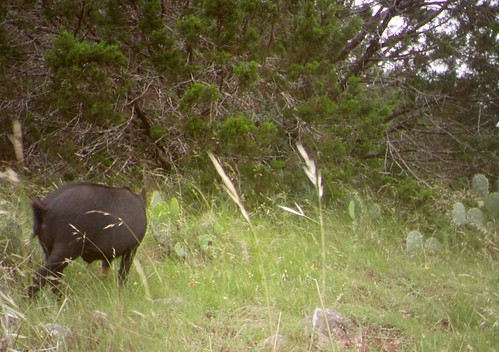
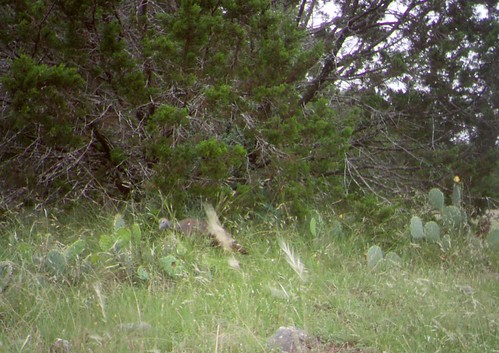
Turkeys in Texas engaging in courting before laying eggs, which are increasingly at risk from feral swine. Image: U.S. Fish and Wildlife Service.
Spring brings new life to the fields and forests and wild turkeys are one of the most interesting spectacles this time of year. Male turkeys gobble and strut to attract the attention of hen turkeys. Hens, in turn, go off and lay their eggs- one egg each day until the clutch is complete and the hens then begin incubation.
Unfortunately, this spring more than ever, wild turkeys across the U.S. are facing an increasing threat from a new and rapidly expanding population of nest predators…feral swine. Feral swine, also known as wild pigs, feral hogs, and wild boars, are not native to North America and are the descendants of domestic swine which either escaped or were liberated. In some cases, feral swine are intentionally released to create new hunting opportunities. But these opportunities come at the expense of other wildlife, including ground nesting birds such as the wild turkey. Feral swine are highly adaptable and can learn to seek out turkey nests even before the hen starts incubation, consuming the eggs when left unprotected. When a partially completed clutch is depredated, the hen is forced to start over, depleting vital reserves within herself as well as risking lower nest success and chick survival.
The USDA-APHIS-Wildlife Services’ program in Texas recently completed a project to estimate the extent of feral swine depredation on turkey nests. Researchers established artificial nests the way a turkey would- one egg per day at each nest site for 12 days. Twenty-two nests were monitored for the 12 days it took to establish a full clutch and for three days following the placement of the last egg. Trail cameras were used to determine the fate of the eggs as well as which predators visited the site.
Trail camera showing a feral swine approaching the turkey’s nest site in Texas.
Of the 22 nests, only two survived the entire 15-day monitoring period. Many nests were depredated on multiple occasions, showing that the predators were seeking out the eggs. Feral swine were responsible for 25 percent of depredation events. Other predators included ravens, raccoons, and grey fox. Feral swine nest predation appears to add to native predators’ impact and the combined 90% depredation rate in this study indicates how difficult it is for turkeys to raise a brood. Additional studies will be conducted by Wildlife Services’ National Wildlife Research Center in conjunction with Texas A&M University-Kingsville.
Depredation on wild turkey nests is just one of the many types of damage caused by invasive feral swine. Wildlife Services is working across the country to estimate, control and prevent feral swine damage.
Congress has appropriated $20 million a year to support USDA-APHIS-Wildlife Services National Feral Swine Damage Management Program. The overarching goal of the program is to protect agriculture, natural resources, property, animal health, and human health and safety by managing damage caused by feral swine in the United States and its territories. To accomplish this goal, APHIS is working in cooperation with states, tribes, other federal and international agencies, universities, the public, and other stakeholders. Visit our website for more information.
Trail camera showing a turkey hen choosing a nest location in Texas.
Saturday, April 2, 2016
Heron
From U.S. Fish and Wildlife Service Midwest Region:

Have you seen any herons lately? Watch for them near isolated swamps and wetlands searching for lunch!
Photo: Great blue heron courtesy of Andrew E. Russell/Creative Commons. https://flic.kr/p/oeE19d

Have you seen any herons lately? Watch for them near isolated swamps and wetlands searching for lunch!
Photo: Great blue heron courtesy of Andrew E. Russell/Creative Commons. https://flic.kr/p/oeE19d
Wet South Florida winter puts rare Everglades sparrow in danger
What's good for the Everglades isn't always so good for one of its smallest and most threatened inhabitants: the Cape Sable seaside sparrow.
This winter, after record rain and water drained from Lake Okeechobee left conservation land to the north flooded, water managers opened flood gates into Everglades National Park for the first time in decades. Biologists celebrated the chance to see Everglades restoration in action. But the unseasonable rain, which also fell over the park, has made what should have been a good dry-season test run into a complicated balancing act, with water levels in critical sparrow grounds far too high heading into nesting season.
http://www.miamiherald.com/news/local/environment/article69303992.html
Friday, April 1, 2016
New Study Highlights Redcedar’s Impact on Prairie Chickens, Helps Improve Conservation Efforts
From the #USDA:
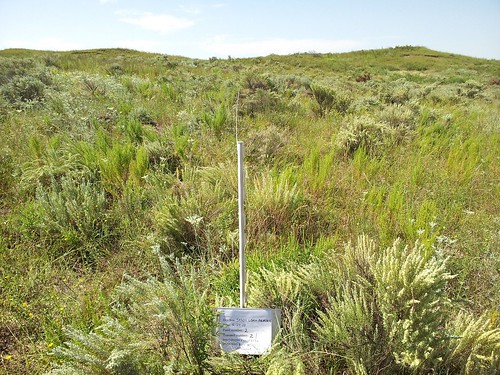
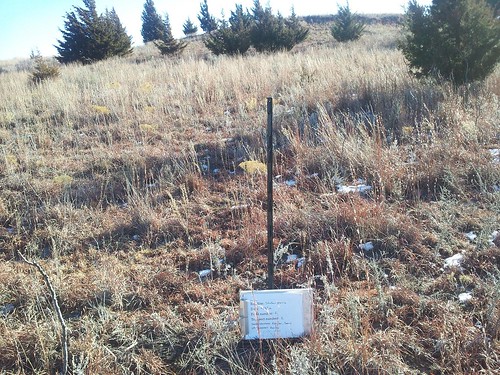
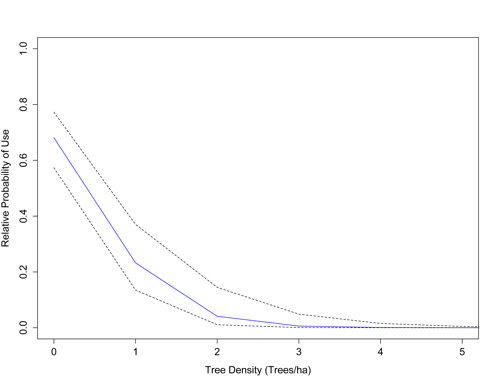
Photo of prairie after redcedars are removed.
A new study offers the first empirical data proving that female lesser prairie-chickens avoid grasslands when trees are present. The study, highlighted in a Science to Solutions report by the Lesser Prairie-Chicken Initiative (LPCI), underscores the importance of removing woody invasive plants like redcedar to restore grassland habitat. The new data will help guide USDA’s conservation efforts.
Though sometimes called the “green glacier” for its steady progress across the prairie, redcedar encroachment is far from glacial in speed. Open grasslands can become closed-canopy forest in as little as 40 years, making the land unsuitable to lesser prairie-chickens and other wildlife.
Natural processes like fire once prevented redcedar encroachment, but fire suppression has led to widespread redcedar invasion and loss of grassland habitat.
Researchers from Kansas State University and the U.S. Geological Survey tracked 58 female lesser prairie-chickens for two years on 35,000 acres of privately owned grasslands in southern Kansas using GPS transmitters.
They found that lesser prairie-chickens did not nest in grasslands with more than one tree per acre. Lesser prairie-chickens placed those nests at least 1,000 feet from the nearest tree; and they stopped using grasslands altogether when tree density reached three trees per acre.
Photo of prairie before redcedars are removed.
The birds require large blocks of structurally-diverse grassland habitat to breed, nest and successfully raise their young. Because of the bird’s landscape-level habitat needs, scientists consider it an indicator species for grassland health. The Great Plains are home to more than 30 other birds that depend on grasslands.
The encroachment of woody plants is a leading threat to the remaining grassland habitat in the southern Great Plains. Removing trees and preventing future encroachment with prescribed fire benefits prairie chicken and other grassland-dependent wildlife. It also leads to healthier rangelands with more forage for livestock.
LPCI, a partnership led by USDA’s Natural Resources Conservation Service (NRCS), provides technical and financial assistance to help ranchers conserve the bird’s habitat while improving working lands.
Since 2010, NRCS and conservation partners have worked with ranchers to conserve more than 1 million acres of lesser prairie-chicken habitat. LPCI and other NRCS conservation efforts are rooted in science and reports like this one help NRCS fine-tune management strategies. NRCS plans to unveil a new three-year strategy in the coming weeks that will serve as a roadmap for grassland conservation on private lands.
LPCI’s Science to Solutions report is available online. To learn more about technical and financial assistance available through NRCS, visit nrcs.usda.gov/GetStarted or your local USDA service center.
As tree density increases, lesser prairie-chicken nesting declines.
Silent Cultural Symbols that Speak Volumes
From the #USDA:
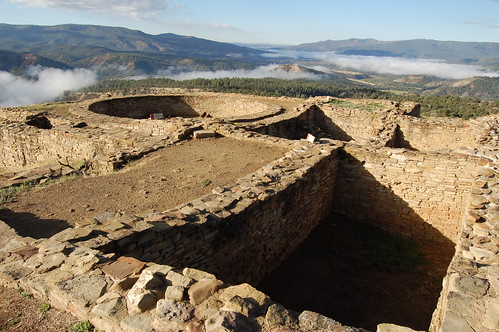

Chimney Rock National Monument in Colorado. Forest Service photo
Quietly waiting for you in our national forests and grasslands are what remains of long past civilizations and cultures. Some of these sites still have direct spiritual or cultural meaning to folks today while others are a complete mystery of what once was of a vanished people. Yet, in both cases, the adventurer is reminded of the centuries-old relationship between people and the land.
It’s this relationship between land and people that gives the U.S. Forest Service such pride in knowing that we protect these irreplaceable symbols that ancient peoples left to us. These near mystical treasures can be found from the Olympic National Forest in Washington State to the Dakota Prairie Grasslands of North Dakota to the George Washington and Jefferson National Forest of Virginia.
Some of the most famous sites include the Silver Creek Archeological Project in Arizona, Chimney Rock National Monument in Colorado, and more contemporarily, Grey Towers, Forest Service founder Gifford Pinchot’s ancestral home in Milford, Pennsylvania.
Grey Towers in Milford, Pennsylvania, is the ancestral home of the U.S. Forest Service’s first Chief, Gifford Pinchot. Forest Service photo
In fact, the Forest Service is responsible for the management of more than 350,000 recorded cultural resources. Our responsibility includes developing sites for public use, enjoyment and education as well as protecting sites from vandalism, theft and effects of federally authorized activities such as timber harvest and road development.
When visiting a cultural site, treat remains of past cultures with respect by leaving artifacts where you find them and never touching fragile surfaces. Take lots of pictures but, remember, the past belongs to all Americans and when thieves and vandals, or someone just being careless, destroys archaeological and historic sites, part of America’s heritage is forever lost.
And you can do your part to help protect and preserve our national heritage sites with a more hands-on approach. One way is to sign up as volunteer in the Passport in Time program that invites the public to share in the thrill of discovery through archaeological and historic research. Also, Heritage Expeditions are educational tours and programs about historic and prehistoric sites on national forests.
Both programs instruct participants on how to protect significant heritage resources, to share their values with the American people, and to contribute relevant information and perspectives to natural resource managers.
On your next outdoors adventure, for a memorable and literal walk through history, why not add cultural awareness to the beauty all around you and experience the links to living traditions by visiting a cultural site protected by the Forest Service.
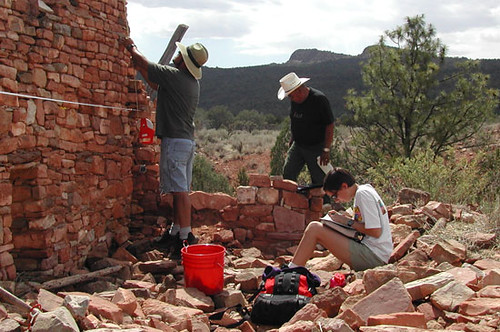
Archeologists work on the Silver Creek Archeological Project on the Apache-Sitegreaves National Forest. Forest Service photo
Subscribe to:
Posts (Atom)