Search This Blog

Friday, February 5, 2016

Investing in Our Public Lands: The President's Proposal to Fully Fund the Land and Water Conservation Fund

From the #USDA:


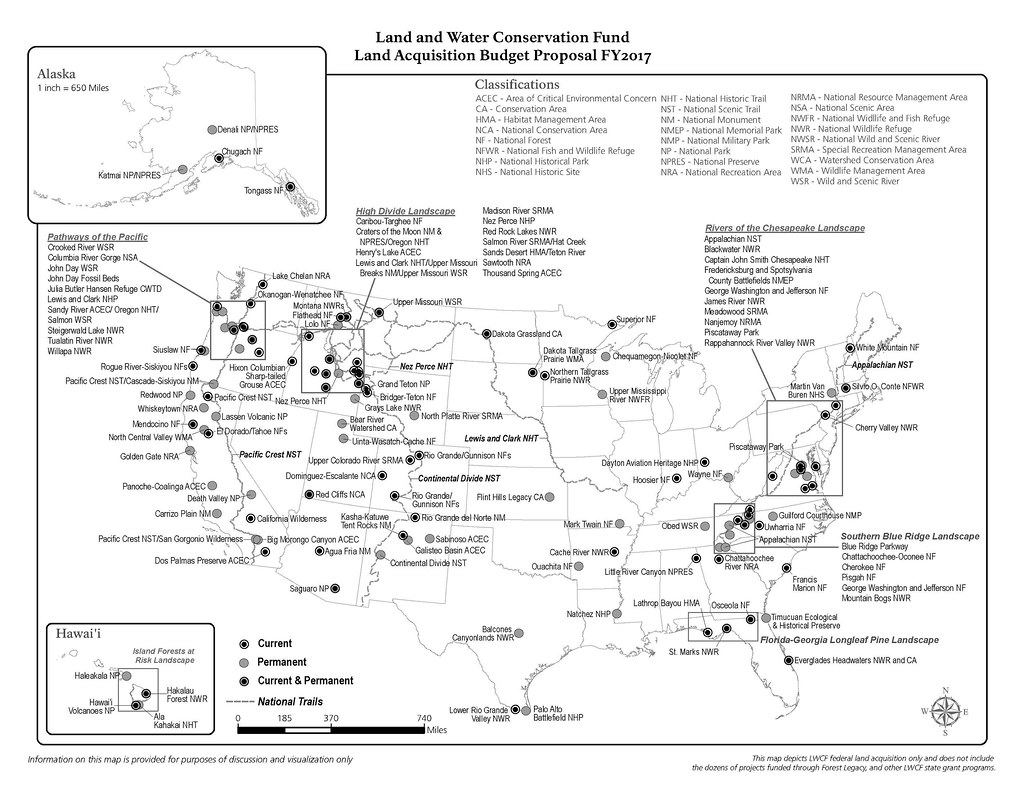
Land and Water Conservation Fund, Land Acquisition Budget Proposal FY2017 map
Land and Water Conservation Fund, Land Acquisition Budget Proposal FY2017 map. (Click for a larger version)
Over 50 years ago, a visionary Congress established an innovative program to bring communities together to invest in open spaces and recreational opportunities that are an essential part of our nation’s heritage and economy. Since then, the highly successful Land and Water Conservation Fund has helped to protect working forests and ranches, preserve our public lands — parks, refuges,  forests, rivers, lakes and wildlife habitats — and provide access to outdoor recreation across the nation for use and enjoyment by all Americans.
President Obama is committed to passing on America’s public lands and waters to future generations in better shape than we found them. That’s why he is proposing full funding for the Land and Water Conservation Fund in the Fiscal Year 2017 budget, and pursuing permanent authorization in annual mandatory funding for the Fund’s programs beginning in 2018.
In 2017, the budget will invest $900 million in conservation and recreation projects – a  portion of the revenues from offshore oil and gas drilling that are deposited in the fund each year –through a combination of discretionary ($475 million) and mandatory ($425 million) funding. This culminates a multi-year strategy leading to full permanent funding for the Fund in 2018.
These investments – using voluntary conservation tools like easements and purchases from willing sellers – respond to local communities’ priorities. They will conserve public lands in or near national parks, refuges, and forests, including landscapes identified for collaborative, strategic conservation; increase access for hunting and fishing; protect historic battlefields; and provide grants to states for close-to-home recreation and conservation projects on non-federal lands.
This is great news for all Americans – from hunters and anglers, to outdoor enthusiasts and history buffs, to communities large and small across the nation who benefit from the Land and Water Conservation Fund investments. In fact, the program has supported more than 42,000 national, state and local parks and outdoor recreation projects in all 50 states.
This year’s budget proposes to fund projects across the country – from expanding access to outdoor recreation opportunities in the High Divide in Idaho and Montana, to protecting endangered wildlife and watersheds in the headwaters of the Everglades in Florida – that will help strengthen local economies and enhance our public lands and waters.  Other projects will preserve the wetlands and grasslands popular with hunters and fishermen in North Dakota and South Dakota.  In Maryland and Virginia, the budget proposes to protect wildlife habitats as well as significant archaeological sites in American history by enhancing the Appalachian National Scenic Trail, the Captain John Smith Chesapeake National Historic Trail, and the Nanjemoy National Resource Management Area.  A full list of the proposed projects is available here.
When we talk about investing in our future, the Land and Water Conservation Fund is one of the most effective programs there is, with conservation and recreation projects serving as a big boon to local economies, bolstering tourism and supporting jobs. For every $1 invested through the Land and Water Conservation Fund, there is an estimated return of $4 in local economic activity.  This is not only good for our nation, environment and people, it’s also a good return on investment.
Congress recently took an important initial step to reauthorize and support the Land and Water Conservation Fund, but we need to do more. By fully and permanently funding the Land and Water Conservation Fund – as millions of Americans are urging – we can do our part to help sustain our nation’s public lands and waters for present and future generations.
Since 2009, USDA has invested more than $29 billion to help producers make conservation improvements, working with as many as 500,000 farmers, ranchers and landowners to protect over 400 million acres nationwide, boosting soil and air quality, cleaning and conserving water and enhancing wildlife habitat. For an interactive look at USDA’s work in conservation and forestry over the course of this Administration, visit http://medium.com/usda-results.
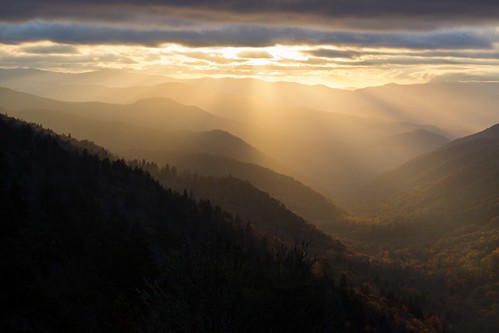
Great Smoky Mountains National Park
Great Smoky Mountains National Park is one of the many scenic areas on the Appalachian Trail. Photo by Dan Sherman

10 #USDA Results in Conservation and Forestry You Should Know

From the #USDA:


USDA Results: Caring for our Land, Air and Water graphic
USDA Results: Caring for our Land, Air and Water. Preserving Precious Natural Resources for Tomorrow.
At the beginning of this year, we launched a year-long reflection on USDA-wide results achieved over the course of this Administration. This week begins a month-long focus on seven years of USDA accomplishments to preserve our natural resources for tomorrow’s generations – accomplishments that have only been made possible with the hard work of our staff at USDA and the support of our steadfast partners.
I’m proud of the work that we’ve done to build lasting partnerships to care for our nation’s unparalleled public lands and support producers as they conserve our nation’s land, water and soil. Please take some time to read a full story of our results on my Medium page at:www.medium.com/usda-results.
To kick off the month, here are 10 Big Data Points that show what we’ve been able to achieve with federal support and a strong commitment to our future.
    1. America’s 193 million acres of public forests and grasslands supply the drinking water for 60 million Americans, support approximately 200,000 full and part time jobs and contribute over$13 billion to local communities each year.
    2. Since 2009, USDA has invested more than $29 billion to help producers make conservation improvements, working with as many as 500,000 farmers and ranchers each year to implement conservation practices on a total of 400 million acres of farm, ranch and forestland.
    3. Despite record drought, longer fire seasons and more than half of its budget spent fighting wildfire, the Forest Service and partners have increased the pace and scale of forest restoration by 9% since 2011 and increased timber harvest by 18% since 2008. In the past 5 years, the Collaborative Forest Landscape Restoration Program has treated more than 1.45 million acres to reduce the risk of catastrophic fire, generating more than 1.2 million board feet of timber, $661 million in local labor income and an average of 4,300 jobs annually.
    4. To improve water quality, we’ve reduced nitrogen runoff from farm fields by over 3.5 billionpounds over the past 6 years and reduced phosphorus runoff by over 700 million pounds since 2009.
    5. Since 1985, the Conservation Reserve Program has sequestered an annual average of 49 milliontons of greenhouse gases, equal to taking 9 million cars off the road and prevented 9 billion tons of soil from eroding, enough to fill 600 million dump trucks.
    6. Since 2009, we’ve helped America’s producers lead voluntary efforts to combat climate change that have reduced net greenhouse gas emissions by over 360 million metric tons or the equivalent of taking 12.6 million cars off the road per year. In April of last year, we also launched the Building Blocks for Climate Smart Agriculture and Forestry Initiative to give farmers, ranchers and forest landowners the tools and resources they need to continue to respond to climate change, with the goal of doubling our annual progress to 120 million metric tons of CO2 equivalent per year by 2025—the equivalent of taking an additional 25 million cars off the road each year.
    7. We’ve put people to work and begun developing the next generation of conservationists with partners like the 21st-Century Conservation Service Corps to provide jobs and training opportunities to nearly 10,000 youth and veterans annually since 2014.
    8. We launched the Regional Conservation Partnership Program (RCPP) in 2015 and heralded a new era of conservation. With USDA and matching partner investments, RCPP can invest $2.4 billion for conservation over 5 years.
    9. Worked with farmers and ranchers to plant cover crops that build soil health and resilience on more than 3.7 million acres and to use no-till on more than 1.7 million acres since 2012.
    10. Invested over $1 billion in programs in 2014 that help farmers, ranchers and our public forests mitigate and adapt to the impacts of drought.

    Thursday, February 4, 2016

    SBIR Grantee's Response to Killer Beetles: SPLAT!

    From the #USDA:


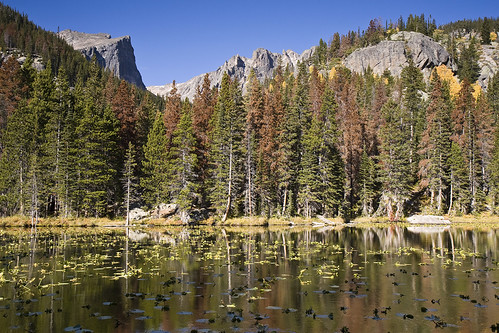
    Mountain Lake With Pine Beetle Damaged Forest
    Mountain pine beetle infestation has devastated pine forests in western North America, creating vast areas of “dead-crown zombie trees.” (iStock image)
    The Small Business Innovation Research (SBIR) program at USDA offers competitively awarded grants to qualified small businesses to support high quality, advanced concepts research related to important scientific problems and opportunities in agriculture that could lead to significant public benefits.  The National Institute of Food and Agriculture (NIFA) administers SBIR Phase I grants that are limited to $100,000 and a duration of 8 months, and Phase II grants of up to $500,000 and 24 months that are open only to Phase I awardees. Below is the first-hand account of NIFA-funded SBIR research from Agenor Mafra-Neto, President and CEO of ISCA Technologies, Inc.
    It might sound like the subject of the lamest B-horror flick ever made, but for pine trees in western North America, it’s a true story—the plant world’s equivalent of a zombie plague that has destroyed an estimated 723 million cubic of timber on more than 17.5 million hectares of forested land.
    All on account of a tiny mountain pine beetle (MPB), no larger than a single grain of rice.
    A single beetle, usually female, can establish a complex biochemical chain reaction of behavior-modifying substances called semiochemicals that can trigger a coordinated attack on a tree by a veritable beetle hoard. The attacking beetles bore networks of tunnels under the bark where they breed and lay their eggs and, quite literally, eat the tree from the inside out.
    Nothing can be done to save the tree once it reaches this stage of infestation; the beetles have fatally disrupted its water and nutrient supply, causing it to starve to death.
    But now there’s hope.  ISCA Technologies, a biotechnology firm based in Southern California, has introduced a new pest control product that targets MPB: SPLAT Verb (Specialized Pheromone & Lure Application Technology).  NIFA supported the research with a $450,000 Small Business Innovation Research Phase II grant.
    This ecological tragedy is playing out across the continent on a scale never before seen in human history. Mountain pine beetles (MPB) and other bark beetles have created swaths of dead-crowned zombie trees from Southern California and New Mexico up into the Yukon Territory of Canada.
    Timber industry losses have been staggering: roughly half that region’s marketable pine. In addition to direct losses, bark beetles also threaten real estate values, tourism, and recreational activities—and create ideal conditions for wildfires by creating a plentiful supply of dead, dried-out kindling.
    SPLAT Verb is a semiochemical-based repellent that turns one of MPB’s most formidable weapons against it—its sensitivity and responsiveness to chemical cues in its environment, especially during selection of a suitable host tree.
    The biochemical processes that mediate mass attack behavior in bark beetles are complex and multifaceted. One compound that has great potential for controlling the pest is verbenone, an anti-aggregation pheromone and the active ingredient for which SPLAT Verb is named. For bark beetles, the scent of verbenone hanging around a pine tree is as good as a sign flashing “NO VACANCY” in bright neon letters.
    SPLAT Verb presents as an organic waxy matrix with a consistency between toothpaste and liquid cement that acts as a controlled release system.  This product dispenses the active ingredient into the environment at high enough rate to divert MPB away from treated trees.
    Throughout a two-year USDA-funded research project, SPLAT Verb consistently achieved a 100 percent rate of protection when applied to individual lodgepole pines, even when bark beetle infestation rates were shown to be high. For example, in a 2012–2013 study, 28 out of 30 untreated control trees fell victim to the beetle plague, whereas all SPLAT Verb-treated trees within the same vicinity remained healthy and uninfested a full year after treatment. In addition, these studies showed that SPLAT Verb can produce a protective “halo effect” that repels MPB from the trees up to 11 meters from the one it was directly applied.
    SPLAT Verb was registered as an organic repellent for MPB in 2012, and has since been applied in nine states. A related product, SPLAT Verb+, is currently under development, attempting to enhance the repellent capacity of verbenone with a blend of volatile compounds, in the hope of driving off another species of bark beetle, Dendroctonus brevicomis, the western pine beetle.
    The results of these studies are an encouraging sign that it’s possible to protect vulnerable pines from bark beetles under field conditions using pheromone-based, insecticide-free methods—a particularly valuable advantage for any pest-management product intended for use in sensitive forest ecosystems. With further work, pheromone-based products like SPLAT Verb could form an important part of the management solutions to one of the greatest threats to the health of North American forests.

    Researching the Role of Contaminants in the Great Lakes

    From the U.S. Fish and Wildlife Service Midwest Region:


    We’re researching how contaminants like pharmaceuticals and fire retardants are affecting fish and wildlife in the Great Lakes. Learn more:http://1.usa.gov/1PSKgpr

    Photo: Great Lakes satellite image by NOAA.

    Wednesday, February 3, 2016

    USDA Celebrates a Record of Conservation Successes

    From the #USDA:


    USDA Results tile
    We're taking a look at how historic investments over seven years have helped USDA build lasting partnerships to care for our nation’s unparalleled public lands and support producers as they conserve our nation’s land, water and soil.
    Throughout the last seven years, the USDA Forest Service and Natural Resources Conservation Service have made great strides in conserving private working lands and our public lands for future generations. We have pioneered approaches to conservation that use incentives and partnerships to work with landowners across property boundaries and conserve watersheds, wildlife and large landscapes.  What’s more, USDA is demonstrating that conserving our natural resources creates economic opportunities for rural communities across the country.
    Today, we are launching the second chapter of USDA Results, a progressive year-long storytelling effort of the Obama Administration’s work on behalf of those living, working and raising families in rural America.  This month’s chapter tells the story of how we are working to conserve our natural resources. Throughout February, we will be announcing new projects and highlighting the work we have done over the last seven years.
    The majority of our nation’s lands are privately owned.  USDA has invested more than $29 billion since 2009 to help farmers, ranchers, and landowners prevent soil erosion, create and protect wildlife habitat, and clean the air we breathe and the water we drink.  NRCS has worked with as many as 500,000 of these producers on over 400 million acres across the nation.  These stewards of the land are leaders in innovation and conservation of our natural resources.
    Secretary Vilsack and I agree that while federal investment is crucial, partnerships are key to sustainable results that reach everyone. We have made it a priority to build long-lasting relationships with landowners, businesses and organizations committed to using sustainable conservation practices that are good for the environment and for the bottom line.
    The new Regional Conservation Partnership Program (RCPP) is a great example of that emphasis on shared responsibility, and is designed to empower local communities to work with multiple partners, farmers, ranchers and forest owners to design and invest in regional solutions that work best for them and the environment. Thanks to our partners, USDA’s $1.2 billion investment in RCPP over the next five years can leverage private matching funds so together we generate a $2.4 billion investment in innovative conservation work.
    In addition to our work to support farmers, ranchers and forest landowners implementing sustainable practices on their land, USDA is also responsible for protecting our national forests and grasslands for future generations.
    Our national forest and grasslands provide opportunities for over 165 million visitors each year to recreate and support local economies through tourism.  The outdoor recreation economy supports 6.1 million direct jobs, $80 billion in federal, state and local tax revenue and $646 billion in spending each year. The Forest Service’s 193 million acres of national forests and grasslands are also where drinking water originates for 60 million Americans.
    A key emphasis of our work over the last seven years has been to increase the pace and scale of forest restoration on the National Forests to improve the ecological health of forests, reduce the threat of catastrophic wildfire, and create economic opportunities through sustainable forest management.  This Administration has substantially increased both the number of acres being restored annually and the forest products being produced.  Importantly, this work has been driven by collaboration — conservation groups, forest industry, local communities and others working together to develop forest restoration projects that have multiple benefits.  For example, over the last five years, Collaborative Forest Landscape Restoration (CLFR) Program projects have improved wildlife habitat on more than 1.33 million acres and reduced the risk of catastrophic wildfire on more than 1.45 million acres.
    The Forest Service has one of the most respected and effective firefighting and prevention organizations in the world.  However, as fire seasons get longer, hotter, and more unpredictable, the cost of fighting wildfires has skyrocketed and now jeopardizes the future of our forests. In 2015, the Forest Service spent almost two-thirds of its budget on firefighting and fire related activities.
    As this trend continues, important programs that can prevent wildfires, like forest restoration, and landscape and watershed management, suffer.  So, too, do many other valuable programs like recreation, forestry research, working lands conservation, and many others.
    We remain willing and ready to work with Congress to fix the fire funding problem.  In the meantime, the Forest Service will continue to do more with less and our brave fire crews will continue to protect lives, property, and natural and cultural resources.
    You can learn more about the work of the Forest Service and NRCS at USDA Results, a progressive year-long storytelling effort of the Obama Administration’s work on behalf of those living, working and raising families in rural America.
    Under Secretary Robert Bonnie visited the Medicine Bow-Routt National Forest in Wyoming
    Under Secretary Robert Bonnie visited the Medicine Bow-Routt National Forest in Wyoming to learn about the Pole Mountain Vegetation Project.

    Accountant to Farmer: Finding Moisture in Dry Soil Conditions

    From the #USDA:


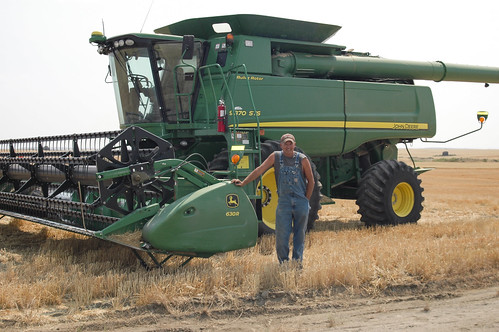
    Douglas Poole in front of his tractor
    Douglas Poole is an evangelist who saved his own soil. Now he wants to help others save theirs. Photo: Jennifer Cole.
    “Nothing motivates me quite like being told I can’t do something. They told me no-till doesn’t work here, and you’re not supposed to be able to grow any type of canola. Well, look around. Here we are.”
    When Douglas Poole speaks, you can hear the passion in his voice for healthy soil and how it has helped his farm. Poole wasn’t always a soil health proponent; he used to be an accountant.
    Poole is a dryland farmer of winter wheat in Mansfield, one of the driest parts of Washington State. The area receives seven to nine inches of rain per year, and with so little water, Poole needed to find a system more efficient than conventional farming for his crops to flourish.  He decided no-till was the way to go.
    “In the beginning, it was more of an opportunity to see if I could save labor, overhead and everything else. The more I researched it, the more I saw that it wasn’t so much no-till as it was soil. That was really the driver,” said Poole.
    But support for no-till in Poole’s community was lacking.
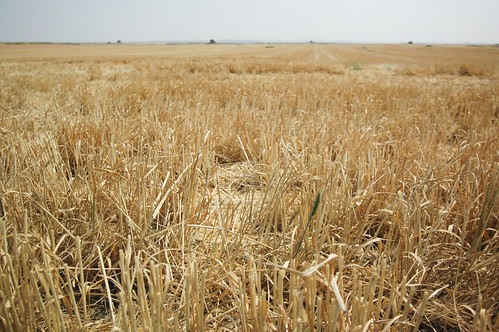
    Wheat
    In the future, Poole’s vision is for his land to be completely covered at all times. Currently his land is roughly two-thirds of that. He plans to have no fallow land within ten years. Photo: Jennifer Cole.
    To get started with no-till and other soil health practices, Poole went to USDA’s Natural Resources Conservation Service (NRCS). In 2012, he was awarded one of the first Energy Initiative contracts through NRCS’ Environmental Quality Incentives Program (EQIP). This contract allowed him to partially convert his operation to no-till, implement cover crops and crop rotations. He was able to convert the remainder of his farm to no-till practices through the EQIP Air Quality Initiative in 2015.
    Poole has implemented no-till practices, and now has crop rotations including canola, sunflowers and spring crops.
    “To me it’s all related – no-till needs cover crops and cover crops need no-till.”
    However, it’s still a conservation practice combination that many conventional growers are hesitant to try, especially in 10-inch precipitation zones.
    Poole’s soil health approach isn’t faith-based. He’s constantly researching soil health practices that improve his soil, and he has participated in several cover crop studies with his local conservation district, as well as some of his own.
    Poole recently decided to let his last cover crop grow throughout the year, rather than terminating it.
    “We found that if we could have that diversity of root growth in soil, we could actually gain moisture. Almost like we are farming moisture. And obviously, that enhances the soil.”
    In the future, Poole’s vision is for his land to be completely covered at all times. Currently his land is roughly two-thirds of that. He plans to have no fallow land within ten years.
    “I can’t even imagine being a conventional farmer and looking to the future. I feel like those of us that have made the conversion have a future.”
    He’s an evangelist who saved his own soil. Now he wants to help others save others’.
    To learn about the Environmental Quality Incentives Program and how NRCS can help you install conservation practices on your land, including information on soil health and conservation assistance, contact your local USDA service center or learn how to get started with NRCS online.
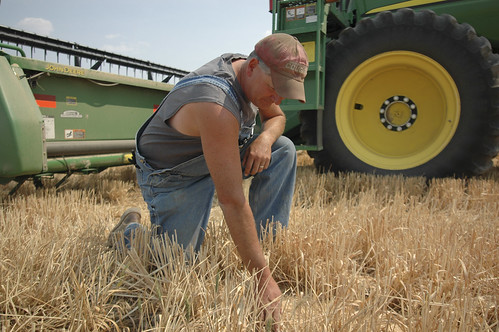
    Douglas Poole kneeling in front of his tractor
    Poole needed to find a system more efficient than conventional farming for his crops to flourish. He decided no-till was the way to go. Photo: Jennifer Cole.

    DYK Hummingbirds

    From the U.S. Fish and Wildlife Service, Mountain-Prairie Region:


    DYK Hummingbirds are the only birds that can fly backwards and their wings can beat at up to 80 times per second.