Search This Blog

Wednesday, February 3, 2016

USDA Innovations to Reduce Food Waste Help the Farmers' Bounty Go Farther

From the #USDA:


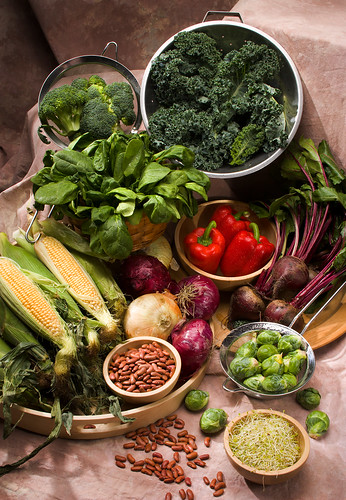
An assortment of vegetables
In the United States, 31 percent of the available food supply in 2010 went uneaten. The estimated value of this food loss was $161.6 billion using retail prices.
This post is part of the Science Tuesday feature series on the USDA blog. Check back each week as we showcase stories and news from USDA’s rich science and research portfolio.
We’re all fortunate to live in a country that has one of the most productive and efficient food production systems in the world.  The United States produces over 430 billion pounds of food each year.  However, nearly a third of the food produced by farmers goes uneaten, representing $161.6 billion.  That’s enough food waste to fill 44 Sears Towers every year.  To meet this challenge, USDA scientists are developing innovative programs and using cutting-edge research to reduce food waste on the farm, on supermarket shelves, and in the home.
So where is food being lost?  It is difficult to measure exactly how much food people, retailers, and restaurants are throwing away without going through everyone’s garbage, so USDA’s Economic Research Service (ERS) developed the Loss-Adjusted Food Availability Data (LAFA) Series, which gives a proxy for consumption and loss for over 200 types of food at the retail and consumer levels.
Food can also be lost on the farm when farmers don’t have adequate storage facilities to hold their freshly harvested food.  In August 2015, USDA expanded the Farm Storage Facility Loan Program to provide low-cost loans for on-farm storage facilities for all kinds of farmers.  This helps the food from being damaged by pests, pathogens, and weather so that more can reach store shelves.
But the story doesn’t end there.  USDA scientists are also working on ways to keep foods from going bad when they are on grocery store shelves, for example by increasing fresh-cut vegetable shelf-life.  The scientists looked at 50 types of commercially available peppers to identify the most promising candidates for future breeding projects.  They chose peppers that were most resistant to fluid leakage after being cut, which leads to the peppers staying firmer longer and reduces the chance of microbial growth.  USDA scientists also found genetic markers in lettuce that could enable cut lettuce to stay fresh for a month instead of wilting after just a week or two.
Even safe, quality, and good-looking foods may go to waste if a “sell-by” or “best-by” date is passed.  That’s why USDA’s Food Safety and Inspection Service recently updated its safe-storage and date-labeling information and, in partnership with the Food Marketing Institute and Cornell University, launched a FoodKeeper App to help consumers figure out when a food that’s past its labeled “sell by” date may still be perfectly safe to eat.
Through economic modeling, targeted financial investments, translational research, and consumer tools, USDA is committed to reducing food waste with integrated, innovative programs throughout the Department.

Tuesday, February 2, 2016

Brown Tree Snake Research Wins DoD's 2015 Resource Conservation Project of the Year

From the #USDA:


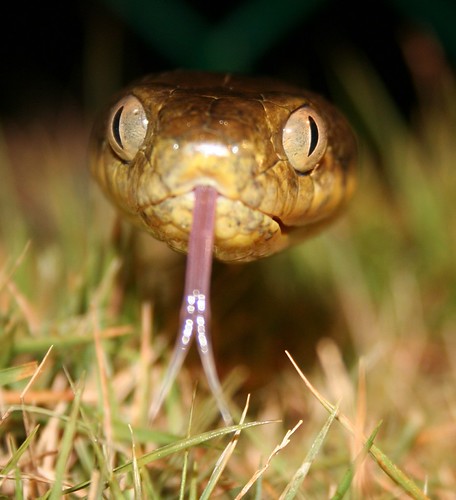
Brown tree snake in grass
USDA Wildlife Services research has led to the development of an aerial bait to control invasive brown tree snakes on Guam. The effort was awarded the Department of Defense’s 2015 Project of the Year Award for Resource Conservation and Climate Change.
This month USDA highlights some of the important partnerships that work with us to care for our land, air and water.  The work stretches into areas and takes USDA employees to places you wouldn’t suspect.
For example, the damage wreaked by invasive brown tree snakes on Guam is hard to imagine.
Infestations of the snake have led to the loss of all but two of the twelve native forest birds on the island, millions of dollars in damages to the island’s electrical power grid, and physical injuries to residents from snake bites.
In December, experts with the USDA-APHIS Wildlife Services (WS) program were honored with the2015 Project of the Year Award for Resource Conservation and Climate Change from the Department of Defense’s (DoD) Environmental Security Technology Certification Program. The award recognizes WS’ achievements toward the aerial application of acetaminophen-treated baits for the control of brown tree snakes on Guam.
“The successful aerial delivery of toxicant bait is a critical next step toward developing a method for large-area control of the invasive snakes, particularly in remote and inaccessible areas on Guam,” states team leader Dr. Brian Dorr with WS National Wildlife Research Center. “The new technique uses dead mouse baits inserted with 80-mg tablets of acetaminophen which are fatal to the snakes.”
Earlier WS research showed brown tree snakes readily accept dead mice and acetaminophen as bait. The bait is fitted to a biodegradable streamer-like device designed to snag onto branches in the dense tree canopy where the snakes feed. Given the fact that the bait is hung in trees, distributed at low densities, and eaten quickly by the snakes, nontarget species exposure to the bait is very limited.
Given Guam is a large port and home to several military bases, another major concern is the accidental spread of the snakes to other islands, such as Hawaii and Saipan, where they could cause similar damage. The development and use of this innovative, new tool will assist the DoD and others in reducing the environmental and economic risks caused by the snake and potentially aid wildlife restoration efforts on Guam.
To learn more, please visit the National Wildlife Research Center’s brown tree snake webpage andFlickr site.

South Florida python hunters break record | Miami Herald

It’s done. Hunters have smashed the record for catching Burmese pythons during the state-sanctioned hunt when they raised the number bagged to 82 as of Monday.


Read more here: http://www.miamiherald.com/news/local/environment/article57951983.html#storylink=cpy


South Florida python hunters break record | Miami Herald

Happy World Wetlands Day!

From the U.S. Geological Survey (USGS):


Happy World Wetlands Day! One of the best places to visit wetlands in the U.S. is the Prairie Pothole Region, covering parts of Montana, the Dakotas, Minnesota, and Iowa. The Prairie Pothole Region contains literally thousands of small, shallow wetlands, which formed in depressions left behind by the Wisconsin glaciation, over 10,000 years ago. Some of these wetlands are temporary – created each spring by snowmelt and rainfall. The region is home to a rich abundance of birds and other wildlife, including more than 50% of North American waterfowl. The Prairie Pothole Region is susceptible to the effects of climate change, which may result in drying out of some wetlands.

Researchers at the North Central Climate Science Center, managed by USGS, are studying how future changes in the region could potentially affect bird populations. Learn more athttp://go.usa.gov/cmYU9.

#USGS #science #WorldWetlandsDay

World Wetlands Day

From the U.S. Department of the Interior:


Help us celebrate World Wetlands Day! Among the world’s most productive environments, wetlands are critically important to freshwater supply, biodiversity, flood control and food production. They’re also places of stunning natural beauty. Photo from the Pa-hay-okee overlook at Everglades National Park in Florida courtesy of Paul Marcellini.— with Paul Marcellini Photography at Everglades National Park.

Monday, February 1, 2016

The American White Pelican

From the Bureau of Reclamation:


The American White Pelican, one of the largest North American birds, has a wingspan of 6-12 feet. These graceful migratory birds can often be seen nesting in colonies in North Dakota. 

Thanks to Reclamation's Jerry Leggate, we have this beautiful image of a White Pelican swimming near Jamestown Dam, N.D. #birdyear

Yawning Alligator

From the U.S. Department of the Interior:


A yawning alligator at Cumberland Island National Seashore in Georgia. With pristine beaches, deep marshes, rich history and terrific recreation opportunities, Cumberland Island is far from boring. Really, there’s no reason for this alligator to yawn -- but maybe it just doesn’t like Mondays. Photo by Gary Davis (www.sharetheexperience.org). — atCumberland Island National Seashore.