Search This Blog

Thursday, January 21, 2016

Shiitake Mushrooms: A Commercial Forest Farming Enterprise

From the #USDA:


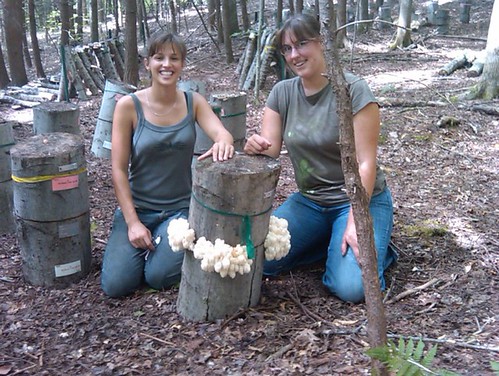
Workshop participants examining forest grown lion’s mane mushrooms
Workshop participants examine forest grown lion’s mane mushrooms. (Photo credit: Ken Mudge / Cornell University and Allen Matthews / Chatham University)
Helping landowners care for their forests and strengthen local economies is an important goal of theU.S. Forest ServiceUSDA National Agroforestry Center and their partnering organizations.
According to Ken Mudge of Cornell University, any farmer with a woodlot and the drive to diversify should consider forest-cultivated shiitake mushrooms. They are well suited to the increasing demand for locally produced, healthy foods.
With a retail price of $12 to $20 per pound, the demand for shiitakes is considerable throughout the Northeast. As an added benefit, growing mushrooms encourages landowners to learn more about managing their forests.
Using freshly cut logs of oak, beech, sugar maple, hornbeam or musclewood, Mudge says that a landowner with a solid production plan can grow one-half to one pound of mushrooms per log in two to three harvests each year for three to four years. Thus, he believes that forest cultivation of mushrooms not only produces delicious food, but is also one of the most reliably profitable non-timber forest products grown in a forest farming system.
Working with a number of partners, Mudge first held a shiitake inoculation workshop in 2009. Although it was unusually cold and icy, 40 people attended. Encouraged by this interest, Mudge and others applied for and received funding from USDA’s Sustainable Agriculture Research and Education(SARE) program to teach interested landowners how to start commercial-scale shiitake mushroom farming.
Unlike one-off workshops, this effort included hands-on training over two years in both the mechanics of growing shiitake mushrooms and how to start a shiitake farming enterprise. A total of 400 participants from eight states participated in the first year.
Since these initial workshops, a number of additional efforts have come about. Several farmer advisors from this project have gone on to successfully acquire SARE farmer grants to research key questions they confronted in their own shiitake operations. Mudge’s group also obtained USDA funds to diversify forest mushroom production by developing production methods and running on-farm trials of three other types of gourmet mushrooms: Lion’s Mane, Wine Cap and Maitake.
With funding from USDA, these creative scientists and farmers are providing strategic research and outreach to catalyze a forest-grown mushroom industry. The Cornell-lead project is currently working to educate farmers on methods of mushroom cultivation through the Cornell Small Farms Program.
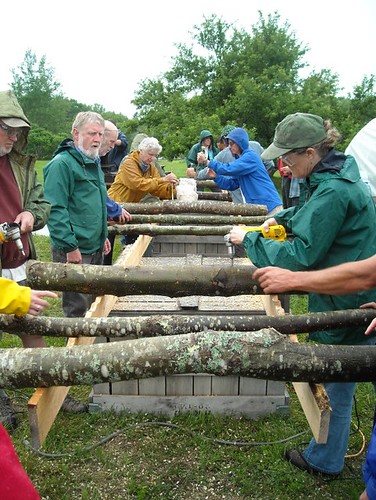
Workshop participants inoculating logs for forest grown shiitake mushroom production
Workshop participants inoculate logs for forest grown shiitake mushroom production. (Photo credit: Ken Mudge / Cornell University and Allen Matthews / Chatham University)

Duskytail Darter

From USFWS Endangered Species:


We are working with the Big South Fork National River and Recreation Area, the U.S. Army Corps of Engineers Nashville District, Conservation Fisheries, Inc., and Austin Peay State University to conduct genetic analysis on the endangered duskytail darter (tuxedo darter). This research will help support propagation and captive population maintenance efforts to promote the species’ recovery and conservation. (Photo: duskytail darter, Matt Thomas, KDFWR)

Future of Agriculture: Creating Change from the Ground Up

From the #USDA:


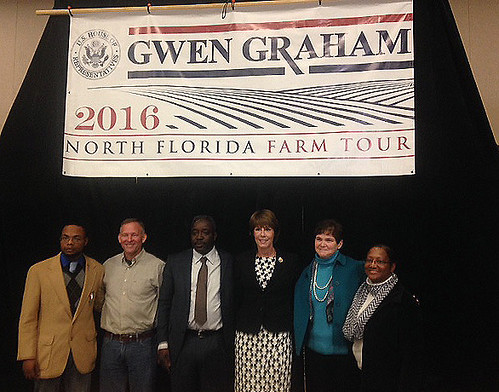
USDA Deputy Secretary Krysta Harden and Congresswoman Gwen Graham standing with others at the 2016 North Florida Farm Tour
USDA Deputy Secretary Krysta Harden and Congresswoman Gwen Graham standing with others at the 2016 North Florida Farm Tour.
The face of agriculture is changing. At USDA, we want you to know that whether you come from a farming background or not, grew up in a rural, suburban or urban area, that there are opportunities for you to get involved in agriculture. It is my highest priority as Deputy Secretary to ensure that beginning farmers and the growing ranks of agriculture – women, young people, immigrants, minorities, socially disadvantaged producers, returning veterans and retirees – have access to the programs and support they need.
That is why yesterday, I joined Congresswoman Gwen Graham at Florida A&M University to talk about the importance of diversity in agriculture. There are a host of resources available at USDA and beyond, especially now that Florida has been named a StrikeForce state. I also announced that farmers can now use our popular microloans to gain access to land. These are just some of the tools that are helping new farmers succeed.
During the discussion, we heard from incredible panelists — a woman who got her start in agriculture as a subsistence farmer and decided to go into business, a current FAMU student and veteran, a veteran who has traveled the world but now wants to bring his military values back to his local community, and a former USDA employee who motivates youth to learn the business side of agriculture. Their thoughts on diversity in agriculture are below:
Caria Hawkins, owner of Abundant Harvest: “Farming has to be a passion. You must have the energy to challenge the obstacles that stand in your way and the creativity to come up with solutions. There are very few women farmers in my area and I’m really looking for ways to create more opportunities for them. Farmers are bringing change to the world from the ground up and I couldn’t be prouder to be a part of that movement.”
Therus Brown, FAMU student and veteran: “A discussion on the role of diversity is of utmost importance, because an ecosystem will not thrive without it!  The role of agriculture will remain the same down the line, though the face may change. We must remember that with added diversity comes various views, products, and markets which are essential in the continued growth and success of any operation.”
Jim Hill, new farmer and veteran: “Just as biodiversity is essential to agricultural sustainability, we can be assured that increasing opportunities for more and diverse people to access farming and ranching land, equipment, education, and training, will result in new kinds of market competition, drive innovation, result in healthier food, and more responsible agricultural practices that will benefit both consumers and the environment.”
Glyen Holmes, Executive Director of New North Florida Cooperative Association, Inc.: “Diversity in agriculture gives a multifaceted view of farming and how it can be applied using several different scales. Diversity for New North Florida Cooperative means greater networking and marketing opportunities for our operation.”
    

Wednesday, January 20, 2016

Bighorn Sheep

From the Bureau of Reclamation:


Nevada's most famous animal is the bighorn sheep. You can often see these magnificent animals near Hoover Dam. This picture shows two bighorn sheep keeping an eye on the photographer, as they graze at Lake Mead National Recreation Area in the afternoon. Photo provided by David Schwartz, Las Vegas. See more at http://www.sharetheexperience.org/.#sharetheexperience #bighorn #nevada

Understanding AMS' Withdrawal of Two Voluntary Marketing Claim Standards

From the #USDA:


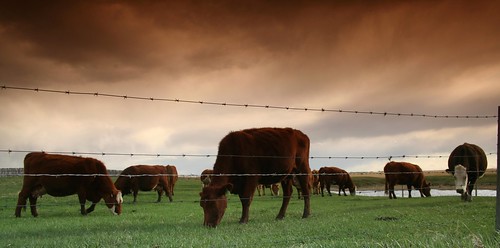
Cattle grazing with clouds behind them
USDA’s Agricultural Marketing Service strongly supports the nation’s grass-fed beef industry by serving as an independent verifier of various grass-fed beef marketing programs, and by providing timely market reports that help producers better understand the value of grass-fed cattle and beef.
Earlier this week, USDA’s Agricultural Marketing Service (AMS) announced that effective January 12, 2016, the agency withdrew two voluntary marketing claim standards – the Grass (Forage) Fed Marketing Claim Standard and the Naturally Raised Marketing Claim Standard. The Naturally Raised Marketing Claim Standard has never been used by anyone.  What does the announcement really mean to grass-fed beef producers and consumers?  The honest answer is nothing.
Consumers and beef producers alike can be assured, AMS still strongly supports the nation’s grass-fed beef industry by serving as an independent verifier of various grass-fed beef marketing programs, and by providing timely market reports that help producers better understand the value of grass-fed cattle and beef.
AMS continually reviews the services it provides and determined that these marketing claim standards did not fit within the agency’s statutory mandate.  Without express authority from Congress – as with the National Organic Program – AMS does not have the authority to define labeling standards and determine if marketing claims are truthful and not misleading.  Therefore, it is inappropriate for the agency to offer these as AMS-defined marketing claims.
Producers/establishments still have many options to label their products as grass-fed. They can:
  • continue to use the AMS-defined standard until their current AMS certificate expires;
  • convert the Grass Fed Marketing Claim Standard into their own standard or develop their own grass-fed standard (which AMS can verify through USDA’s Process Verified Program or another USDA-Certified program); or
  • operate under another recognized grass-fed standard.
The USDA Grass Fed Small and Very Small Producer Program (SVS) administered by AMS will remain intact, and no action is necessary from producers that participate in the program. All grass-fed beef verified by AMS using USDA’s Process Verified Program or another USDA-Certified auditing process will still have the objective industry-defined grass-fed standard detailed on our website.
Producers that want to include grass-fed claims on their packaging must submit their proposed label with supporting documentation for approval to USDA’s Food Safety and Inspection Service (FSIS) – just as they have always done.  FSIS reviews the label’s grass-fed claim and supporting documentation to determine if the producer can support their claim.  FSIS, not AMS, is charged with ensuring that all labeling claims – such as grass-fed – on packages of beef are truthful and not misleading.
We understand this is a complicated issue, and that is why AMS hosted a stakeholder call to discuss this in more detail.  But, bottom line, there really isn’t anything different with regard to AMS’ commitment to the grass-fed beef industry or the truthfulness behind the various grass-fed beef marketing programs.  Producers still have many options to use grass-fed labels on their products, and consumers can still find grass-fed products in the marketplace.
If anyone has any additional questions, please feel free to contact AMS at AMSPublicAffairs@ams.usda.gov.
    

New Southern Resident Killer Whale Calf Confirmed!

From NOAA Fisheries West Coast - Science & Management:


New Southern Resident Killer Whale Calf Confirmed!

We’re excited to announce that NOAA Fisheries killer whale researchers documented a new calf during a research survey with J pod yesterday, January 18, 2016, in Puget Sound. Using photos taken by the researchers, the Center for Whale Research confirmed this is a new calf, designated J55. The calf was in close proximity to both J14 and J37, so we don’t know who the mother is just yet, and it may take a few encounters before we know. The calf seems to be just a few days old and in good condition.

This good news comes with some sad news, however. On the same trip we observed J31, a 20 year-old female who has never successfully calved, pushing around a deceased neonate calf. It is estimated that at least 50% of calves do not reach their first birthday, so unfortunately this sad event is not unusual. We’re sharing a picture of new calf J55 with this post.

Trumpeter Swans

From Great River and Clarence Cannon National Wildlife Refuges:


Several Trumpeter Swans were seen yesterday at the Delair Division. The mature Trumpeter Swans are white while the immature are a little darker and sooty in color.