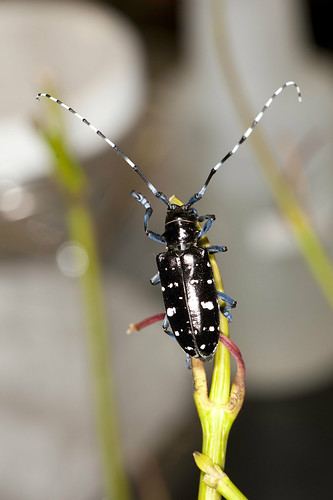
The Asian Longhorned Beetle has killed more than 100,000 trees since it was accidentally introduced to this country about 20 years ago.
USDA APHIS is deeply involved with mitigating invasive pest issues, along with State and local governments. Invasive pests cost the U.S. an estimated $120 billion each year in damages to our environment, agriculture, and native species. The five invasive species described here are a few of the damaging invasive pests of concern to the Animal and Plant Health Inspection Service. You can help detect these pests and take actions to reduce their spread.
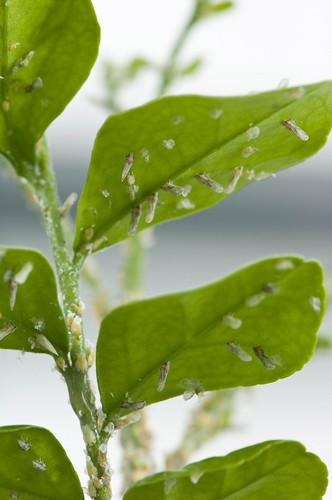
The Asian Citrus Psyllid (ACP), a disease-infected insect, spreads Huanglongbing (HLB or citrus greening disease) throughout citrus producing states. Once a tree is infected with HLB, there is no cure and it will produce green, misshapen and bitter fruit. HLB has already devastated millions of acres of citrus crops throughout the United States and abroad. However, with funding through the Huanglongbing Multi-Agency Coordination (HLB-MAC) group, a public-private collaboration effort led by USDA, USDA is putting up a formidable fight against this pest. We have doubled production of Tamarixia radiata, a wasp that parasitizes the ACP and stops the spread of the disease, trained detector dogs to sniff out trees infected with HLB with 99% accuracy, and helped develop treatments like thermotherapy to heat-treat trees to kill the ACP and restore the viability of the fruit. Consumers can help this fight by not moving citrus plants so ACP and HLB cannot spread.
Two species of Imported Fire Ant were unintentionally introduced into the port of Mobile, Alabama, from South America almost 100 years ago: the black imported fire ant (1918) and the red fire ant (late 1930s). Both probably came in soil used as ballast in cargo ships. These invasive ants commonly move to new, non-infested areas either naturally by spreading colonies or by hitchhiking on agricultural commodities, including baled hay. They feed on the buds and fruits of numerous crop plants, especially corn, soybean, okra and citrus. Hard, mound-shaped nests can get quite large, posing risks to workers and farm equipment, inhibiting field work. They also displace native ant species and reduce food sources for wildlife. Imported fire ants threatens crops in Alabama, Arkansas, California, Florida, Georgia, Louisiana, Mississippi, New Mexico, North Carolina, Oklahoma, South Carolina, Tennessee, Texas and Virginia. You can help reduce their spread by cleaning farm equipment of caked mud and dirt before moving them from property to property.
The
Asian Longhorned Beetle (ALB) is a wood-boring beetle that attacks 12 different types of trees, with maple being a favorite host. Since its discovery in Brooklyn, New York, in 1996, over 130,000 trees have been lost in New York, New Jersey, Massachusetts, Ohio and Illinois due to the ALB. USDA and its partners are actively fighting infestations in New York, Massachusetts and Ohio. Once the ALB infests a tree it will die. Signs include, perfectly round 1/4 inch or larger exit holes on the tree trunk and branches, egg sites about the size of a quarter that look like wounds on the bark, a sawdust-like material called frass on the ground or in branch crotches, dead or fallen branches, and also any larva or tunneling holes in cut wood. You can help by looking for and reporting signs of the ALB before it has the chance to destroy trees in other states. And, please burn firewood where you buy it; do not move firewood, you may move ALB or other damaging pests.
One of the world’s most destructive pests is one that is not currently detected in the United States, and we want to keep it that way. The Khapra Beetle is a threat to America’s stored agricultural products, including grains, spices, packaged and dried foods, and animal products. Plants at risk include: wheat, barley, oats, rye, maize, rice, and flour. Known for its “dirty eating” behavior, this tiny beetle only feeds a little on each grain and thus can damage a surprising amount of stored product. Its feeding damage often spoils 30 percent of the product with up to 70 percent damage reported. The beetle can survive without food for long periods, with little moisture, hiding in tiny spaces. Because of its preference for warm climates, it has the most potential to become established in Arizona, California, Kansas, New Mexico, Oklahoma and Texas. USDA is constantly on the lookout for this beetle, which is detected periodically in commercial cargo and passenger baggage at U.S. ports of entry. Remember to declare all agricultural products when traveling internationally to help keep this beetle out of the U.S.
Get more information about these and other pests and what you can do to stop their spread at
HungryPests.com.
The Asian Citrus Psyllid plays an important role in helping spread citrus greening disease and controlling this little pest is vital to ensuring continued enjoyment of citrus fruit.