Search This Blog

Saturday, September 5, 2015

USDA: Leading the Way Towards Preserving and Restoring Our Water, Soil and Lands

From the #USDA:


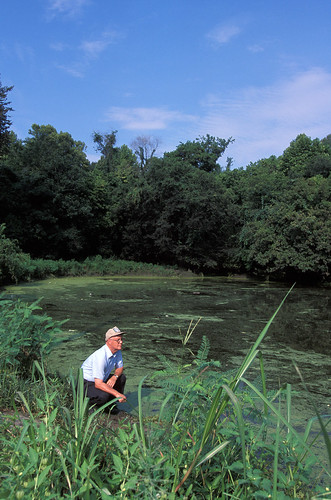
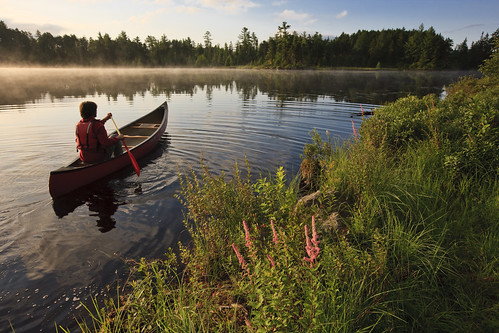
A man canoeing on Little Bear Brook Pond
Across our 175 national forests and grasslands, we provide American people and visitors from across the world opportunities for both adventure and solitude.
Conservation of our nation’s natural resources is at the heart of USDA’s mission.  Our work on public and private lands supports clean air, clean water, and thriving wildlife habitat.  These conservation efforts strengthen rural economies by providing farmers and ranchers the resources they need to thrive and feed our nation. And this conservation allows us to support gateway communities and a robust recreation economy.  
USDA’s management of our national forests and our support for farmers’ and ranchers’ stewardship of private working lands helps us meet our moral obligation to the next generation to leave our land, water, and wildlife better than we found it.
It’s an exciting time for conservation, and this month, we’ll focus our story on our collaborative efforts that will ensure our national forests and private working lands are conserved, restored, and made more resilient to climate change.
Today, USDA is focused more than ever before on partner-based solutions to drive our conservation efforts.  NRCS is calling on farmers, ranchers, partner organizations, and local government to drive our Farm Bill investments through the innovative Regional Conservation Partnership Program, or RCPP.  Earlier this year, we announced 115 partner-driven projects in which we’ll invest more than $370 million, which is being matched by our partners.  These projects enable tribes, landowners, and an array of conservation partners improve soil health, water quality and efficiency, wildlife habitat, and other resource concerns.  We’ve just finished reviewing our second round of preproposals, and are excited by our partners’ continued commitment to leading the way.
These partnership efforts are helping USDA drive solutions that work for sportsmen, producers, wildlife, and local communities.  NRCS and the Forest Service are leading the way in efforts to foster landscape-level conservation, and our sage-grouse efforts are a great example.  Last month, Secretary Vilsack announced a long-term strategy for NRCS’s investments in sage-grouse efforts on private lands through the Sage Grouse Initiatives; efforts that have already helped 1,129 ranchers conserve and restore 4.4 million acres of sage-grouse habitat.  At the same time, the Forest Service has been developing forest plans that support healthy sagebrush ecosystems as part of its multiple-use mandate.
Our legacy will be to restore lands stressed by climate change, drought and fire.  Climate change has led to fire seasons that are longer and more severe. The cost of fighting these fires, largely borne by the Forest Service, is straining its budget and dramatically impacting its ability to devote resources to restoration, recreation and watershed protection efforts, many of which can actually help mitigate the stresses of climate change, drought and fire.  The devastating impacts of short- and long-term drought are hampering agricultural operations and threatening habitat.  In the face of these challenges, we are working with farmers and ranchers to make their operations more resilient through soil health and water conservation practices, and working with communities to restore their forest and meadows to ensure downstream water quality and quantity.
Across our 175 national forests and grasslands, we provide American people and visitors from across the world opportunities for both adventure and solitude, laboratories to teach children about the wonders of nature and the campgrounds for families to bond.  Our national forests support a vibrant recreation economy that supports hundreds of thousands of jobs across urban and rural America and enhancing access to these lands is a priority that will ensure that generations to come can experience the great outdoors.
In addition, this year we are celebrating the 30th anniversary of the Conservation Reserve Program (CRP).  This federally-funded voluntary program contracts with agricultural producers so that environmentally-sensitive land is not farmed or ranched, but instead used for conservation benefits.  The program reached a major milestone this year when USDA announced that the  number of acres conserved reached the one million mark. The efforts produced by CRP partners prevents more than 8 billion tons of soil from eroding, reduces nitrogen and phosphorous runoff relative to cropland by 95 and 85 percent respectively, and even sequesters 43 million tons of greenhouse gases annually, equal to taking 8 million cars off the road.
And through our work in quantifying the environmental benefits of conservation–like clean water and air, flood prevention, healthy soils, and wildlife habitat–we’re leading the way in supporting environmental markets that can sell or trade those benefits, providing yet another opportunity for people to put conservation on the ground.  These markets are proof positive that the conservation efforts we support make financial sense, and through innovative efforts like the NRCS Conservation Innovation Grant program, we’re helping develop of many of the nation’s leading environmental markets for water quality and carbon.
USDA has a significant role to play in protecting our air and water, restoring and conserving habitat for wildlife, fostering strong and resilient farming and ranching operations, and supporting thriving recreation and agricultural economies.  We take this responsibility seriously, and in the face of climate change and urbanization, are committed to conserving our resources to support thriving landscapes and robust agriculture for present and future generations.  We look forward to sharing some of these stories with you this month.
USDA NRCS in South Dakota office planted a seed mix that included nine native wildflowers and three native prairie grasses along the Interstate 29 median that borders North Dakota.
Today, USDA is focused more than ever before on partner-based solutions to drive our conservation efforts.
    

From Commerce to Conservation, Coastal Areas Reap Rewards

From the #USDA:


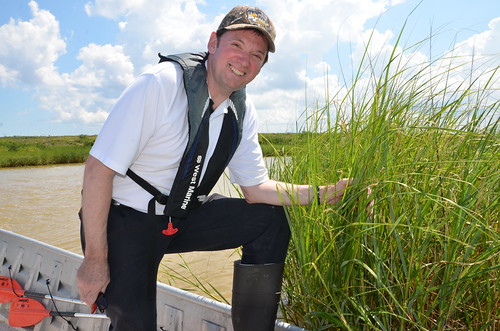
NRCS Assistant Chief, Kirk Hanlin, inspecting created marshes in the Houston Ship Channel
NRCS Assistant Chief, Kirk Hanlin, inspects created marshes in the Houston Ship Channel.
Looks can be deceiving. Take the Houston Ship Channel located just east of the city of Houston. To the casual observer with a windshield view, they might briefly note the shipping vessels, grain elevators and day-to-day commerce as they speed by.
However, it’s on the Houston Ship Channel’s waters where, for some, the real action is taking place. This is where commerce meets conservation.
According to the Port of Houston Authority, an estimated 200 million tons of commodities and products annually pass through the 52-mile ship channel aboard more than 8,000 shipping vessels. To keep the channel deep enough for these large ships to navigate through, the channel has to be dredged on a continuous cycle.
Commerce, meet conservation. Through a multi-year Port of Houston expansion project which began in 1992, the U.S. Army Corps of Engineers Interagency Coordination Team created the Beneficial Uses Group, or BUG. Numerous BUG partners including the USDA Natural Resources Conservation Service, or NRCS, have utilized dredge materials to create manmade intertidal marshes, wetlands, oyster reefs, bird nesting islands and upland wildlife habitats. 
“This is a very important project for the Port of Houston, over many years there has been a steady loss of wildlife habitat as marshes, islands, and wetlands have disappeared. We are actually taking what is a problem, the siltation of the ship channel, and turning it into a benefit for the environment, for animals, for recreation, for people who fish and catch crabs, and for commercial activity,” said Kirk Hanlin, assistant chief of the USDA Natural Resources Conservation Service. “Basically, what is happening is they are taking the dredge material from the Houston Ship Channel and making it into marshes and small islands so that there are both dry areas and wet areas which are beneficial for a lot of different species.”
To-date, more than 1,800 acres of intertidal marsh, 172 acres of oyster reefs, a six-acre colonial bird nesting island and more than 250 acres of upland wildlife and marine habitat have been created through environmentally and economically sound practices along the Ship Channel.
Hanlin recently traveled from Washington, D.C. to Texas to see NRCS’s conservation efforts within the state’s upper Gulf Coast region. During a boat tour of the Houston Ship Channel and Galveston Bay he saw first-hand the benefits reaped when partners pull together with a common goal.
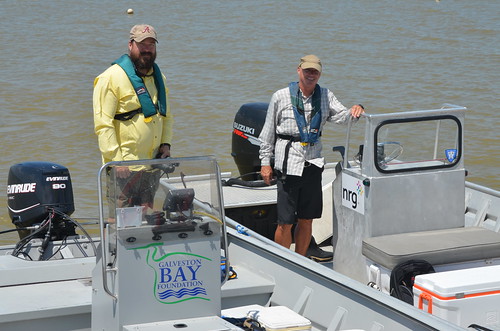
“One of the great things about this project is the partnerships that we’ve been able to work with. Groups like NRG, the Galveston Bay Foundation, Texas Parks and Wildlife, all coming together and working for a common goal and it’s really benefiting the people of Texas and the U.S.,” Hanlin said.
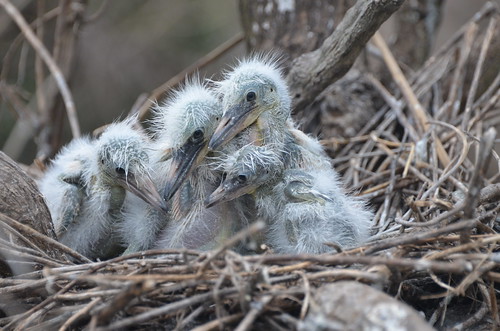
A group of chicks in a nest
Hundreds of chicks are born each spring on an island rookery built from dredged materials.
As Hanlin’s boat tour quietly drifted around the shore of the colonial bird island, they were greeted with a cacophony of bird species ranging from pelicans to herons to Roseate Spoonbills. Recently hatched chicks, along with juvenile pelicans, herons and Laughing Gulls were in abundance. In fact, two weeks prior to Hanlin’s visit, a bird survey done by NRCS Coastal Specialist Scott Alford, and Audubon Texas, estimated that more than 8,000 adult birds were nesting on the 11-acre island. 
A tour of marsh sites like Atkinson Island Marsh and Burnett Bay Marsh along with upland habitats like Goat Island and St. Mary’s Island highlighted unspoiled wildlife and aquatic habitats created by dredged materials and hand-planted smooth cordgrass which was grown by NRCS and NRG staff at the nearby Baytown Ecocenter.
“This project is a perfect example of the importance of partnerships. This is something NRCS is really striving for, and the new Farm Bill encourages us to form more effective partnerships. When you look at it, the work that needs to be done here in this bay couldn’t be done by any one organization,” said Hanlin gazing across a marsh. “It really takes all of the organizations working together for a common goal.”
A model for Gulf of Mexico restoration is how Hanlin described the importance of the work being done in Texas.
“What we are doing here is actually an example that we think can be replicated across the Gulf. When you are looking at the Gulf of Mexico, we’re having a lot of erosion along the shore. We’re losing a lot of our small barrier islands and wetlands. Here we have a perfect example of how you can restore that very important ecosystem and also protect land inland, provide habitat for fish and wildlife,” said Hanlin.
Two men on boats
Partners in conservation are key to the success of created ecosystem marshes from dredged materials.
    

Ruby-throated Hummingbird

From U.S. Fish and Wildlife Service Midwest Region:


Ruby-throated hummingbirds are starting their journey south. Winters are spent in Central America, and some birds will fly straight across the Gulf of Mexico in a single shot!

Photo: Ruby-throated hummingbird courtesy of Mark Moschell/Creative Commons.


Thursday, September 3, 2015

USDA Blog » Working Together to Restore the Colorado Front Range

It started with a call from a concerned landowner living on Pine Country Lane, nestled in the foothills just west of Denver. The landscape spread out before them was scarred from previous high-severity fires, the homeowners told their local Conservation District.
Their home was sitting at the top of a hill in a tinderbox surrounded by dense forests dying from bark beetle and tussock moth invasions. Decades of fire suppression has altered forests on the Front Range. These forests were historically adapted to frequent low-severity fire and, with suppression, have become fuel-dense and are now comprised of a different species mix.


USDA Blog » Working Together to Restore the Colorado Front Range

Wednesday, September 2, 2015

Kirtland’s Warbler Wildlife Management Area

From the U.S. Fish and Wildlife Service Midwest Region:


Kirtland’s Warbler Wildlife Management Area in Michigan is made up of jack pine stands managed to mimic the composition and structure of a forest recently burned in a wildfire.

Photo: Aerial view of Kirtland’s Warbler Wildlife Management Area by USFWS.

Using Gypsum to Help Reduce Phosphorus Runoff

From the #USDA:


USDA agricultural engineer Jim Fouss observing an algal bloom on Alligator Bayou, near Baton Rouge, Louisiana
USDA agricultural engineer Jim Fouss observes an algal bloom on Alligator Bayou, near Baton Rouge, Louisiana. These blooms, a particular problem during hot summer months, can be caused by high concentrations of fertilizer nutrients from agricultural drainage waters.
This post is part of the Science Tuesday feature series on the USDA blog. Check back each week as we showcase stories and news from USDA’s rich science and research portfolio.
When it rains it pours. Whether we get a passing shower or a day-long downpour, the runoff ends up in rivers, streams and waterways. That runoff may include nutrients from fertilizers, and one of those nutrients is phosphorus.
Phosphorus runoff is causing blooms of harmful algae that deplete waterways of oxygen, resulting in “dead zones” that damage ecosystems vital for aquatic life. It’s a problem in many of the waterways we all depend on for recreation and drinking water, including the Great Lakes and Chesapeake Bay.  Just last year, Maryland’s outgoing governor proposed land use regulations designed specifically to reduce phosphorus runoff in the Chesapeake watershed.
USDA’s Agricultural Research Service (ARS) scientists have been looking for ways to address the problem by using gypsum, which binds with phosphorus in the soil and prevents it from running off. There is no shortage of gypsum. In fact, one type is a byproduct of scrubbing the sulphur out of power plant emissions and is used to make wallboard.
Studies by ARS soil scientist Allen Torbert, Dexter Watts and their colleagues at the National Soil Dynamics Laboratory in Auburn, Alabama, have shown that when this industrial gypsum is applied to the soil with poultry litter, it reduces phosphorous runoff by 50 to 60 percent. Torbert and colleagues working in Beltsville, Oxford and elsewhere, also have found that gypsum reduces the potential for pathogens, such as E. coli, in poultry litter and cow manure to be transported in runoff and reach drinking water supplies. The gypsum improves soil infiltration and curbs algae growth by binding with phosphorus in the soil, so that less phosphorus is available to algae as a nutrient.
The studies have been instrumental in setting key policies.  USDA’s Natural Resources Conservation Service (NRCS), which sets national standards for maintaining soil quality, used the ARS findings in best management practices published this summer, including a recommendation that farmers use gypsum to reduce the risk of phosphorus runoff. NRCS also used them in developing Alabama’s “Phosphorous Index,” a guideline for determining phosphorous runoff risks in specific fields.
    

In Conversation with #WomeninAg: Carissa Koopman Rivers

From the #USDA:


Carissa Koopmann Rivers with grazing cattle on Mount Diablo
Carissa Koopmann Rivers, a fifth generation cow/calf rancher, with grazing cattle on Mount Diablo.
As part of our ongoing #womeninag series, we are highlighting a different leading woman in agriculture each month.  This month, we profile Carissa Koopmann Rivers, a fifth generation cow/calf rancher from Sunol, Calif., where her family established the Koopmann Ranch in 1918.
The Koopmann family has continued to be at the forefront of conservation and partnership development including playing a key role in the establishment of the California Rangeland Conservation Coalition.  Carissa discusses how there is not a “one size fits all” approach when it comes to living on the family farm or ranch. She believes that it’s not about fitting the mold, but what sets us apart that defines how we will build a future for the agriculture industry.
How do you start your day? 
Currently, my life is about to change as my husband and I anticipate the birth of our first child in October.  We are in the process of purchasing our first home in Northern Califiornia and I will be starting as the University of California Cooperative Extension Livestock and Natural Resources Advisor for Siskiyou County in February. My husband is a fire dozer operator for the United States Forest Service in the Shasta-Trinity forest.
So my typical mornings of enjoying a cup of coffee while peering into the sunrise through oak trees, now occur with my folks as I am spending time at our family ranch. I enjoy this time pondering the trials and tribulations of the beef cattle industry, the importance of rangeland management and the outlook of our natural resources as they pertain to agriculture and public concerns. I am always thinking about how I can help give the public a tangible agriculture experience that will connect them positively to the land.
What do you think are the biggest challenges for women in ag who are just starting their careers? 
I have not felt any challenges as a female growing up with a passion for raising livestock and managing our natural resources, thanks to having a supportive family and agricultural environment. My parents instilled in me the importance of hard work and being excited about what you do, whether it is agriculture-related or not. I attribute my successes to those who have raised me, and I consider that to be the agriculture community of California. There are good people out there and when we show passion and drive, the agriculture community embraces us and will help to stock our tool boxes with tools for success. 
It can be challenging as a strong, independent woman looking to be aggressive in your career field. But not fitting the mold is what woman in agriculture do and it is what sets us apart, and makes us good role models for the next generation.
There are absolutely challenges for all folks trying to enter agriculture today, especially my generation as so many see Mom and Dad, Grandpa and Grandma work so hard to just make ends meet.  Many of us see the hard work as rewarding and as much more than a job. We see it as family pride and an opportunity to continue a legacy started generations back or to start a legacy as a first generation farmer or rancher. It is our responsibility to share with our communities the education and knowledge of what we are actually doing on the ground to supply a world with food. 
How do you spend the free time you have? 
My free time is spent with my family, my cattle, my dogs. I enjoy keeping busy and love calving season which is in full swing right now so my mornings and evenings are spent out and about in the rolling hills and oak woodlands of beautiful California checking on our mother cows and admiring how lucky I am to be able to spend my life taking care of animals and maintaining healthy ecosystems for generations to come.  
What are your hopes for the next generation for women in agriculture? 
I have many ambitions for the next generation of agriculturalists and they all focus on being passionate, listening to others and taking action based on gathered knowledge, because if you don’t, who will? 
I hope that the next generation continues to grow in terms of numbers directly involved in production, but also in terms of the amount and quality of knowledge that gets passed between one another. The agriculture industries are very departmentalized and though very different we all face similar challenges and need to assimilate in order to reach a successful state where we can overcome challenges together. I hope that the next generation sees this and takes action towards a successful future for agriculture as a whole. 
In seven words or less, what is some advice you would offer your fellow women in agriculture? 
Listen, be informed and follow through. 
Is there a leading woman in agriculture you would like to hear from?  Send us your suggestions using #womeninag or via email at agwomenlead@usda.gov.
Carissa Koopmann Rivers and her husband, Vic, a fire dozer operator for the United States Forest Service in the Shasta-Trinity forest
Carissa Koopmann Rivers and her husband, Vic, a fire dozer operator for the United States Forest Service in the Shasta-Trinity forest.